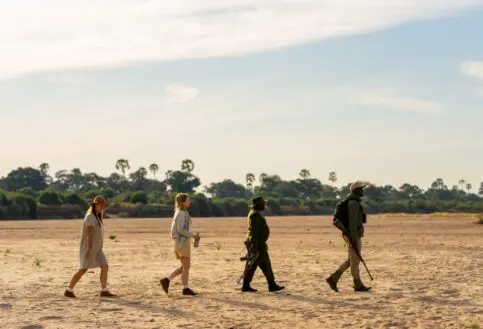
A walking safari changes the scale of the wilderness. Away from the vehicle, attention shifts from the horizon to the details beneath your feet: a fresh track in the dust, the scent of crushed wild basil, a dung beetle at work, the alarm call of a francolin. It is an experience shaped by observation rather than distance covered, revealing connections that can be easy to miss from a game-drive vehicle.
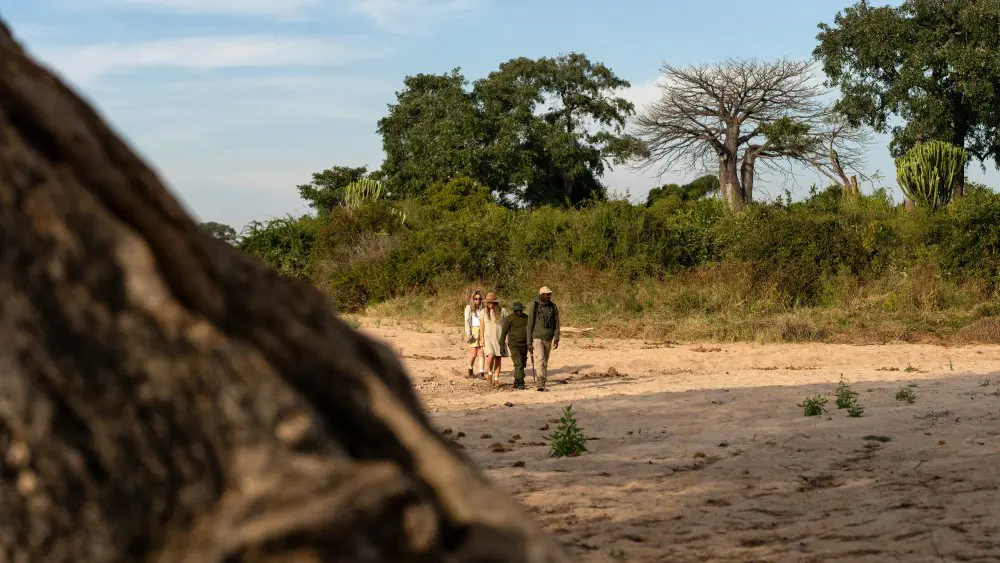
A walking safari is not about getting closer to wildlife than is respectful or safe. It is about moving through the landscape with care, guided by people who know how to read it. The rhythm of every walk is set by the conditions of the day – the weather, the terrain and the movement of wildlife – with your guide making thoughtful decisions at every turn.
For many guests, time on foot brings a different kind of safari memory. You may still see larger animals from a safe distance, but the lasting impressions are often smaller: the patterned bark of an acacia, the weight of an elephant footprint, or the quiet that arrives when everyone stops to listen.
What to expect on a walking safari
A typical walk is unhurried and tailored to the group, usually taking place in the cooler hours of early morning or late afternoon. Your guide will introduce the principles that keep the experience safe and enjoyable, including how to move quietly, when to stop, and why it is important to follow instructions without hesitation. In certain areas, walks are also accompanied by an armed ranger, as required by park regulations.
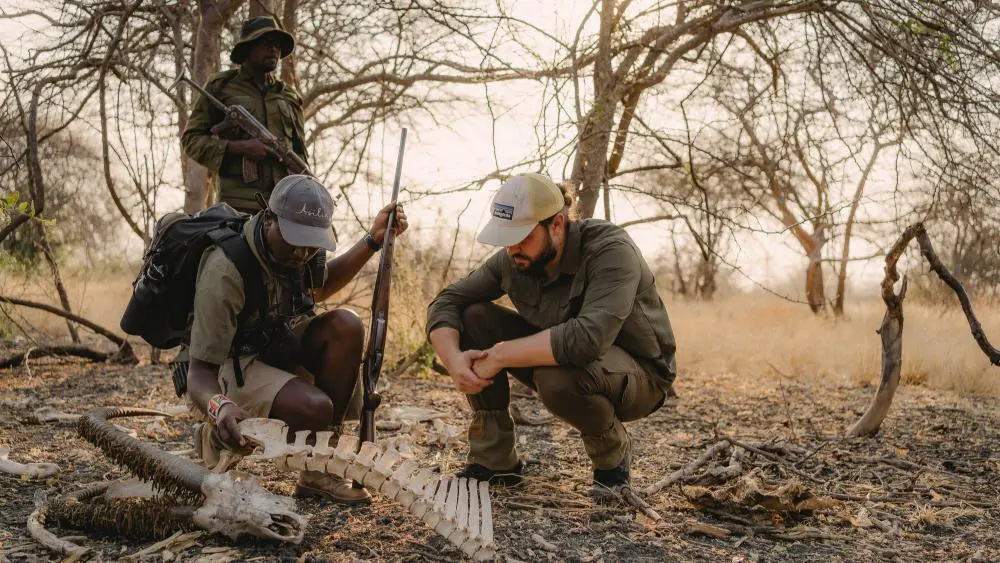
You do not need to be an accomplished hiker. A reasonable level of fitness, comfortable closed walking shoes and a willingness to slow down are usually more important than speed or endurance. The experience is suitable for guests who are curious about the smaller stories of the bush: spoor and scat, plants with medicinal uses, birds, insects and the many signs that show what has passed through an area before you.
Every walking safari is shaped by the conditions of the day. Your guide will consider the weather, terrain and recent wildlife activity before choosing a suitable route, while local minimum age requirements also apply. No two walks are ever quite the same – each brings its own discoveries.
On foot in the Mara Naboisho Conservancy
In Kenya, the Mara Naboisho Conservancy offers one of the most rewarding settings for a walking safari. This community-owned conservancy forms part of the greater Maasai Mara ecosystem, where wildlife moves freely through open grassland, acacia woodland and riverine habitat. Its low-density tourism model also allows activities that are not permitted in the neighbouring national reserve, including guided walks, night drives, and fly camping.
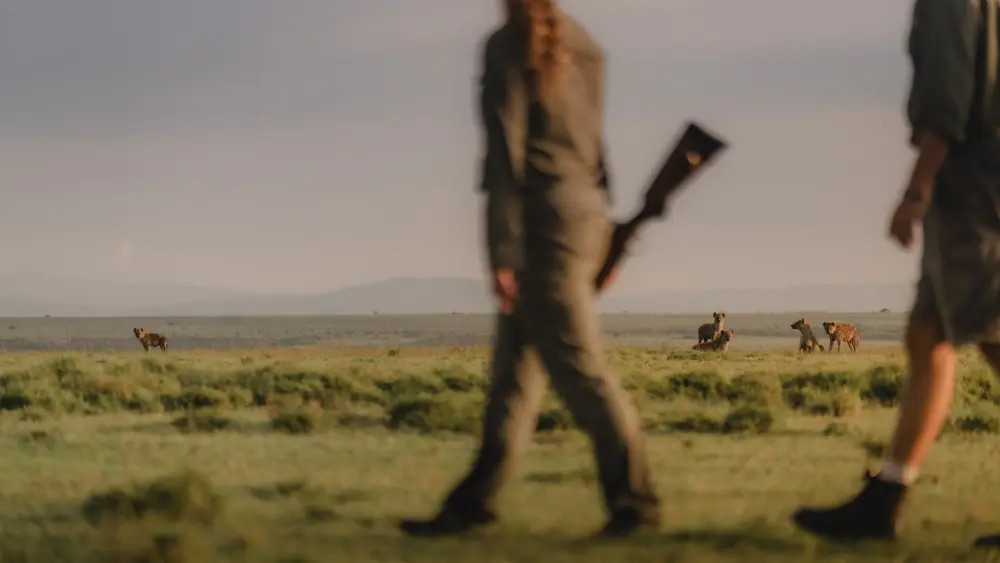
A walk from Naboisho Camp offers a fresh perspective on a landscape that may already feel familiar from the vehicle. With an experienced Asilia guide – often alongside a Maasai guide – guests can learn to interpret tracks, identify plants and understand how people, livestock and wildlife have shared this landscape over generations. It is a chance to experience the conservancy at a slower pace and to see how closely its conservation story is tied to the livelihoods and knowledge of its Maasai landowners.
The wildlife remains as present as ever, but the focus is different. Rather than pursuing a sighting, the walk is shaped by the guide’s reading of the environment. A line of ants, a raptor overhead or the direction of the wind can become the starting point for a much larger story.
Walking in Tarangire from Oliver’s Camp
Further south in Tanzania, Oliver’s Camp has long been associated with walking safaris in a remote part of Tarangire National Park. Set near the wildlife-rich Silale Swamp, the camp is surrounded by a varied landscape of grassland, woodland and seasonal waterways. Here, the scale of Tarangire’s elephant country is particularly striking on foot.
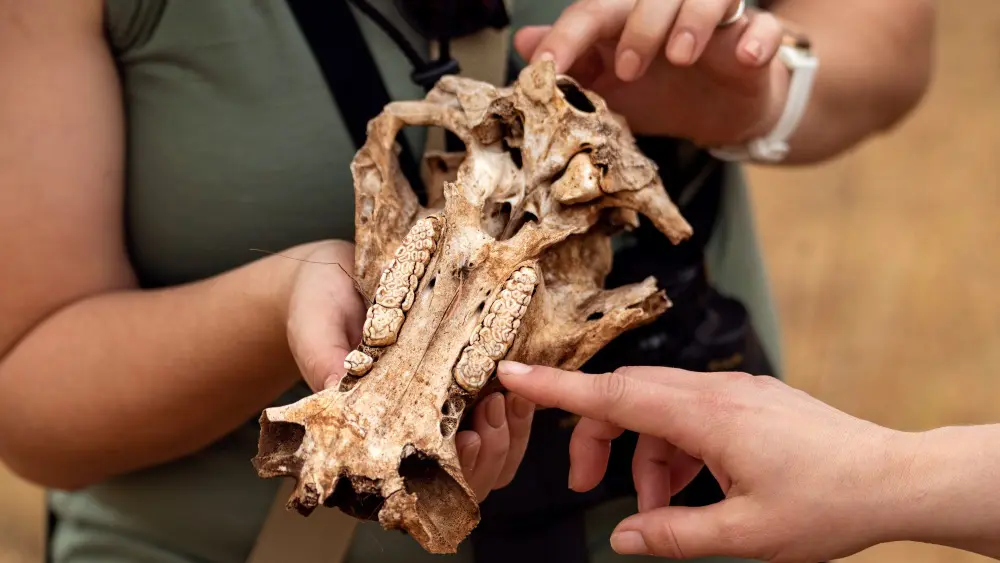
Walking in Tarangire gives guests time to notice the signs elephants leave behind: a path pressed into the earth, bark stripped from a tree, seedpods crushed underfoot and the red dust that gives some of the park’s elephants their distinctive colouring. The park’s plant life is equally compelling, from baobabs and acacias to palms and the varied habitats that support its exceptional birdlife.
The route and pace are always guided by the day’s conditions. In the dry season, wildlife gathers around water and the density of animals can be remarkable. At other times, the changing vegetation, birdlife and light bring their own character. Oliver’s walks are led by experienced Asilia guides and, as a park requirement, accompanied by an armed ranger. Walking here is a reminder that Tarangire is not simply a place to observe wildlife, but a landscape to understand through all the senses.
Southern Tanzania and the value of remoteness
In the more remote landscapes of southern Tanzania, walking can offer an especially powerful sense of perspective. Ruaha and Nyerere are defined by wide spaces, shifting seasons and a feeling of distance from the busier northern circuit. Their river systems, woodlands and open country invite a slower form of exploration, whether on foot, by vehicle or, in Nyerere, by boat.
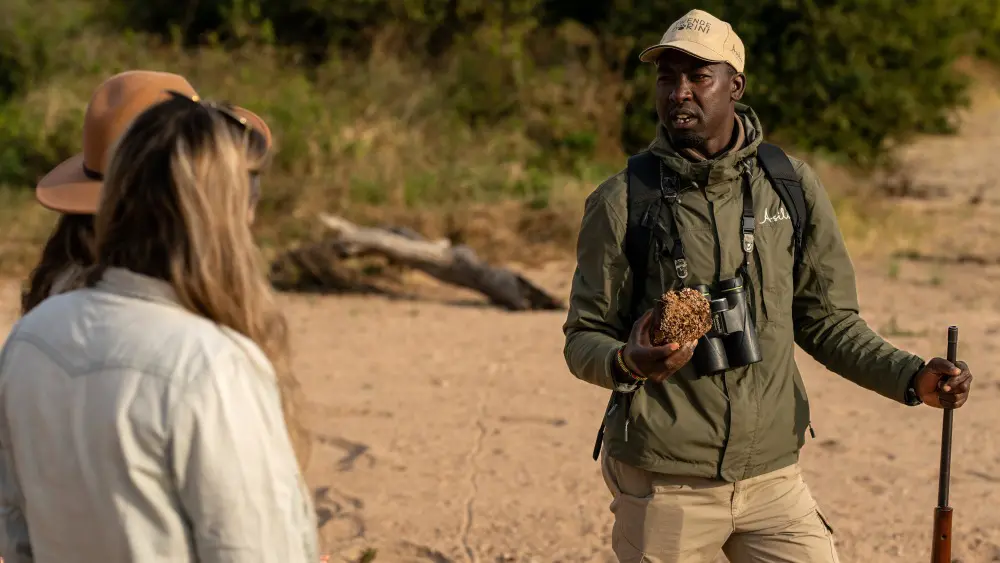
The exact walking opportunities in these regions vary by camp, season and park regulations, but the principle remains the same: leave space for the landscape to lead. A guide may pause beside a waterhole to explain a gathering of tracks, follow a game trail through the grass, or draw attention to the relationship between a tree, an insect and the animals that feed beneath it. These are the details that deepen an understanding of a place long after the safari has ended.
For travellers drawn to a more exploratory rhythm, southern Tanzania is a natural complement to East Africa’s better-known plains. It asks for patience and rewards it with a sense of immersion that is difficult to manufacture.
A different way of seeing
A walking safari does not replace the game drive. It adds another dimension to it. From the vehicle, your guide can cover distance, follow wildlife movement and reveal the wider drama of the ecosystem. On foot, the same landscape becomes more immediate and more detailed. Each experience informs the other.
This is also why good guiding matters so much. A knowledgeable guide knows when to share information and when to allow silence, when to follow an interesting thread and when to change direction. Their role is not to promise a particular encounter, but to help guests understand what is already unfolding around them with respect for wildlife and the people who call these places home.
To walk in East Africa is to accept that the day may not go exactly as planned. That is part of the privilege. With time, attention and the right guide beside you, even the smallest signs can reveal the extraordinary complexity of the wild.
Start planning your East Africa walking safari today