As you arrive at our Encounter Mara camp in Kenya, just after entering the perimeter you may catch a glimpse of something unexpected on your right, our new grow-house.
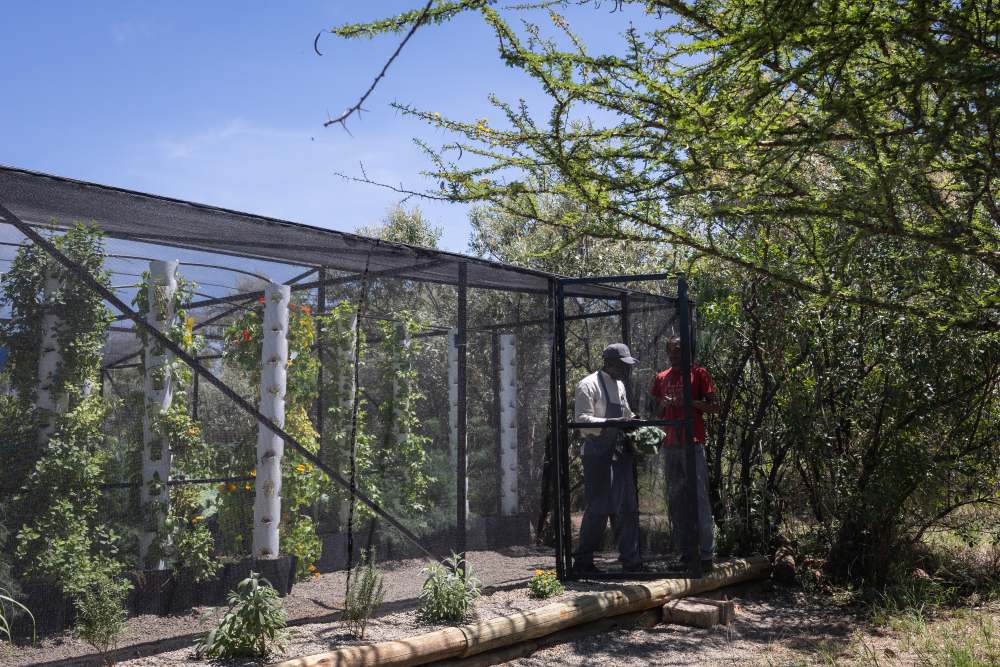
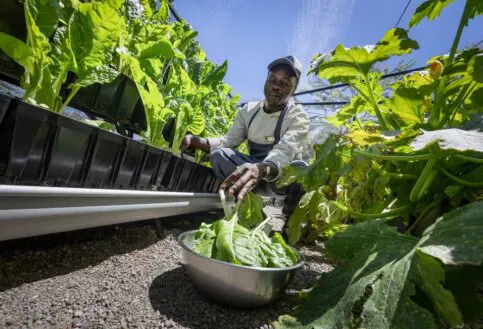
Largely hidden by evergreen Euclea trees it’s not large, but inside it’s dense with colour. Tomatoes, rainbow chard, basil, kale, nasturtium and more stretch upwards from their planting towers. Neat rows of vibrant greens and herbs sway gently in the filtered light.

This is our Vertical Farm. It’s changing how we source, share and serve food in the Masai Mara, and may well shape the future of how we grow food across other camps. Built in partnership with Nairobi-based hydroponics specialist Vertical Gardens Ltd, the farm uses a soil-free system where water is pumped through vertical towers and troughs. The water, enriched with nutrients, flows in a closed loop, constantly recycled through underground tanks. Each plant gets what it needs, with nothing lost to run-off. In this dry and delicate landscape, where every drop of water matters, the setup is clean and efficient, run just using solar power and rainwater.

Inside the greenhouse, more than 26 varieties of vegetables and herbs are cultivated. Leafy greens like kale, spinach, arugula and rainbow chard are joined by peppers, cucumbers, cherry tomatoes, carrots, beetroot, spring onions, courgettes and herbs like parsley, coriander, mint, dill and oregano. There’s even edible flowers. All of it is grown just metres from where it’s eaten.

The produce feeds staff and guests across three of our Kenya camps. At maturity, the farm will supply around 70 percent of the fresh vegetables used at Encounter Mara. It also supports Naboisho and Rekero Camp. Guests from Naboisho can visit the farm too, joining the chef to pick herbs, taste fresh greens, and understand the growing process.
Crops are picked by hand, often just hours before being served. The chef chooses what’s ripe each morning, gathering it into baskets, carefully logging what has been harvested to monitor the yield, before walking back to the kitchen where they’re washed, prepped and served the same day. Guests can visit the farm too, joining the chef in selecting herbs for dinner, or tasting what’s just been picked.

Inside the kitchen, you can see the difference. The chef moves through prep with ease. Ingredients hold their shape. Flavours are cleaner. “These ingredients are a pleasure to work with”, says one of the chefs during a prep session, pointing to the morning’s kale and coriander. “When the produce is this fresh, you don’t need to do much to it.”
The guests notice it too. “You can taste the difference. I’m not a big salad eater but I’m going back for more” said one Encounter Mara guest, after trying a simple dill and cucumber side dish served at lunch. The ingredients had been harvested a couple of hours earlier.

For the garden team, the project has created new energy when it comes to farming. The training involved has introduced new skills and routines. The team tracks pH levels, manages irrigation, monitors growth cycles and rotates crops. Their WhatsApp group with the Vertical Gardens agronomists is a daily touchpoint for troubleshooting and planning.
“People are shocked that you can grow lettuce in the Mara,” says Fred Mwithiga, founder of Vertical Gardens. “But it works. And the taste, the quality, it’s better than anything that’s trucked in from Nairobi.” He talks about simplicity as strength. “Our towers don’t need high tech. They need water, gravity and attention. These systems work because they’re built for the realities of this place.”

Fred started Vertical Gardens with a mission to rethink food production in challenging environments. “We knew food security wasn’t just about quantity. It was about control, freshness and local relevance.”
The design includes three growing systems: towers, crates and troughs. Towers allow high-yield growing in a compact footprint. Troughs support trailing and larger-root crops like beetroot and carrots. Crates are used for fast-growing or smaller greens. Seedlings are propagated on-site in a shaded nursery, grown to a size where they are ready to transplant, and then transferred to their growing station in the grow-house.

The difference this has made is clear. Food is a big part of every safari, and its supply chain has traditionally been one of the most wasteful and emissions-heavy parts of camp operations. While we source what we can from local communities, they don’t produce everything we need. The Vertical Farm at maturity will supply around 70 percent of the fresh produce used at Encounter Mara that normally has had to be sourced from Nairobi. That means fewer delivery trucks crossing the plains, saving fuel, reducing packaging, and avoiding spoilage from produce that arrives tired after hours on the road. The result is less waste, fewer emissions, and more reliable access to quality food in a remote location. It’s better for the environment, better for the kitchen, and better for our guests.
“We didn’t invent the idea of growing food close to where it’s eaten,” Fred says. “But we’ve found a way to make it work in places where people didn’t think it was possible.”

In the Mara, where every action has to be carefully considered for its impact, this is a step that makes sense. The Vertical Farm sits quietly just off the path, its mesh walls barely visible from a distance. It shows what’s possible when we embrace innovative but simple solutions. It allows us to be more sustainable in how we grow, cook, and serve food in wilderness locations, allowing us to deliver high-quality culinary experiences with minimal environmental impact.
Start planning your visit to Encounter Mara, and come experience the fresh flavours of produce grown just meters from the dining table.