Why is Tipping Expected on Safari?
Tipping on safari is customary but never mandatory. When travelling in East Africa, gratuities are a meaningful way to recognise the care, knowledge and effort of camp staff and guides. Safari tipping etiquette in East Africa differs significantly from tipping customs in other parts of the world.
Unlike hotel tipping in Europe or North America, safari tipping in East Africa is usually calculated per guest per day rather than as a percentage of the bill. This often surprises first-time visitors, but it makes sense when you consider how a safari operates. Safari staff work in camps and lodges, often leaving their family for weeks at a time in peak season. Guide and camp teams work closely with you throughout your stay, and your tip is a direct, personal acknowledgement of their dedication.
While base salaries for safari guides and camp teams have improved across the industry, gratuities still represent a significant portion of take-home earnings – particularly for behind-the-scenes staff such as housekeepers and kitchen staff. By tipping thoughtfully, guests contribute to a culture that values and rewards the people who make safari experiences exceptional.

Who Should You Tip on Safari?
A safari experience involves more than just your guide. From waiters to chefs and drivers, many individuals contribute to your experience. Understanding who to tip on safari – and how to tip on safari – can help first-time travellers take the guesswork out of their safari.
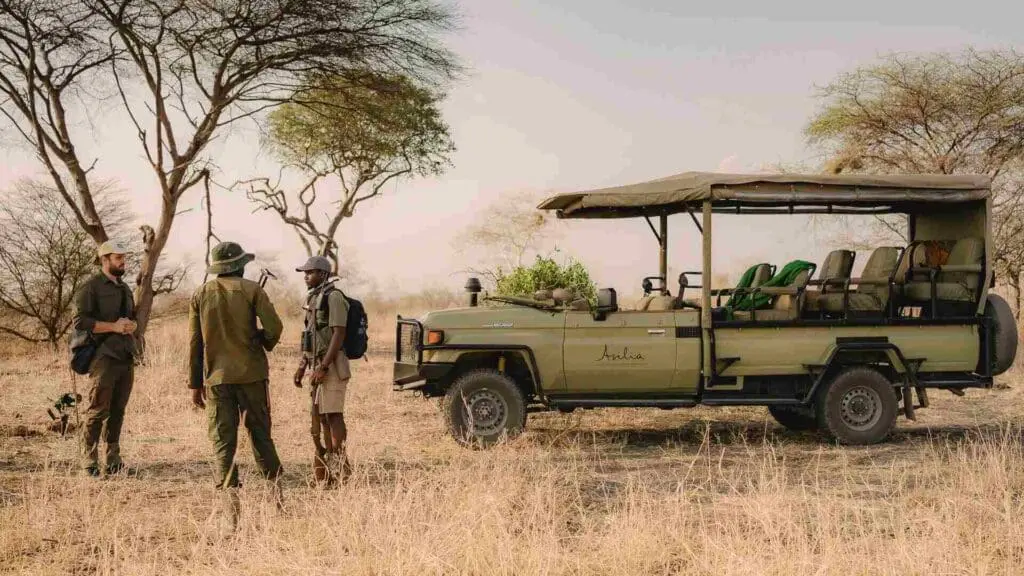
Safari Guides
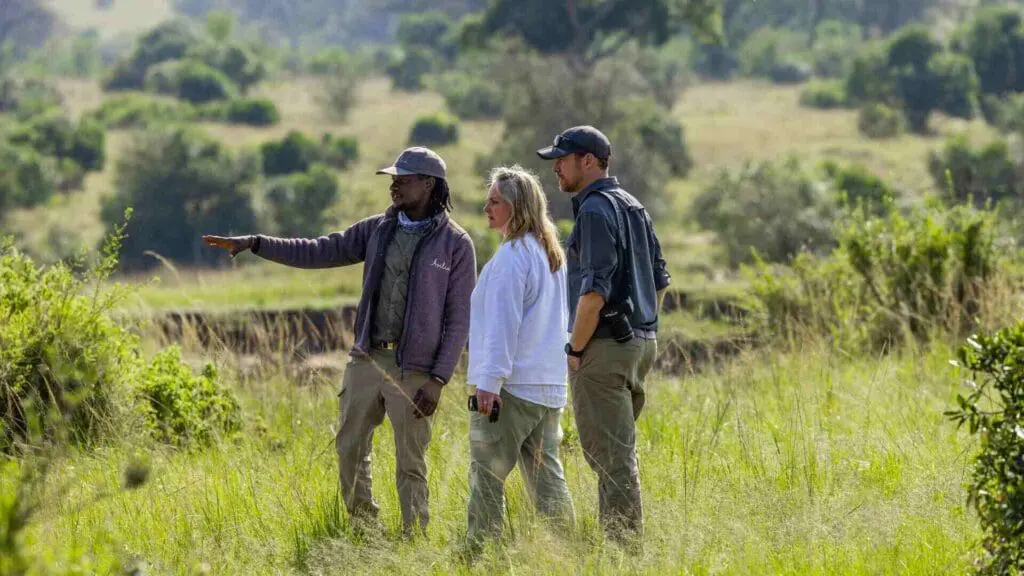
You’ll spend the most one-on-one time with your safari guide during your stay. They play a pivotal role in your safari by acting as your interpreter of the bush. Safari guides don’t just track and point out wildlife, but they have an intimate knowledge of the ecosystem to share with you along the way.
Tipping your guide is customary across virtually all safari destinations in East Africa. Most travellers tip between US$10 and US$20 per guest per day, depending on quality, group size and whether you’re in a private or shared vehicle. Unlike traditional tour guides who you see for a few hours, your safari guide is with you from dawn game drives through to evening sundowners, over multiple days. That sustained personal attention is what makes guide tipping one of the most important parts of safari tipping etiquette.
Tips for guides are usually given directly – in an envelope or by hand – at the end of your stay.
Camp & Lodge Staff
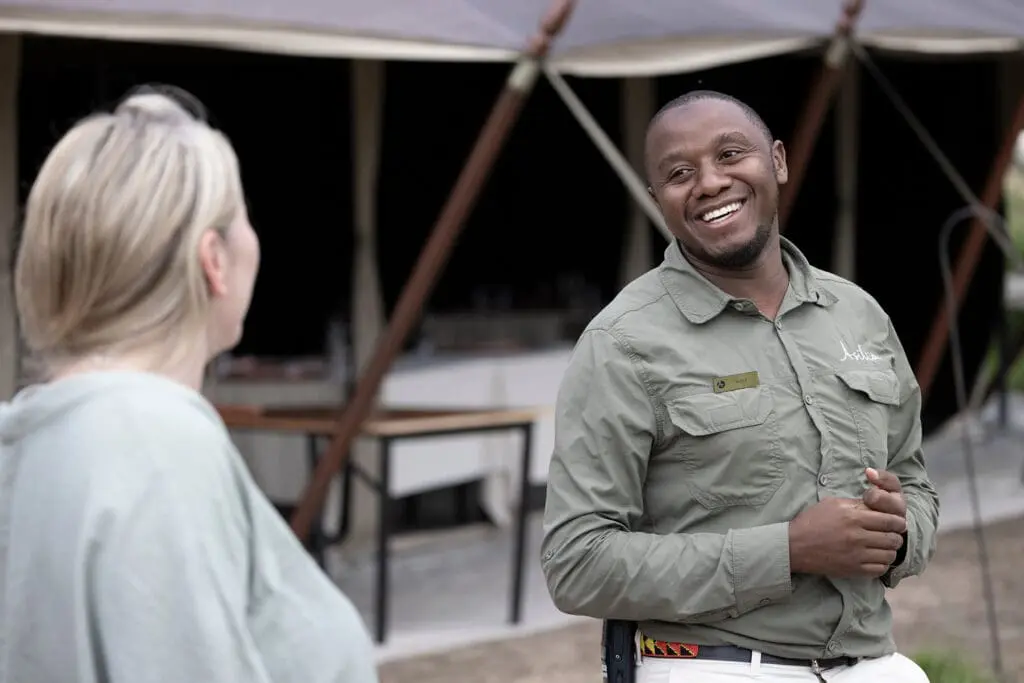
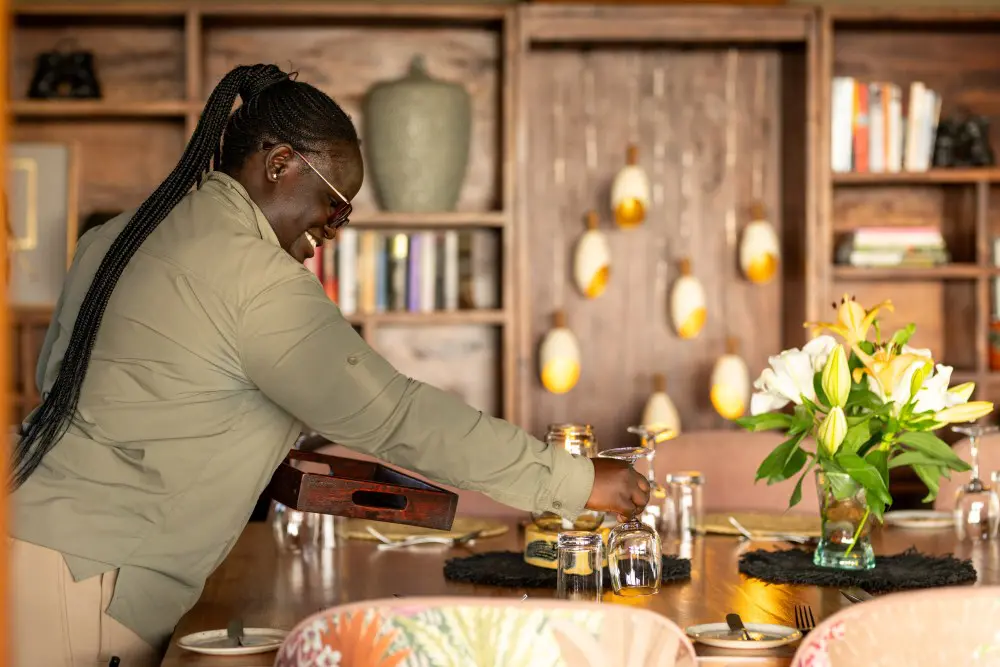
Behind the scenes of your safari is a full team of housekeepers, chefs, bartenders, waitstaff, laundry attendants, and maintenance crew who work tirelessly to ensure your safari runs smoothly.
Most safari camps and lodges have a safari tip box – a communal collection point, usually located near reception or the main lodge areas. Contributions placed in the tip box are pooled and distributed among all staff, ensuring that even those you never see still benefit from your generosity. A typical recommendation is US$5 to US$15 per guest per day for camp staff. If no tip box is available, ask the camp manager to an envelope and for the tip to be distributed among that staff.

Trackers & Rangers
This is an area where safari tipping can feel a bit confusing, because the terms ‘tracker’ and ‘ranger’ refer to very different roles depending on the destination.
A tracker – common in destinations like Rubondo Island and Uganda – is someone who follows primate groups (chimpanzees or gorillas) through the forest ahead of your visit, so that guides know where to take guests. Trackers do physically demanding work, often early in the morning, through dense vegetation. Trackers are seldom seen by guests, despite their essential contribution to the success of gorilla trekking and chimpanzee trekking experiences. A tip of US$5 to US$20 is customary and appreciated.
A ranger, on the other hand, may refer to a park ranger who accompanies you on a gorilla trekking safari, or a ranger who joins a walking safari as an armed escort for safety. Rangers and trackers play a vital role in both conservation and guest safety, and tipping them a similar amount to the trackers is widely practiced.
Transfer Drivers
Transfer drivers are the people who travel between airstrips, lodges, towns, and parks – often covering long distances on bumpy roads. While your time with a transfer driver may be brief compared to your safari guide, their skill and local knowledge should not be underestimated.
A tip of US$2 to US$10 per transfer is standard, depending on the length and complexity of the journey.
Porters
Porters are most commonly encountered during gorilla trekking in Uganda and Rwanda, and Kilimanjaro climbs in Tanzania. During gorilla treks, porters can carry additional camera gear and equipment and provide physical support on steep, muddy trails. On walking safaris, porters are not typically used unless a guest specifically requests assistance with additional camera gear.
A range of US$5 to US$15 per porter is widely accepted.
Restaurant Staff
If your safari includes meals at standalone restaurants – perhaps in Arusha or Nairobi before or after your bush experience – standard tipping etiquette applies. A tip of around 10% of the bill is customary in most East African restaurants, though this may already be included as a service charge. Check your bill before adding extra.
How Much Should You Tip a Safari Guide?
One of the most common questions asked by travellers is: how much to tip a safari guide? The table below summarises recommended safari tipping amounts across different roles. The figures are guidelines based on widely accepted practice across East African safari destinations – actual amounts should reflect the quality of service, your budget, and your personal experience.
| Role | Suggested Tip |
| Safari guide | US$10-20 per guest per day |
| Camp & lodge staff (tipbox) | US$5-15 per guest per day |
| Transfer driver | US$2-10 per transfer |
| Gorilla trekking porter | US$5-15 |
| Rangers/trackers | US$5-20 |
A few things to keep in mind: these amounts are per guest, not per couple or per group. If you’re travelling as a couple and have an outstanding guide, a combined tip of US$20 to US$40 per day reflects the standard range. For private safaris, where the guide’s attention is entirely on you, tipping toward the higher end is a thoughtful acknowledgement.
Safari Tipping Guidelines by Destination
Tipping customs are generally similar across East Africa, although recommended amounts, currencies and safari styles can vary slightly by destination. Here is a brief overview of what to expect in each country.
Tipping on Safari in Tanzania
In Tanzania, tipping on safari is customary at most safari camps and lodges, particularly in premium safari regions like the Serengeti and Ngorongoro Crater. Many camps recommend separate tips for guides and general camp staff, and most properties provide tip boxes for the latter. The per-guest-per-day framework is well established in Tanzania, and US dollars are universally accepted.
Tipping on Safari in Kenya
Tipping practices in Kenya are broadly similar to those in Tanzania, particularly in safari regions such as the Maasai Mara and private conservancies, where guiding standards are exceptionally high. The same per-guest-per-day guidelines apply, and most Kenya safari lodges have communal tip boxes for camp staff.
Tipping in Uganda & Rwanda
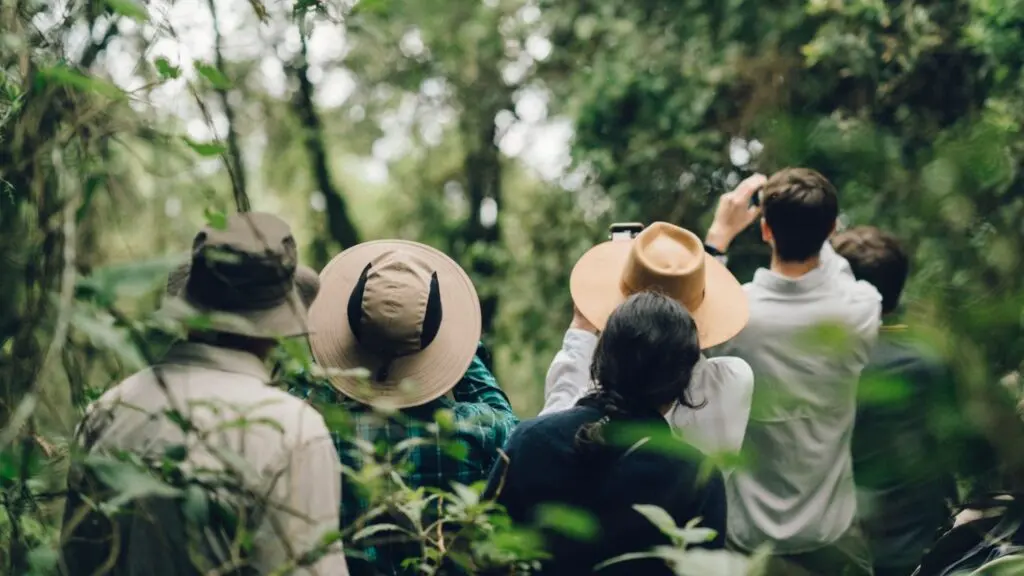
Gorilla trekking experiences in Uganda and Rwanda often involve additional staff, including park rangers, trackers, and porters. Tips are customary and widely appreciated due to the physically demanding nature of trekking experiences. In addition to the standard guide and camp staff tips, budget for porters and rangers separately. Gorilla trekking tips can add US$20 – US$40 per person per trek when you factor in all the supporting roles.
What Currency Should You Use for Safari Tips?
US dollars are widely accepted across East Africa for safari tips in Tanzania, Kenya, Uganda, and Rwanda. This is one of the most practical aspects of tipping on safari in Africa: you do not need to convert to four different local currencies if you are travelling across borders.
That said, there are a few important details:
- Small denominations are preferred. US$1, US$5, and US$10 bills are far more practical than large notes.
- Newer US$ bills are preferred. Many banks and exchange points in East Africa won’t accept US dollar notes printed before 2006, and some will even reject notes that are heavily worn, torn or marked.
- Local currencies are also accepted and often appreciated, particularly for small tips. Tanzanian shillings, Kenyan shillings, Ugandan shillings and Rwandan francs are all perfectly suitable.
- Cash is preferred over cards in remote camps where tips are concerned. While most lodges and hotels process cards for general payments, the vast majority don’t have the ability to facilitate tips via cards.
How to Tip Discreetly on Safari
Knowing how much to tip on safari is one thing; knowing how to actually hand it over is another. Many first-time travellers feel uncertain about the logistics – and that’s completely normal.
Communal tip boxes are the simplest way to tip camp staff. Most lodges place a tip box near reception, the dining area, or the departure lounge. Contributions are pooled and distributed equally among the full team. This eliminates any awkwardness and ensures fairness.
Direct guide tipping is always appreciated. While camp staff tips go through the communal box, your guide is an integral part of your experience and the staff member you’ll have the most contact with.
Envelopes are the standard way to tip your safari guide directly. Many camps provide envelopes at reception for this purpose. Place the tip inside, add a thank-you note if you wish, and hand it to your guide at the end of your stay. This keeps the exchange private and personal.
Tipping at the end of your stay is the most common timing. Rather than tipping daily, most guests wait until their final morning to give tips. This allows you enough time to assess the full experience and tip accordingly.
Digital and card tipping is not yet widely available, particularly in very remote areas. For now, cash remains the most reliable option for safari tips.
Do You Need to Tip on Safari?
Is tipping mandatory on safari? No. Tipping on safari is appreciated but not compulsory. Guests are encouraged to tip according to their experience, budget, and level of service. There’s no obligation, and you should never feel pressured.
How Much Cash Should You Bring for Safari Tips?
This is one of the most practical questions travellers ask, and the answer depends on your trip length, group size, and safari style. Here are some realistic estimates for how much cash to bring on safari trips:
- Couple on a 7-night mid-range safari: Between US$300 and US$500. This covers guide tips (approximately US$140-280 at US$10 – US$20 per day), camp staff tip box contributions (approximately US$70 – US$210 at US$5 – US$15 per person per day), plus transfers and any additional tipping.
- Family of four on a 5-night safari: Between US$400 and US$700. Multiply per-person daily tips across four guests and five days, plus transfers.
- Couple on a luxury 10-night safari: Between US$600 and US$900. Longer luxury safaris at premium properties often come with higher service expectations, and many guests tip toward the upper end of the recommended range.
Bring your tip money in smaller US dollar denominations – mostly US$1, US$5, and US$10 bills. This gives you the flexibility to tip different people at different levels without needing to change.
Frequently Asked Questions
Do you tip safari guides in Africa?
Yes. Tipping safari guides is customary across most African safari destinations, especially in Tanzania, Kenya, Uganda, and Rwanda. Guides are typically tipped directly at the end of a stay.
How much should you tip a safari guide?
Most travellers tip between US$10 and US$20 per guest per day, depending on service quality, safari style, and whether the safari was private or shared.
Is tipping mandatory on safari?
No. Tipping is appreciated but not compulsory. Guests should tip according to their experience and budget. There is no set rule, and no one should feel pressured.
Do safari lodges have tip boxes?
Yes. Many safari camps and lodges have communal tip boxes for housekeeping, chefs, and general staff, while guides are usually tipped separately. The tip box ensures all team members benefit, including those who work behind the scenes.
Can you tip safari staff in US dollars?
Yes. US dollars are widely accepted across East Africa, although local currencies are also appreciated. Bring clean, newer bills in small denominations.
When should you tip on safari?
Most guests tip at the end of their stay. This allows time to assess the full experience before deciding on an amount.
How much cash should I bring for safari tips?
For a mid-range to luxury safari, couples often bring between US$300 and US$800 in smaller denominations for gratuities and incidental spending. The exact amount depends on the length of your trip and the size of your group.