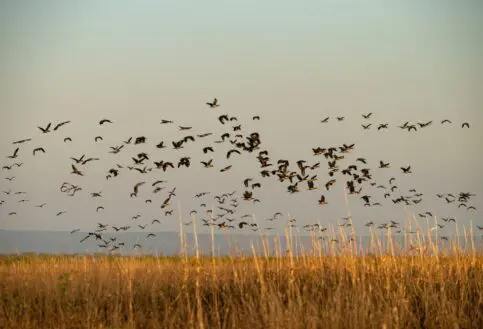
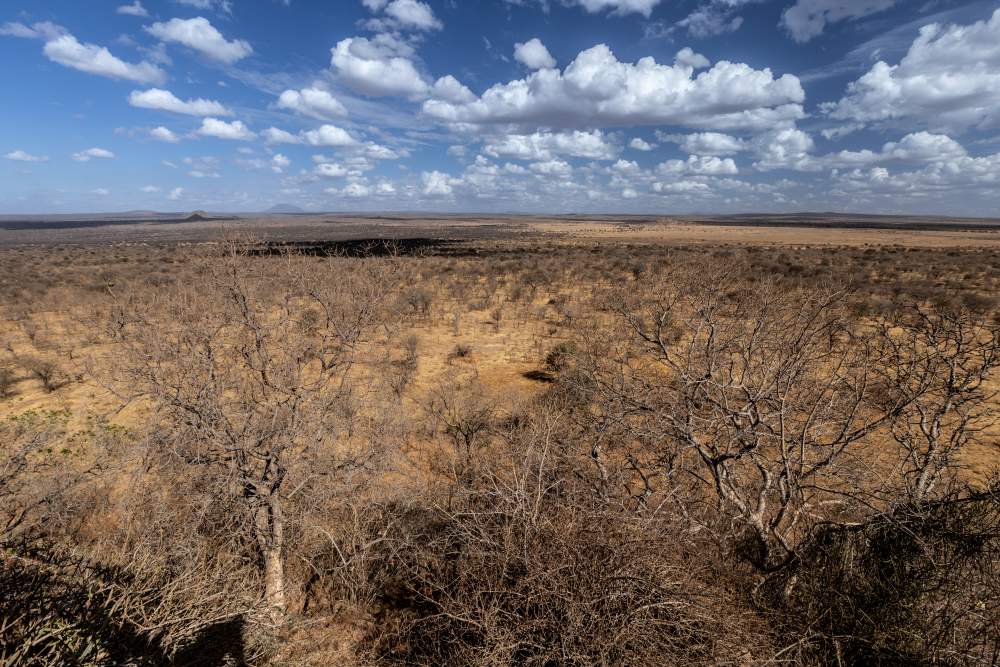
The heat rises early in Randilen, Tanzania. Grass crackles underfoot, dry after months without rain. Through this landscape, Juliana Haghai walks in a pressed green uniform. Tall boots. A wide-brimmed hat. Calm and alert, as she scans the surroundings it’s evident, she knows the place well.
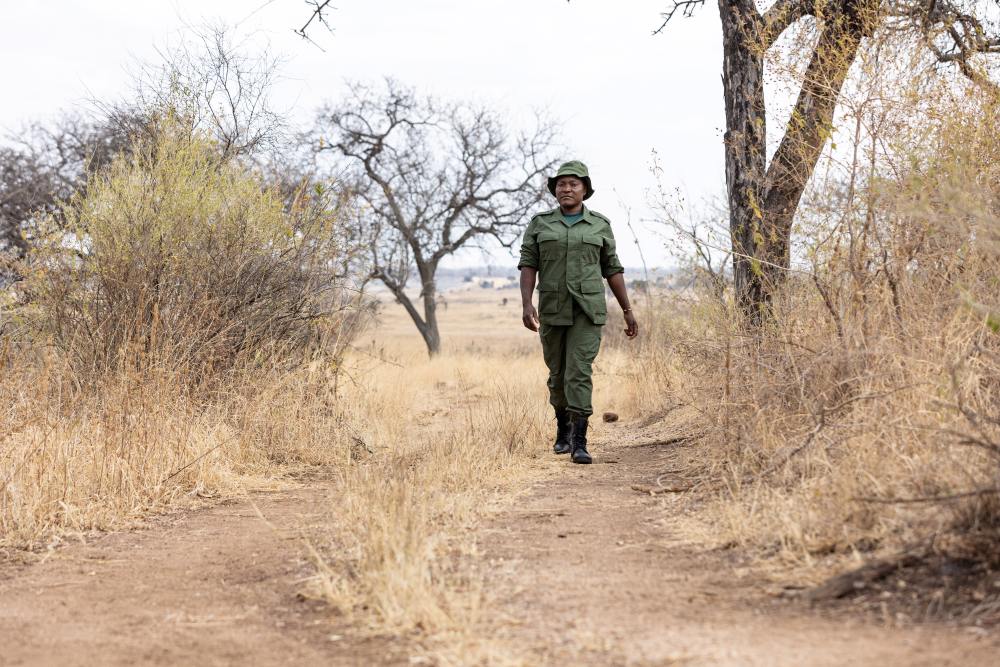
This is part of Juliana’s patrol route. The trail cuts through thorn scrub and open plains, past withered termite mounds and giraffe tracks in the sand. As a ranger her role is about being visible and present. A steady part of the community and the ecosystem they share.
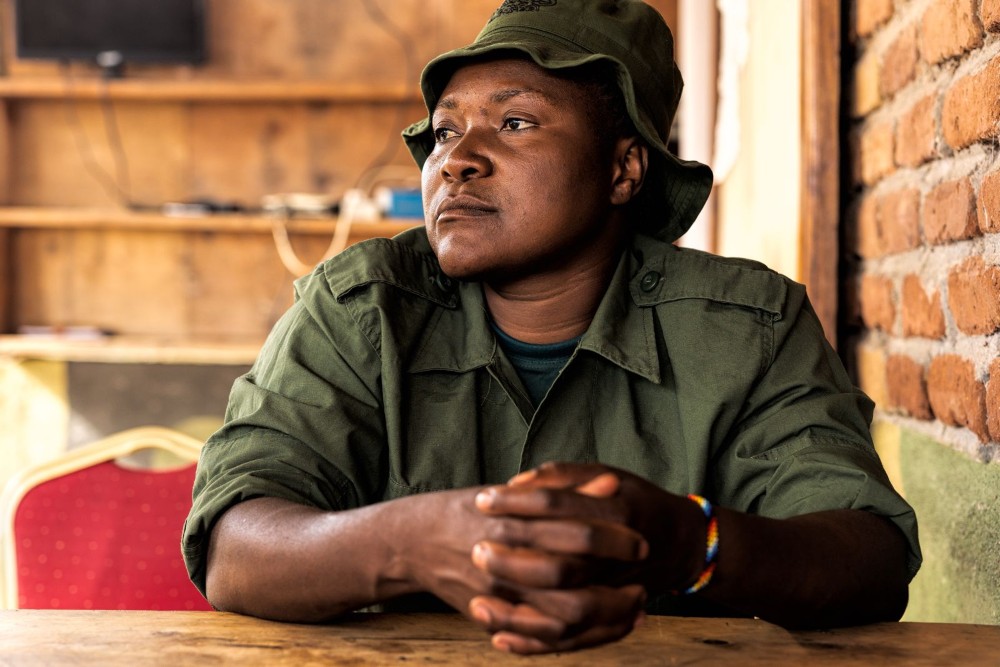
Juliana has been a ranger in Randilen since 2016. She’s 37, a mother, and proud of what she does. “My son knows my work protects the animals,” she says. “And that it helps our home and people too.”
A Different Kind of Ranger Work
Randilen isn’t a National Park. It’s a community-run Wildlife Management Area (WMA), sharing a boundary with Tarangire National Park, where conservation and livelihoods meet on the same ground. The WMA forms a critical buffer and dispersal area for Tarangire National Park, home to Oliver’s Camp. During the wet season, when there is an abundance of available water sources, wildlife can disperse away from the security of the Silale Swamp, spilling into Randilen in search of improved foraging and space. These movements are essential for the health of the ecosystem, especially given the strong elephant population, as it reduces pressure on Tarangire’s core habitats.
Although the wildlife fails to recognise the border between the national park and the WMA, the rangers in Randilen aren’t funded by Tanzania National Parks Authority (TANAPA). They’re trained by organisations like Honeyguide and supported through funds raised through the WMA itself, which in turn is carefully governed and managed by the community. Asilia Africa has supported the protection of Randilen WMA since its early days. In 2007 we helped to establish Honeyguide Foundation and continue to fund their work. Honeyguide is one of our primary impact partners, collaborating with communities to manage WMAs like Randilen. Their focus is on building strong local governance systems, training rangers, and connecting conservation areas to lasting sources of income, from carbon credits to tourism and nature-positive investment. Over the next five years, we’re supporting Honeyguide to expand their work to 15 WMAs across Tanzania, using the same proven model to protect vital ecosystems and improve community-led governance.
Given the community management approach of the WMA, Juliana’s job begins with people. She knows every path and every person who uses them. She checks grazing boundaries, monitors issues that arise from crop-raiding elephants, and listens to concerns about livestock loss or bushmeat hunting.
As a ranger, being alert for poaching is a key part of her role. She says, “The poachers come mostly at night. They bring strong torches, blind the animals, use noise to confuse them. The ones hunting bushmeat, they’re not hunting to eat, it’s for trade.”
But she’s rarely alone in uncovering poachers. Villagers often tip her off. They know who belongs on their land and who doesn’t. That network built on trust and familiarity is one of the most effective tools she has. “You can’t patrol this area by yourself. It’s too big,” she says. “But with the community helping, we know what’s happening.”
She’s talking about over 1500 sq. kilometres of land, patrolled by a small team with limited fuel and resources, and no night-vision equipment. The eyes and ears of the community are the most important tools the rangers have. It has proven effective. Before the WMA was established, the area was losing up to 20 elephants per year to ivory poachers but since the establishment of the WMA and deployment of anti-poaching rangers, ivory poaching has stopped altogether in the area.
Local Knowledge, Local Authority
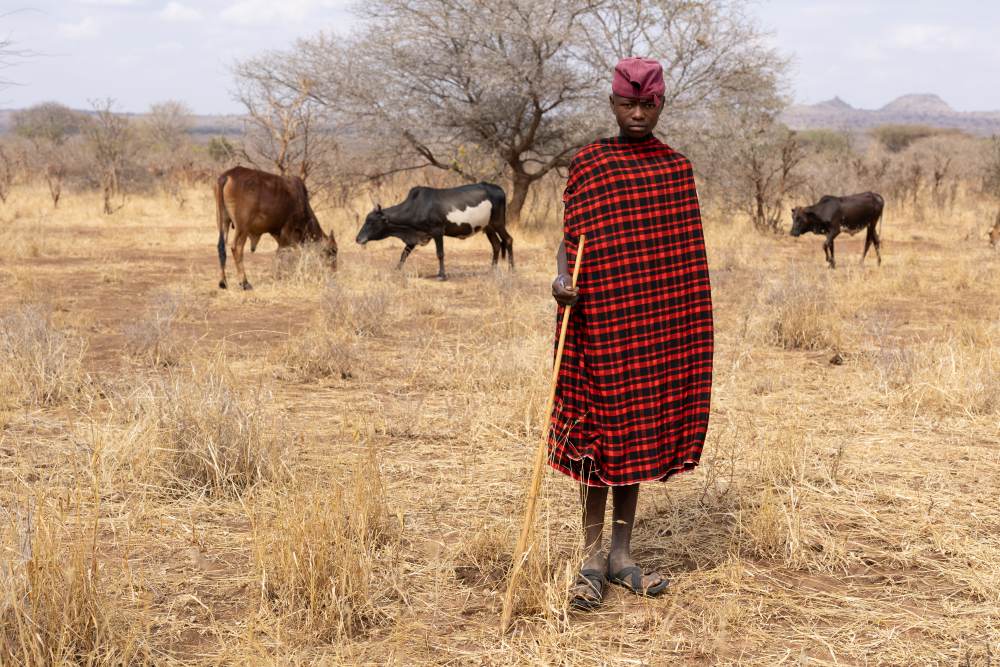
Juliana is from one of the nine villages that help manage Randilen. That matters. She understands the needs of the community and the importance of grazing land. She knows what it means when an elephant tramples your only field of maize. She knows the tracks and who walks them. So, when she approaches a group of herders, it’s not with suspicion. It’s to check if they need help or have seen anything unusual.
Quiet Leadership
Juliana’s favourite animal is the lion. She didn’t say why at first, but later it came out in passing: “It moves like it owns the place.” There’s something in that. Juliana carries herself in a similar way, quiet but firm, calm under pressure.
As a woman in a field still dominated by men, she’s aware of the eyes on her. Especially young girls. “Before, some people said this work wasn’t for women,” she says. “But now they see what it means and that it is possible for females to have this sort of role.”
It’s not without its challenges, and she reflects that some of the people she has to challenge don’t take her seriously because she’s a woman. Some have threatened her. But she’s never backed down. “I’ve never run. I’ve never been afraid. I have training. And I have the community.”

The Work Behind the Uniform
The day starts early. She checks tourist permits at the gate, then heads out to patrol, alert to the movement of people and wildlife, protecting the rangelands from illegal grazing. She’ll stop in a village on the way back, to build relationships or listen to reports of lions or elephant sightings nearby.
When human-wildlife conflict flares up, she’s there. She helps calm tensions and assists farmers in protecting their crops. Ten years ago, 70% of the local communities’ crops were being destroyed by elephants. Today only 7% are damaged.
Much of the role is about talking and listening. Rangers like Juliana link the day-to-day of village life with wider conservation efforts. Growing awareness and collaboration around protecting the land and wildlife is hugely important. The rangers help to show how it brings benefits like tourism revenue, which the village can then use for what they need, such as health clinics or new classrooms.
More Than One Kind of Power
The theme for this year’s World Ranger Day is “Rangers, Powering Transformative Conservation.” That phrase can sound distant. But Juliana lives it.
She doesn’t rely on weapons or authority to make an impact. Her strength comes from consistency and connection.
Her work is about the people who live within this landscape, and the quiet, daily effort to keep those relationships steady. When asked what keeps her going, she shrugged. “I’m proud. This job is worthwhile, it protects my home, supports my family. And it helps the animals I love too.”
By choosing to travel with Asilia, you are choosing to contribute towards the support of organisations like Honeyguide Foundation and their protection of vital wilderness areas and community development. Contact us today to learn more about the Asilia Conservation Charge and how your safari can make a positive impact.