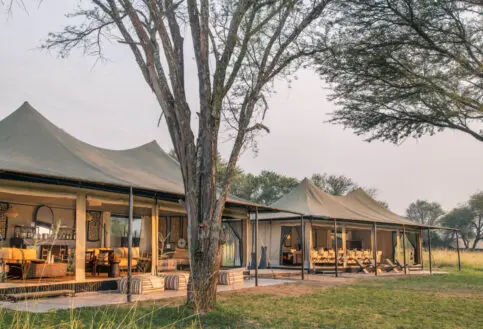
Walking out onto the deck from Emboo’s lounge, the Talek River slips quietly through a ribbon of riverine forest. Sycamore figs stretch broad branches across the water, while fever trees catch the morning light. Vervet monkeys move through the foliage. Birds call from somewhere overhead. It feels shaded, calm, and surprisingly still.
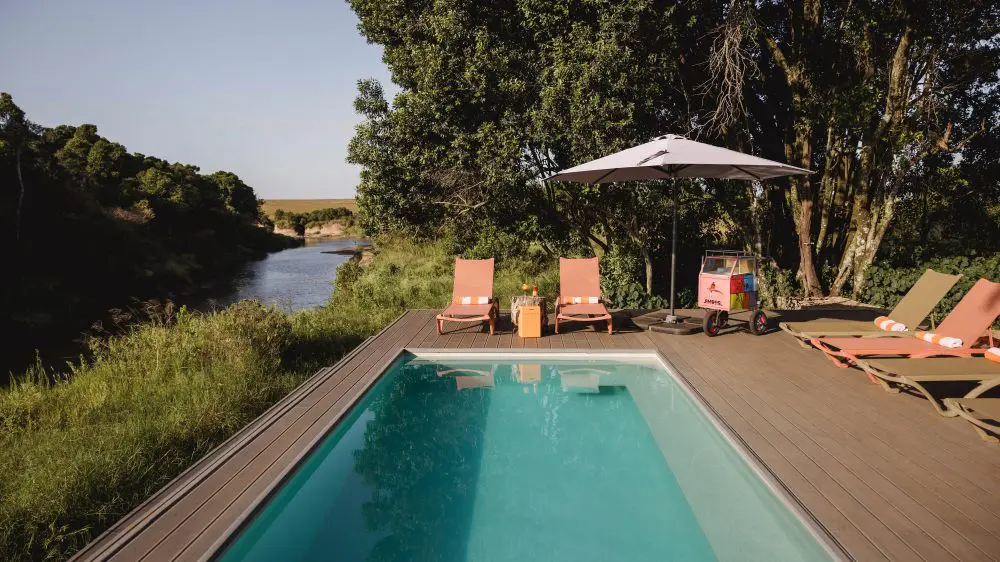
You arrive thinking about wildlife, eager for your first game drive. Sustainability barely crosses your mind as you take in the scene around you, and then someone from the team asks, “Have you looked at the floor beneath your feet?”
It is one of the first surprises on Emboo’s Eco Tour. What looks like hardwood flooring is actually made from discarded cement bags and woven sugar sacks. Materials that would otherwise have been thrown away have been compressed into a remarkably durable floor. Around you, the shelves are lined with green drinking glasses. They look perfectly ordinary until you’re told they began life as discarded glass bottles. Later on the tour you’ll watch someone cut them neatly in half before patiently sanding every rim smooth by hand.

You begin to realise that almost everything around you at Emboo has another story, repurposed, reused, and collectively supporting the sustainability ethos of the lodge.
Leaving reception, the path leads towards the back of house. Along one wall, colourful panels reveal tiny fragments of their previous life. Look closely and you begin to pick out flecks of packaging sealed within the compressed Tetra Pak and recycled plastic. The building itself was a recycling programme.
As you continue, the kitchen comes next. One wall has been transformed by a mural painted by local women. Bold yellows, deep greens, turquoise and pink stand out against the working buildings behind them. It is an unexpected burst of colour in a place most guests never usually see, while also creating work for local artists whose contribution has become part of the camp itself.

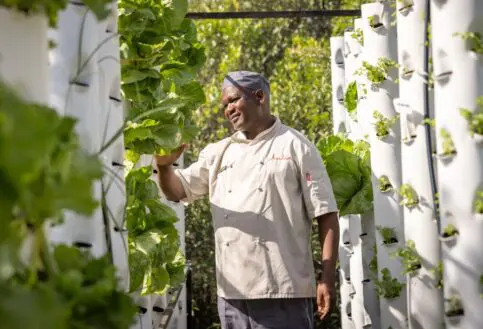
The scent of fresh mint hangs in the warm air before you reach the plants themselves. A dense hydroponic wall grows alongside the path, supplying herbs that later find their way into cocktails and meals. Beyond it, the garden opens into neat rows of white growing towers where strawberries, tomatoes, leafy greens and herbs emerge from volcanic pumice rather than soil. Water circulates through the system in a closed loop, using a fraction of the water needed by conventional agriculture while producing the fresh produce served in camp. The distance from garden to plate is measured in metres.
A few steps further on, another part of the story begins.
Behind a small, fenced enclosure sit the biogas digesters. Every meal served in camp leaves behind peelings, vegetable trimmings and leftovers. Instead of becoming waste, they are fed into the digesters, where they break down to produce gas for the kitchen. Even yesterday’s leftovers have another purpose.
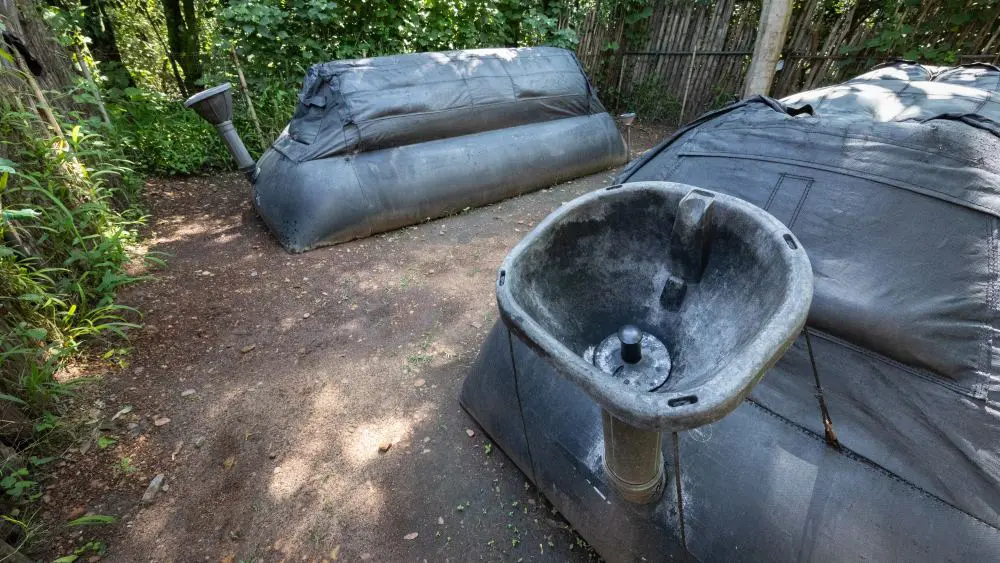
By now you start to notice something else. There is no generator.
The absence of any steady background rumble, whether that is from a generator or diesel motor starting, changes the atmosphere of the camp in ways you hadn’t appreciated when you first arrived. The Talek River sounds louder. Birds seem closer. Wind moving through the fig trees becomes part of the soundtrack.
Living entirely on solar energy requires constant awareness from the team. On bright days, everything runs as normal. When cloud covers the Mara, the team adapt. Extra refrigeration may be switched off, if nobody is using the swimming pool, the pump is turned off. Laundry returns to hand washing where practical. Energy is managed throughout the day, without guests noticing anything has changed.
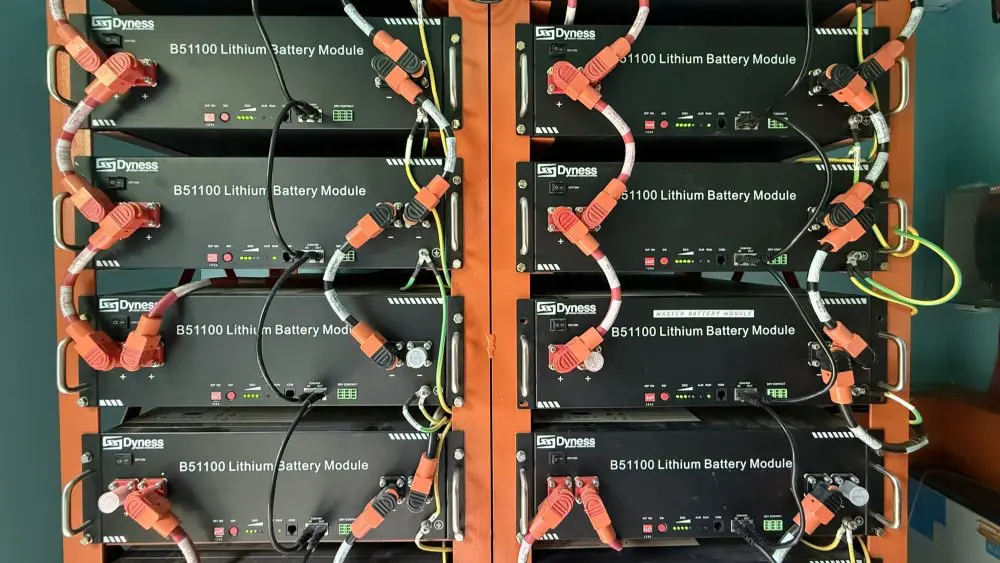
Behind another door, rows of lithium batteries store the electricity collected from the camp’s solar panels. Later, standing beside the solar array itself, it becomes easier to understand how carefully the whole system is balanced. Nothing here is excessive. Energy is generated, stored and used thoughtfully because it has to be. There is no back up.
Before returning to the main camp, the tour stops beside the garage.
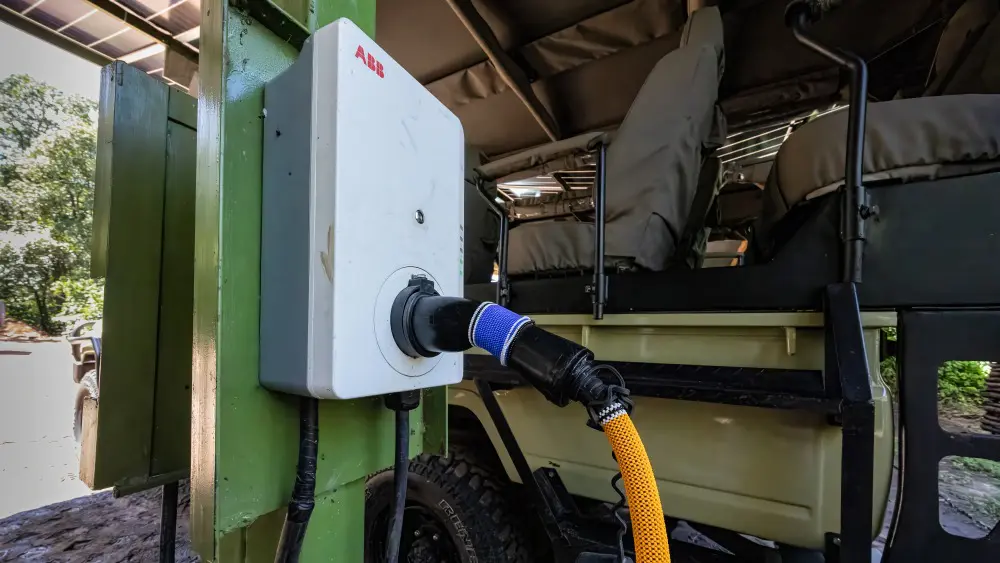
Six electric safari vehicles stand charging, their thick cables finished with brightly beaded Maasai cuffs that soften the industrial hardware with unmistakable local craftsmanship. Each has a different battery capacity, ranging from around 120 to 140 kilometres. In the heart of the Maasai Mara, they do not need huge ranges and batteries seldom return beyond 50% depletion. They simply need enough to spend the day exploring the reserve before returning to recharge.
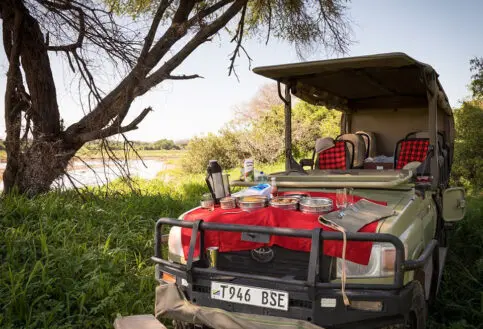
Later that afternoon, as you leave camp, there is no engine to interrupt the sounds of the Mara. The tyres press through the grass with a gentle crunch. Birds continue calling. A grazing impala barely lifts its head. At a wildlife sighting there is no vibration beneath your feet while you wait. When it is time to move on, the vehicle simply rolls forward, almost unnoticed. That silence becomes even more striking after dark, when frogs begin calling from the grasses and insects fill the night with sounds that are so often hidden behind the constant hum of a diesel engine.
By the time you return to the deck overlooking the Talek River, the camp feels subtly different from when you first arrived. The river still flows beneath the same towering fig trees. The same green glass sits beside your chair. The floor beneath your feet hasn’t changed. Only your understanding of it has.
What first appeared to be an elegant safari camp has subtly revealed itself to be something else entirely, a place where hundreds of small decisions shape the sustainability and low impact ethos. The Eco Tour doesn’t ask you to learn about sustainability. It just allows you to see it, woven into the fabric of the camp, often in places you would never have thought to look.
Talk to us about incorporating Emboo Camp into your next Kenya safari.