A safari is largely spent scouring the savannah for members of the illustrious Big Five. But if you ask any seasoned safari goer what really captivates them, they’ll most likely crouch down, point at a trail of cleared earth or a perfectly geometric sand pit, and say: “Look here.”
The Little Five are the intricate cogs of the East African ecosystem. They aren’t large in stature, but what they may lack in physical size, they more than make up for with their unique and fascinating ways. They burrow, build, and engineer on a scale that most visitors don’t see from a game vehicle whizzing past. And that’s exactly why they matter.
At Asilia, our guides are trained in the full spectrum of biodiversity – not just finding big cats, but reading the textures, sounds, and subtleties of the bush. The Little Five are their quiet obsession. And once you see what they see, the savannah will never seem the same again.

What Are the Little Five? A New Perspective on Safari
The term ‘Little Five’ was coined by conservationists with the intention of redirecting the spotlight. For decades, the Big Five – lion, leopard, buffalo, elephant, and rhino – dominated the safari narrative. They were the checklist, the epic photograph, and the reason to book the trip. But the African ecosystem is a delicate web, and the smallest creatures within it are just as vital as the largest.
The Little Five – the elephant shrew, the rhino beetle, the antlion, the buffalo weaver, and the leopard tortoise – were chosen as their namesakes’ counterparts to make a point: if you want to understand Africa, you need to look closer.
Where the Big Five are about adrenaline and scale, the Little Five are about observation and patience. It’s the difference between a ‘drive-by’ sighting and an immersive East Africa micro-safari – one that rewards stillness, curiosity, and a willingness to kneel in the dust.
The Evolutionary Parallel
The connections between the two groups run deeper than a clever name. They share genuine biological and ecological threads:
The elephant shrew shares a common ancestor with the African elephant. Both belong to the ancient superorder Afrotheria – a lineage that evolved on the African continent over 100 million years ago. It’s one of the most surprising branches on the tree of life.
The leopard tortoise carries markings that mirror the rosette patterns of the leopard – geometric, precise, and perfectly adapted for blending into the dappled light of the bush.
The rhino beetle wears the same ‘armour-plated’ persona as the rhinoceros. Proportionally, it’s one of the strongest creatures on earth – capable of lifting objects many times its own body weight.
This is the philosophy behind the Slow Safari. At camps like Sayari and Oliver’s, the goal isn’t to check a box. It’s to understand the small-scale engineering that keeps the savannah healthy – the tunnels, the nests, the sand traps, and the quiet migrations happening right beneath your feet.
Meet the Marvels: The Small but Mighty Stars
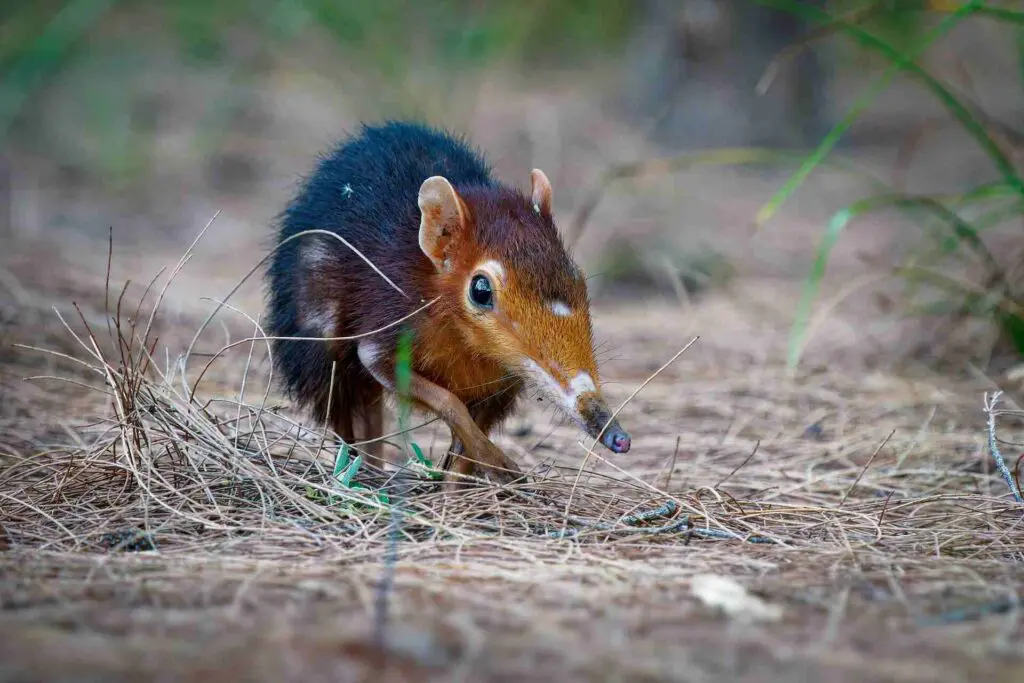
The Elephant Shrew (Sengi): A Tiny Titan with Ancient Roots
With a twitching, trunk-like nose and legs built for speed, the elephant shrew – or sengi – is one of East Africa’s most charismatic micro-mammals. Despite weighing less than half a kilogram, sengis can reach speeds of nearly 30kph, darting along cleared pathways they meticulously maintain through the undergrowth. They are creatures of habit and engineering, sweeping their trails free of debris so nothing slows their escape from predators.
Their presence in the coastal forests and dense thickets of Nyerere National Park makes them a rewarding find on guided morning walks – if you’re paying attention. Look for their telltale trail: a narrow, swept line through the lead litter, almost impossibly neat.
Are there elephant shrews in the Serengeti? While the Serengeti’s open grasslands aren’t their preferred habitat, they can be found in the rocky kopjes and woodland fringes at the ecosystem’s edges. For the best chance, head south.
Where to spot them: Roho ya Selous – perfect for encountering sengis on intimate morning bush walks through the miombo woodland.
The Rhino Beetle: Pound-for-Pound Strength
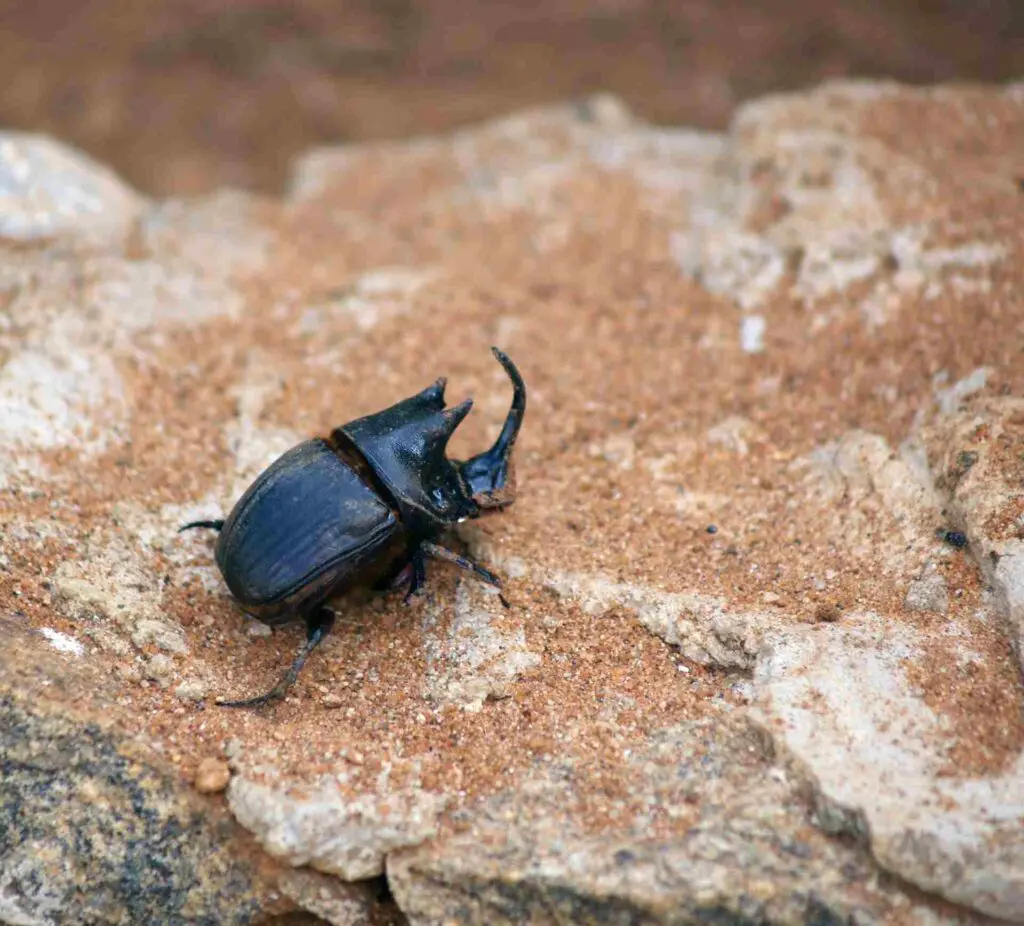
The rhino beetle earns its name honestly. Males sport a curved horn that they use in combat – shoving and flipping rivals in disputes over territory and mates. They can also carry up to 850 times their own body weight. Proportionally, that makes them one of the strongest animals on the planet. To illustrate, if you were that strong, you’d be able to lift around 65 tonnes.
Rhino beetles are best seen after the rains, when they emerge from the soil where they’ve spent months as larvae, slowly decomposing organic matter and cycling nutrients back into the earth. They are, in essence, the recyclers of the savannah, quietly doing their essential work.
Where to spot them: Sayari Camp – excellent for insect diversity during the green season, when the northern Serengeti hums with life.
The Antlion: The Master of the Sand Pit
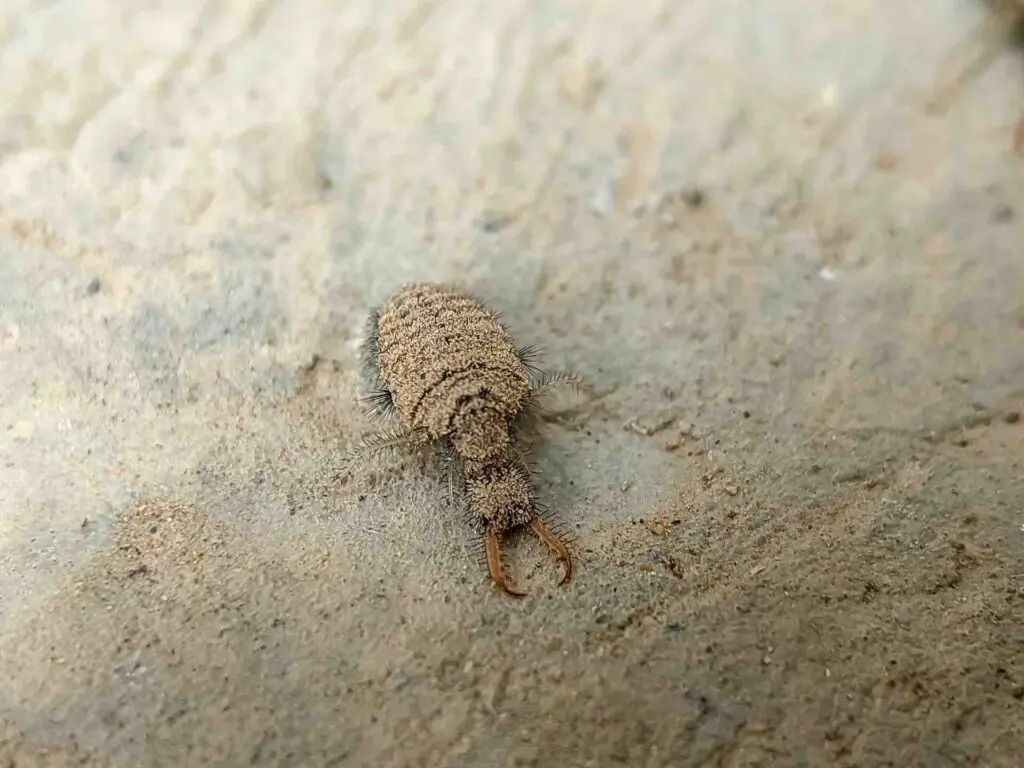
If you’ve ever noticed a small, perfectly conical pit in sandy soil and wondered what made it, you’ve found an antlion’s trap. The larval antlion excavates these funnels with extraordinary precision, then buries itself at the bottom and waits. When an ant stumbles over the edge, the loose sand collapses, pulling the prey down into the antlion’s jaws. It’s ambush engineering at its finest.
The antlion life cycle is a story of patience and transformation. Larvae can spend years in their sand pits before pupating and emerging as delicate, lacewing-like adults. Antlions are a hit with our younger guests; children are fascinated by the idea of an insect that builds a trap and waits.
Where to spot them: Namiri Plains – where the sandy soils of the eastern Serengeti are ideal for antlion pits. Your guide will show you how to coax one out with a blade of grass.
The Buffalo Weaver: Architects of the Bush
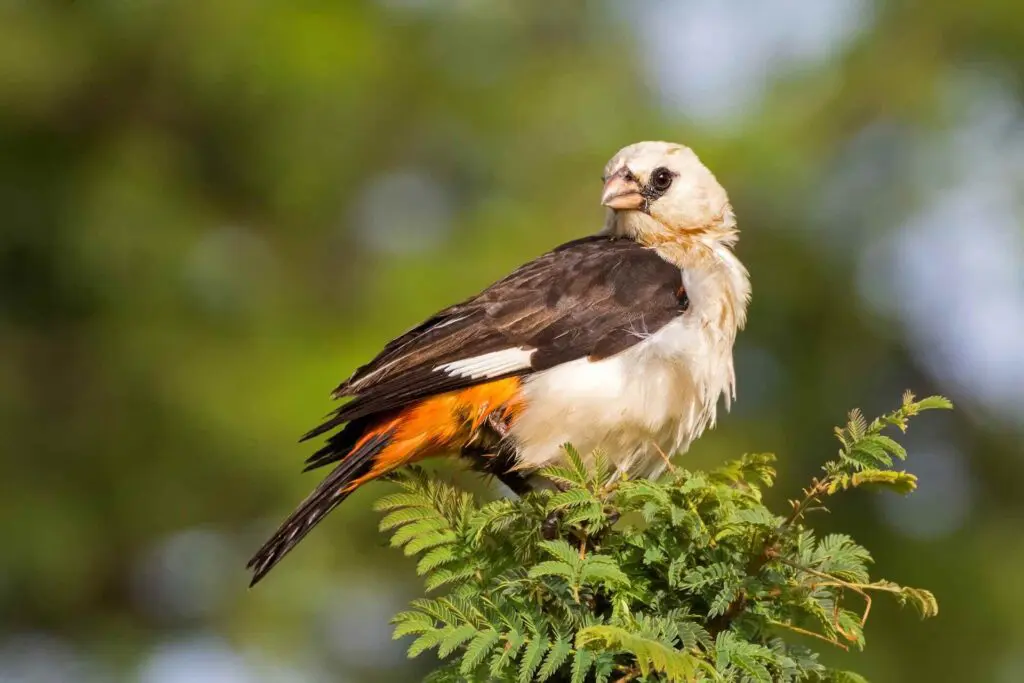
The red-billed buffalo weaver is an industrious bird. They’re communal nesters that build enormous, messy stick structures – sometimes large enough to fill an entire tree canopy – that house multiple breeding pairs. Their colonies are loud, busy, and endlessly entertaining to watch.
Their name comes from a behaviour rather than a physical resemblance: buffalo weavers follow herds of African buffalo, feeding on the insects disturbed from the grass by the heavy grazers. It’s a neat ecological partnership – the buffalo enjoy free pest control, and the weavers get an easy meal.
Tarangire National Park, with its ancient baobabs and dense populations of large herbivores is a birdwatcher’s paradise. The massive weaver colonies here are among the most impressive in East Africa, and the park offers some of the best bird watching safaris in Tanzania.
Where to spot them: Oliver’s Camp – set in the heart of Tarangire, where the weaver colonies are hard to miss, and the birdlife is extraordinary.
The Leopard Tortoise: A Living Pattern of the Savannah
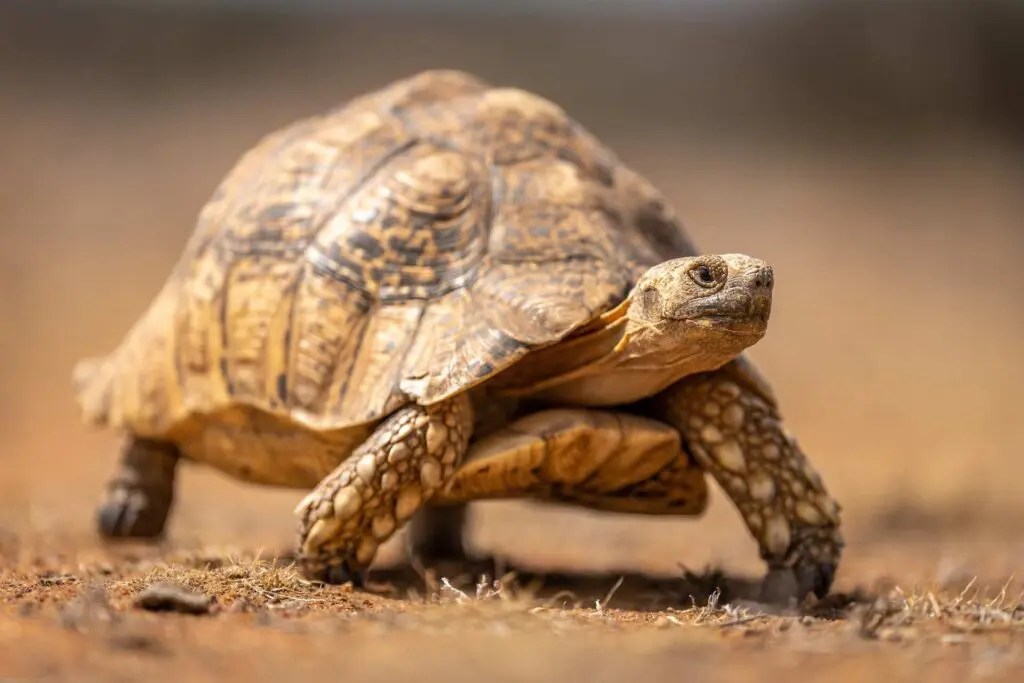
The leopard tortoise is the largest of the Little Five and possibly the most frequently encountered. Named for the bold, black-and-gold rosette pattern on its domed shell, the leopard tortoise is a grazer, feeding on grasses, succulents, and fallen fruit.
They’re often found crossing the track early in the morning, basking on the warm earth, or tucked among the scrub – the kind of sighting that rewards those who are prepared to slow the pace of their game drive.
Where to spot them: Ol Pejeta Bush Camp – the conservancy’s varied terrain, from open savannah to riverine forest, is a stronghold for these gentle reptiles.
The Micro-Safari Experience: Why Look Down in East Africa?
Something magical happens when you leave behind the engine noise and step into the wild on foot. Suddenly, you hear everything – the crunch of the dry grass under your boots, the rustle of something small moving through the scrub. The breeze carries the scent of sun-warmed earth and recently trampled wild grasses.
This is a micro-safari. The ‘micro’ doesn’t mean it’s a lesser version of the ‘real’ safari. It refers to a new lens through which you view the wild. You won’t see the Little Five from a vehicle. You need to be on foot, walking with a guide who knows where to look, what to listen for, and when to stop.
The best walking safaris for spotting micro-fauna are those that slow the pace deliberately. It’s less about distances to be covered and more about examining the ground closely. The Ngorongoro Highlands, with their mossy ravines and cool volcanic soils, offer a startling contrast to the endless plains of the Serengeti. The Greater Mara ecosystem, where savannah transitions to riverine thickets and rocky outcrops, is another prime spot for those willing to trade speed for depth.

Frequently Asked Questions About Africa’s Little Five
The Little Five consists of the elephant shrew, the rhino beetle, the antlion, the buffalo weaver, and the leopard tortoise. Each was named to correspond with one of the famous Big Five.
The Little Five can be found across Tanzania and Kenya, but they are best spotted on walking safaris in diverse habitats. Tarangire National Park is excellent for buffalo weavers and leopard tortoises, while the sandy tracks of Nyerere National Park are perfect for encountering antlions and elephant shrews.
Yes -and it’s one of the most surprising facts in African zoology. Recent genetic studies place elephant shrews in the superorder Afrotheria, making them more closely related to elephants, manatees, and hyraxes than to true shrews. The elephant shrew facts don’t stop there: they’re also one of the fastest small mammals in Africa.
It’s not impossible, but difficult. The Little Five are ground-level creatures. They burrow, build in low scrub, and move through the undergrowth. To see these marvels, a guided bush walk is the way to go. Being on foot allows you to focus on the tracks, nests, and behaviours that are simply not visible from a vehicle.
The Little Five play critical roles in the environment. Rhino beetles help decompose organic matter and recycle nutrients. Antlions control insect populations. Buffalo weavers disperse seeds and manage pest insects around large herbivore herds. Without them, the savannah’s nutrient cycles would falter, eventually affecting the survival of the Big Five themselves.
A micro-safari is a walking-based safari experience focused on the smaller wildlife, plants, and ecological processes that most visitors overlook. Rather than covering long distances by vehicles, a micro-safari slows the pace and shifts the focus to biodiversity at ground level. You’re called to look closer at insects, reptiles, birds, tracks, and the intricate systems that sustain the larger ecosystem.
If you’re ready to kneel beside a termite mound, to wait for the beetle to emerge, or to follow a trail of swept earth to its maker, contact us today to begin planning your micro-safari.