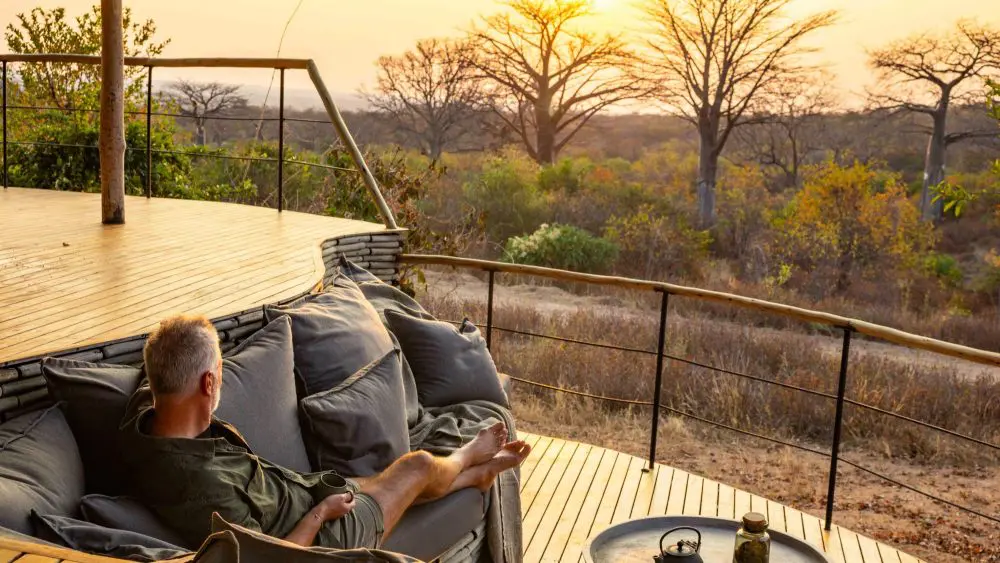
In Ruaha, during the dry season our guides know to watch the water. From Jabali Ridge, set among granite boulders perched above the surrounding miombo woodlands and baobab forests, an afternoon game drive may lead down towards the seasonal Mwagusi River. By then, the heat has begun to loosen its hold on the day. The light turns copper along the sand and catches in the dust behind the vehicle.
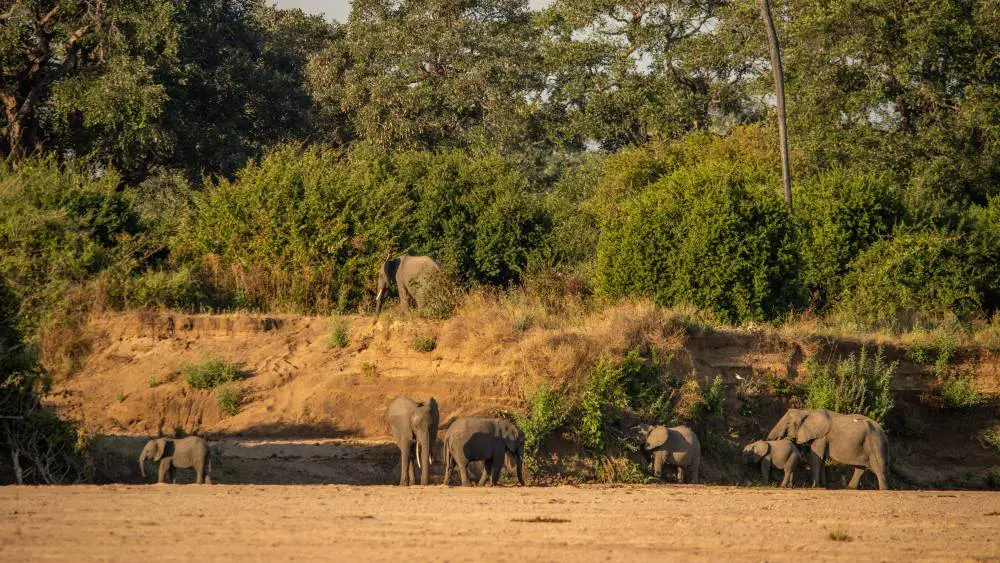
Across the dry riverbed, elephants appear. They travel without hurry, adults surrounding younger calves as they cross the open ground. Their feet press deep, round tracks into the sand. Trunks move over the surface, searching out scents we cannot read. For those watching from the vehicle, the moment contains much of what draws people to safari. The stillness, the scale of the animals and the sense of being briefly admitted into another creature’s day.
Ruaha is one of Tanzania’s great elephant landscapes. During the dry months, wildlife gathers around the few remaining sources of water. Elephants move between the river, seasonal pools and places where they know water can still be found beneath the earth. Their journeys make for extraordinary sightings as a herd emerges from the woodland or passes through a riverbed at sunset.
Water draws the whole landscape towards it. Beyond the protected area, that same movement has a different meaning. The routes followed by elephants extend across boundaries that exist on maps but are absent from the land itself. Some now pass close to villages and farms. An elephant seeking water may arrive beside a field, a food store or a temporary well dug by a family.
Doroto village lies at the end of miles of dirt road near Muhesi Game Reserve in Manyoni District, central Tanzania. Rainfall is low and unreliable. During the dry season, dust settles over the land and permanent water becomes difficult to find. Villagers dig down into the earth and draw what they can for drinking, cooking and washing.
Elephants come looking for the same water. For people living here, their arrival can bring the loss of crops, damage to water points and long periods of uncertainty. An elephant admired from a safari vehicle feels very different beside the harvest on which a family depends. People in Doroto do not romanticise coexistence. Elephants are part of the landscape around them, but sharing that space carries a cost.
On 24 July 2026, the Executive Officer of Doroto Village contacted the wildlife authorities. An elephant calf had slipped into a temporary well in the Darabetaa area adjacent to Muhesi Game Reserve.
The calf was about eight months old. It could not climb the steep, muddy sides. Its mother remained nearby, reluctant to leave, while the village temporarily lost access to a source of water it needed.
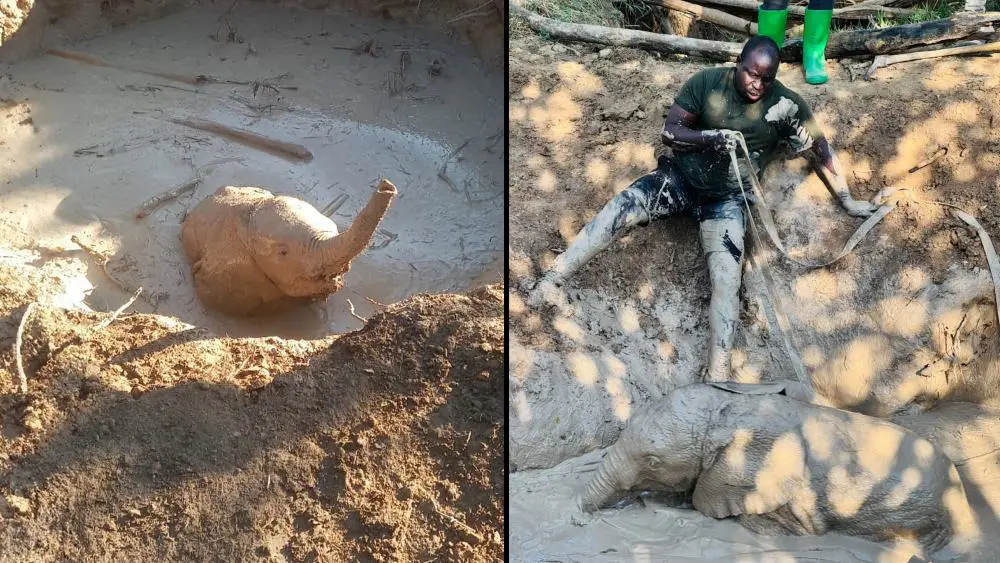
Rangers from the Tanzania Wildlife Management Authority arrived with a Local Elephant Monitor and specialist equipment supplied by the Southern Tanzania Elephant Program, known as STEP. The rescue equipment had been purchased using funding in-part generated through guests staying at Asilia’s camps.
The team separated into three groups. One worked at the well. Another watched the surrounding bush and the elephants nearby. The third followed the herd’s tracks, so that the calf could be returned as soon as it was free.
Rangers used sound deterrents to create enough space to work around the well safely. Broad straps were fitted around the calf and its weight carefully supported as it was raised from the mud.
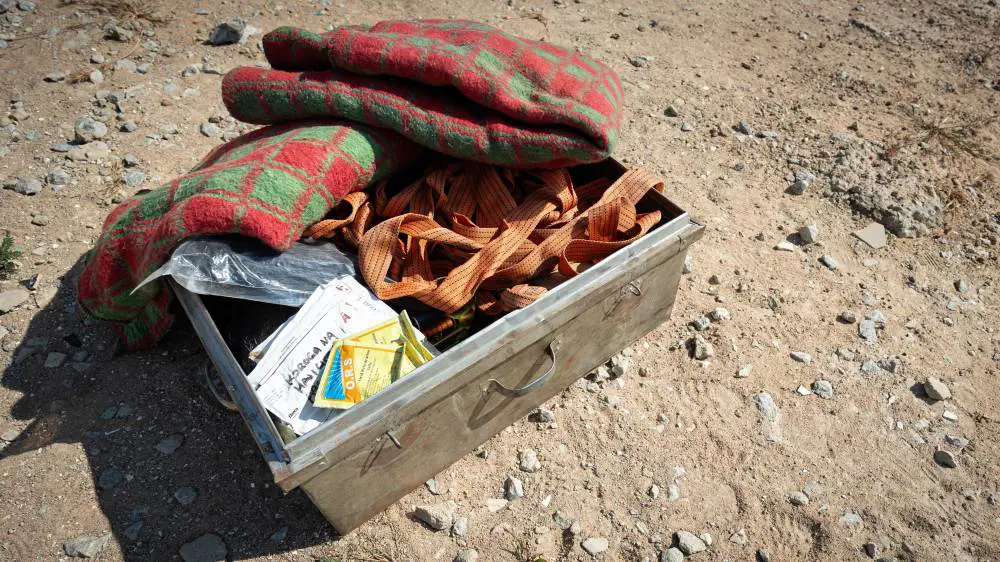
The equipment is made for young elephants found in exactly these circumstances. The kit contains heavy-duty belts, a metal support rod and blankets for calves that have spent a long time getting cold in water. The response vehicle also carries a mattress, feeding bottles and electrolytes that can be mixed with warm water. Rangers are trained to fit the straps correctly and support the animal throughout the lift.
Once the calf was out, one group remained with it while the trackers continued into the dense vegetation. They followed the footprints and other signs left by the elephants until they found the herd in nearby woodland.
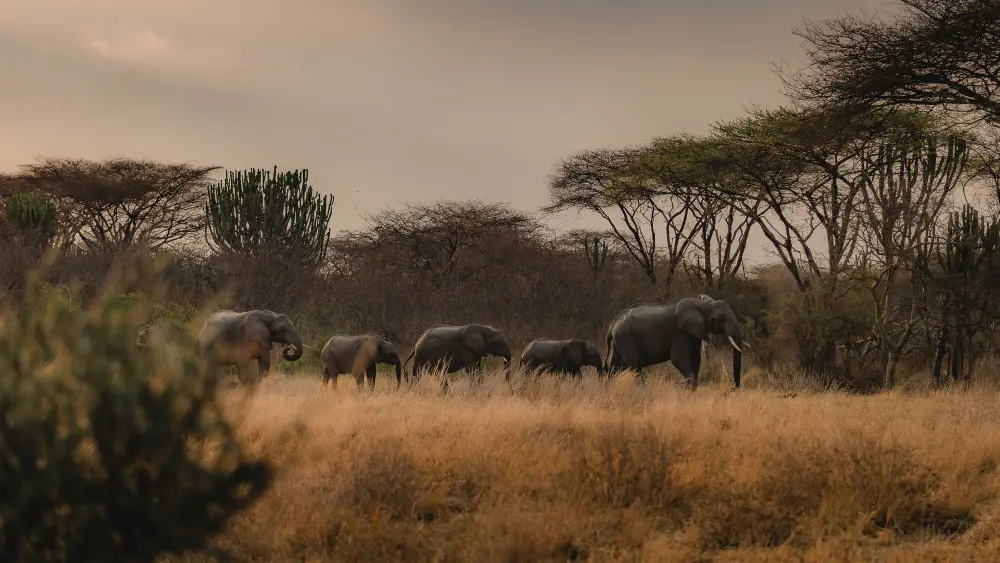
The calf was taken towards them and released. It returned to its mother and family. The elephants moved on and the villagers could use their well again.
STEP has worked in southern Tanzania since 2014, supporting elephant research, protected areas and communities living close to elephant habitat. Around Kizigo and Muhesi Game Reserves, its Local Elephant Monitors share information about elephant behaviour, record activity on village land and help connect residents with wildlife authorities when assistance is needed.
Every guest who spends a night in an Asilia camp helps support work of this kind, supporting our partnership with STEP allowing us to fund local organisations working in the ecosystems through which our journeys pass.
A safari gives us a few hours in the company of elephants. We see them cross a riverbed, gather around water or disappear among Ruaha’s baobabs as the light falls. The impact of our travel also connects us to what happens beyond that sighting, in the villages and farms where the same elephants continue to move and people work to make room for both.
Every guest that travels with Asilia helps to support these and other conservation initiatives.