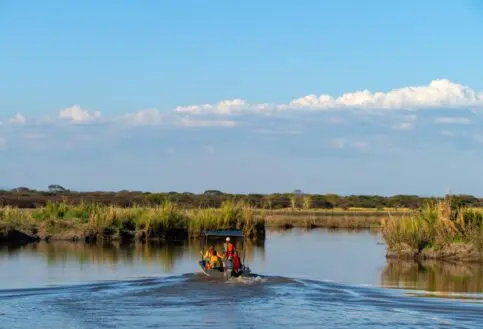
As we build towards Giving Tuesday, we continue to shine a spotlight on the partners and projects we work alongside and support throughout East Africa. Our partners are supported by every guest that spends a night in an Asilia camp, as well as through the Asilia Giving platform which combines contributions made by Asilia with private donations from individuals.
We work with multiple impact partners in southern Tanzania on a range of different projects. As part of this series we are focusing on one of our newer partners operating in the far south of Tanzania.
Regenerating Land and Livelihoods
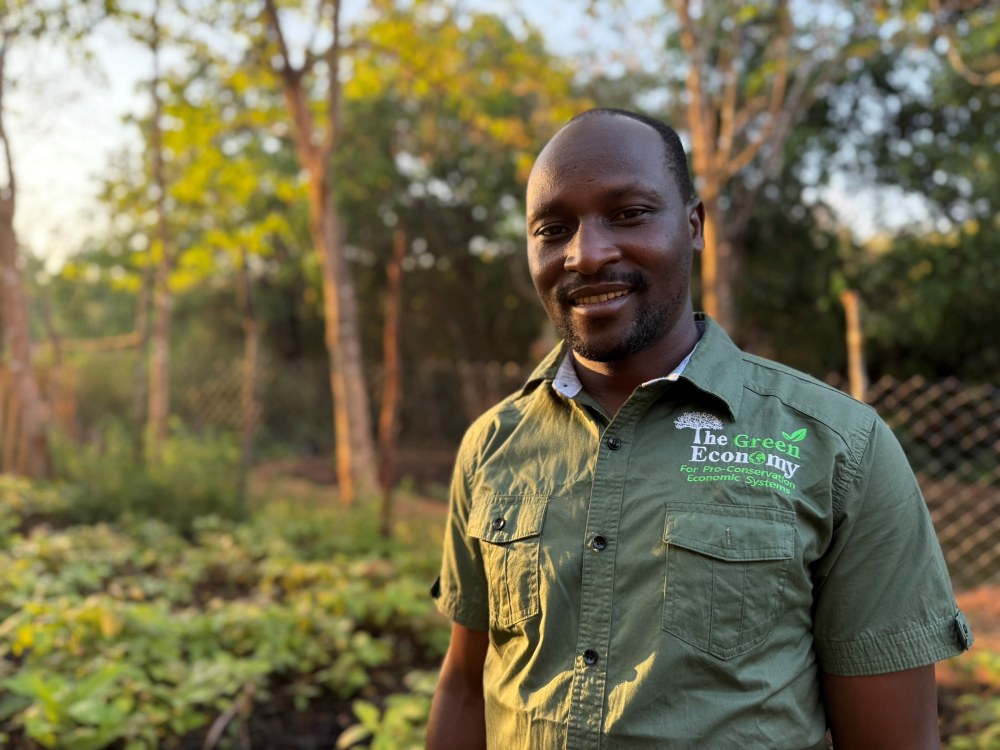
Last year, Asilia as part of NawiriGroup, began a partnership with The Green Economy (TGE), a small but ambitious grassroots organisation working to balance environmental conservation with economic opportunity in Tanzania’s southern highlands. Founded by brothers who had once worked with the Tanzania Forest Service, TGE was born from the idea that protecting forests and wildlife must go hand in hand with helping people prosper and benefit from the land.
A landscape of connection
The Ruvuma landscape stretches across the Southern Highlands of Tanzania, where the Mbarang’andu Community Wildlife Management Area connects Nyerere National Park in the east with Mozambique’s vast Niassa Reserve. Together, they form one of the largest continuous wilderness areas in Africa. The land is rich in biodiversity, dense woodlands habituated by elephants, lions, zebra, and leopard, but its people face entrenched poverty.
Most families here rely on subsistence farming, able to grow just what they need to survive. With no irrigation and little access to improved seeds or fertiliser, a bad season can leave them without enough food for much of the year. Many households eat only one meal a day. Others turn to charcoal burning or hunting to survive, further depleting the natural resources that sustain the area. “This is a region that hasn’t seen a lot of NGO support” Philip Parmet, TGE’s Programme Manager explains. “People rely on what they can grow or bushmeat poaching.”
“There is no more land to open up,” Philip says. “The challenge now is to make the land that people already have more productive, and to do it in a way that doesn’t destroy the ecosystem. We are working with the community to improve livelihoods and restore the land in tandem.”
From assessment to action
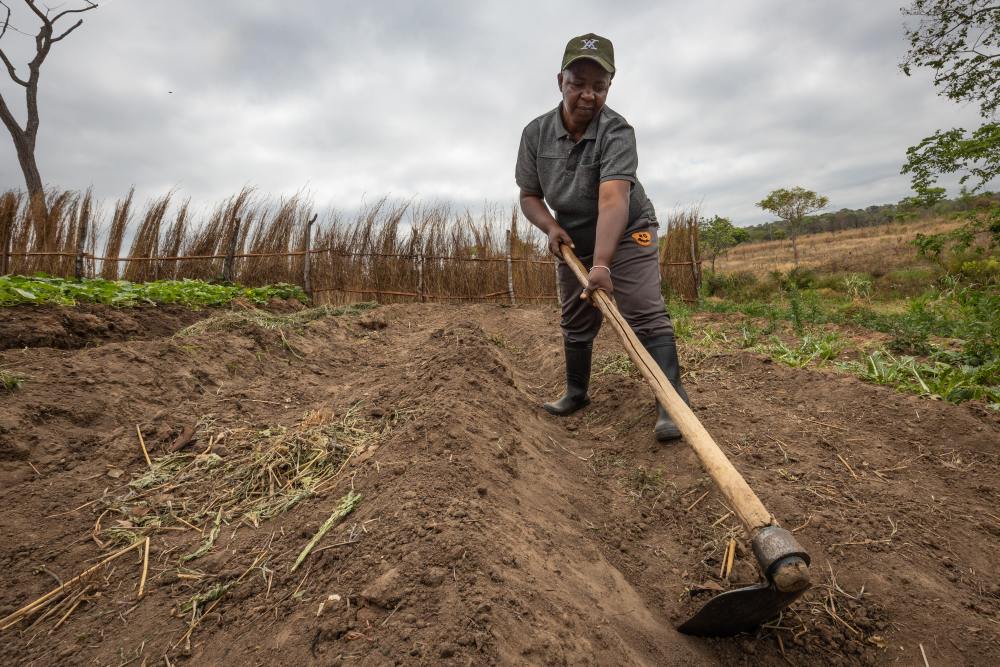
Before launching the project, we funded TGE to conduct a social and economic assessment that illustrated the main challenge people in the region were dealing with, namely severe food insecurity and high poverty levels. Most farmers were only growing maize leading to poor nutrition, and with increasingly unpredictable rainfall, entire harvests were sometimes being lost compounding the difficulties.
The research formed the basis of the RAISE Project; Regenerative Agriculture Innovations for Socio-economic and Ecological Sustainability. With our support, the team set out to pilot practical, nature-based solutions that could improve soil health, increase yields, and provide new sources of income.
One year later, the results are impressive. The first phase of the project has reached five pilot villages; Mchomoro, Songambele, Kilimasera, Kitanda, and Likuyuseka. Demonstration plots have been built showcasing different nature-based solutions in action, serving to educate the community. Now, more than 1,000 farmers are involved, the reach of the project spanning 642 acres of farmland.
Feeding people
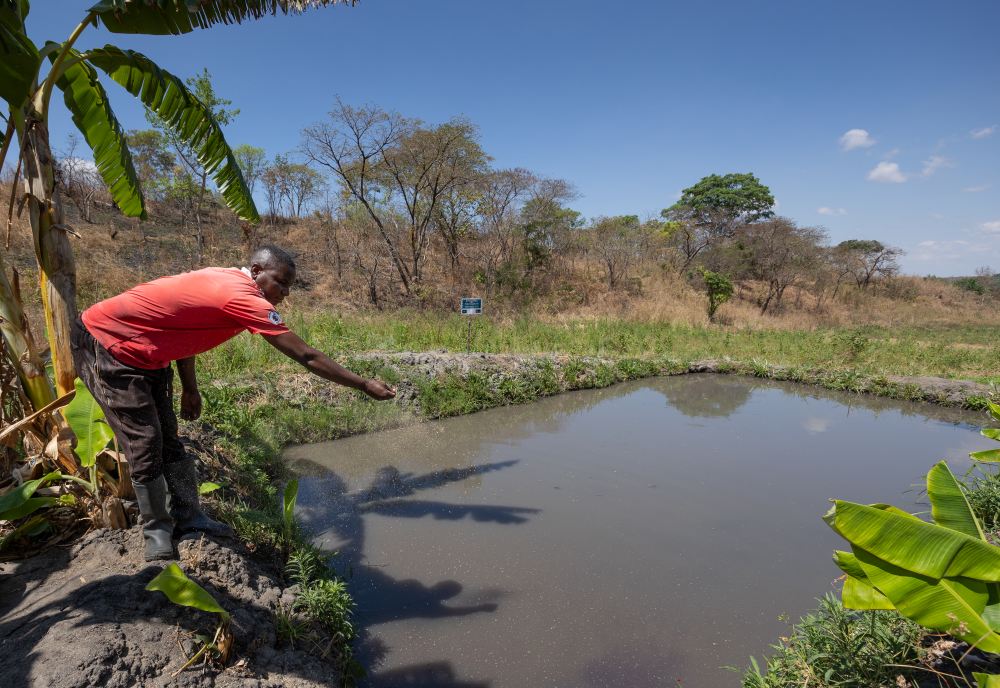
A key element of the project is the new fishponds dug into village farmland. In July 2025, TGE introduced 8,500 tilapia fingerlings into 17 ponds, combining aquaculture with small-scale poultry rearing. One of the beneficiaries, Ziada Ndauka from Mchomoro village, proudly shows us the glinting water at the edge of her plot, throwing in a handful of fish food so we can see the activity that bubbles beneath the surface. “Before, I only grew maize and tomatoes,” she says. “Now I can harvest fish every three months. I use the pond water for my vegetables, and they grow better. I will use the income to send my youngest child to school.”
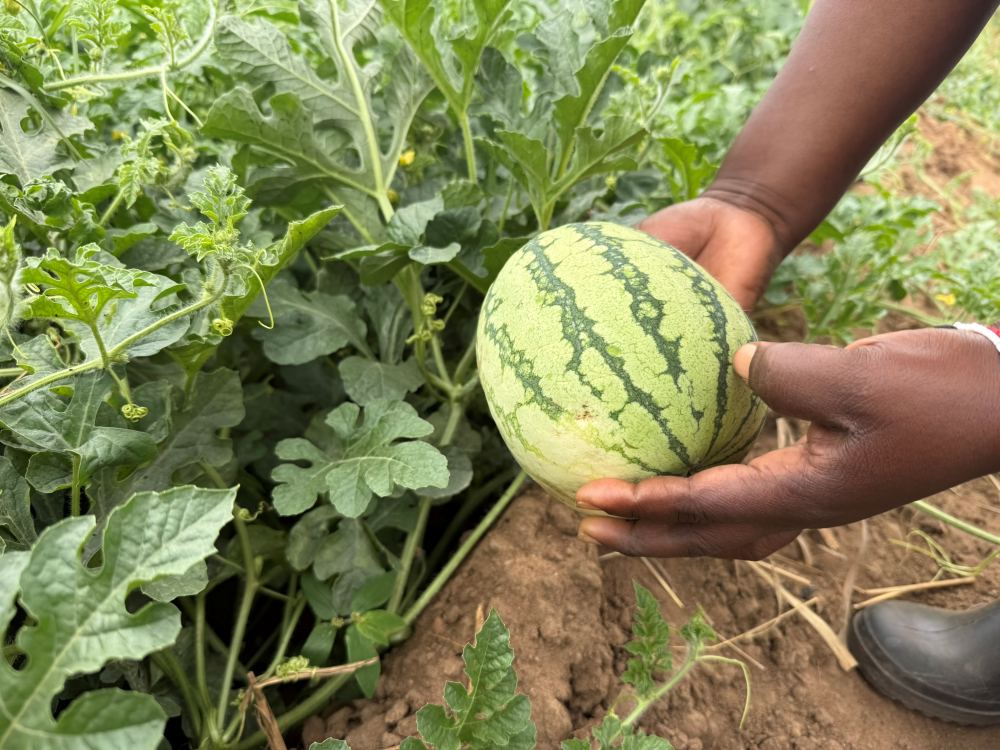
The system is efficient and self-sustaining. Water rich in nutrients from the fishpond is diverted to nearby gardens to irrigate vegetables like watermelon and tomatoes. Poultry droppings provide organic feed for the fish, creating a closed, low-cost cycle. As the ponds mature, each will yield several hundred kilograms of tilapia per season creating an affordable protein source that also helps reduce reliance on bushmeat.
As Haika Msenga, TGE’s aquaculture specialist, explains: “We train farmers to make their own local fish feed using what’s available, things like maize bran and cassava, so they don’t need to depend on expensive feed supplies. The aim is to make the fishponds truly self-sustaining.”
Regenerative farming taking root
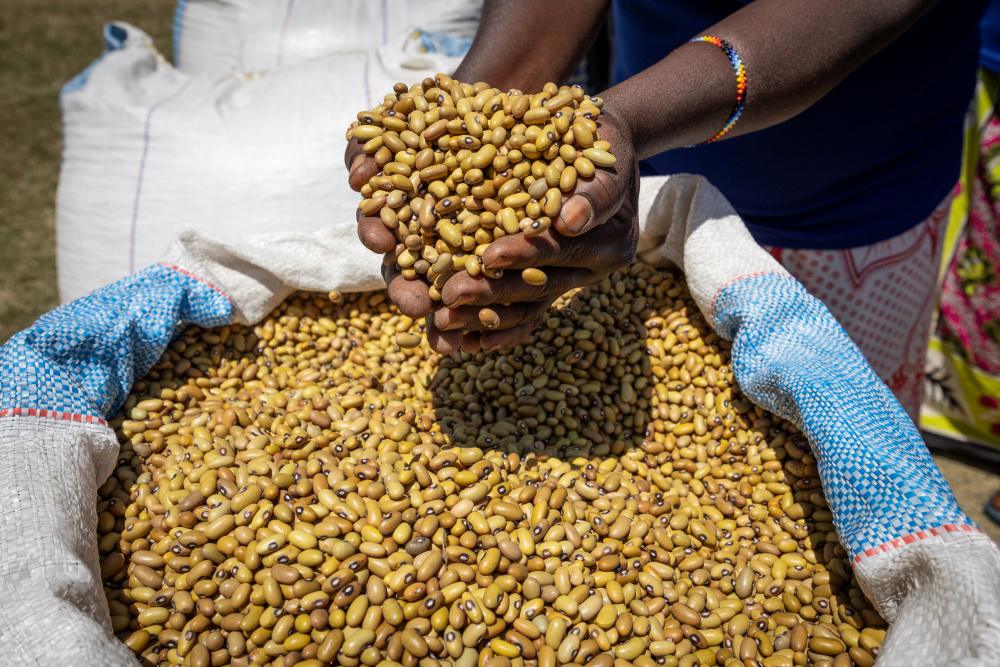
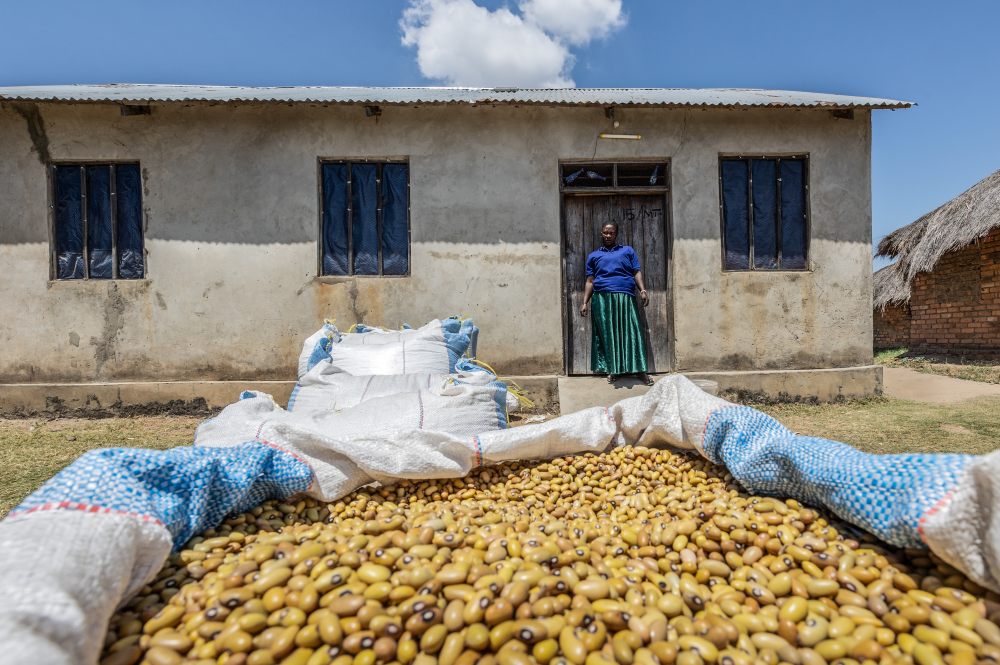
Alongside aquaculture, farmers have begun adopting regenerative farming methods to restore soil fertility and improve yields. In its first year, the project distributed 1,196 kilograms of improved bean seeds and trained farmers in intercropping, the demonstration plot showing how growing maize and legumes together fixes nitrogen and retains soil moisture.
After the first harvest, the results speak for themself. Selemani Asedi Linyaka, a lead farmer in Kilimasera, saw his maize harvest jump from 10 bags per acre using his old seed and farming methods, to 27 bags per acre after applying the new techniques. “Before, my family would run out of food halfway through the year,” he says. “Now I have enough to sell and to share seed with other farmers.”
TGE’s model encourages this “pass-it-on” approach. Each farmer who receives improved seed is asked to share a portion of their next harvest with neighbours, spreading the benefits without dependency on external aid.
Planting for the future
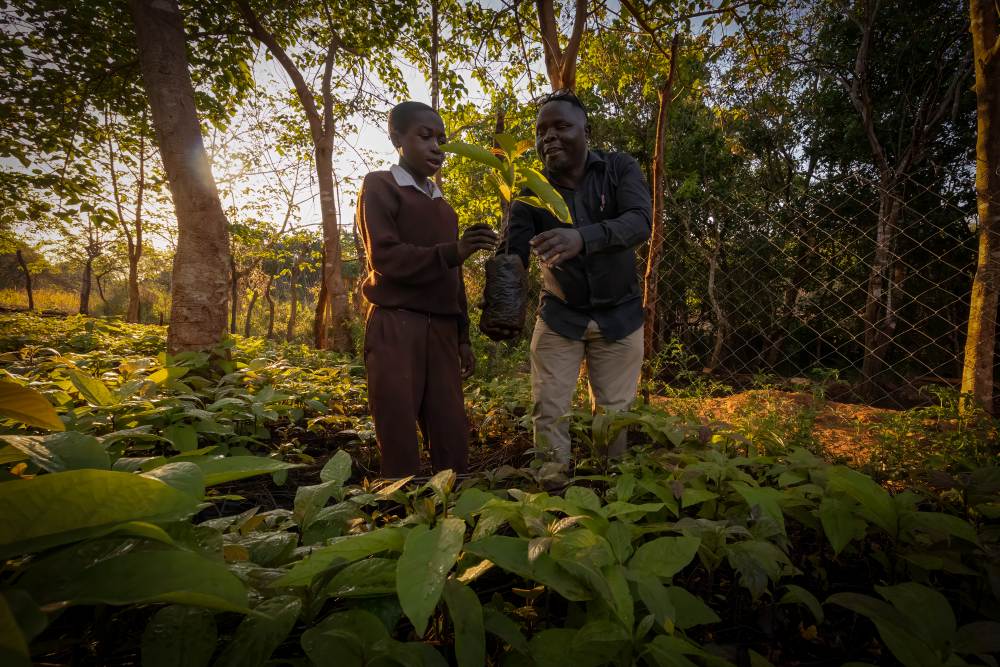
Perhaps the most symbolic of all the project’s activities is the establishment of a 50,000-seedling nursery on land owned by a local secondary school. The young saplings being nurtured have been carefully selected to support the needs of the area and wishes of the community and include a mix of nitrogen-fixing species, fruit trees, and timber varieties. Already 26,400 saplings from the nursey have been planted around neighbouring farmland.
School children help water and tend the seedlings, learning hands-on about the value of trees for soil fertility, shade, and erosion control. As they mature, TGE purchase the trees which are distributed to households and farms, providing shade, fruit, and wood while reducing pressure on nearby forests. “Trees are essential for soil health and biodiversity” Philip explains. “Being involved in planting them also teaches the next generation to love and protect the environment.”
“Our approach is always co-design,” says Philip. “We don’t bring something completely new. We start from where people are, and we adapt ideas together.”
A new movement taking shape
In just one year, the RAISE project has demonstrated how regenerative agriculture can transform lives while restoring ecosystems. The combination of improved seeds, integrated aquaculture, and tree planting is already yielding visible results. As the first year’s maize, beans, and rice are harvested, and new vegetable gardens flourish, both food security and nutrition quality are bolstered. For many families, it’s the first time in years they’ve had a surplus.
For Asilia and NawiriGroup, the partnership embodies its wider vision of aligning livelihoods, education, and conservation across East Africa’s critical ecosystems, and delivering community-led change, built on evidence, that benefits both people and nature.
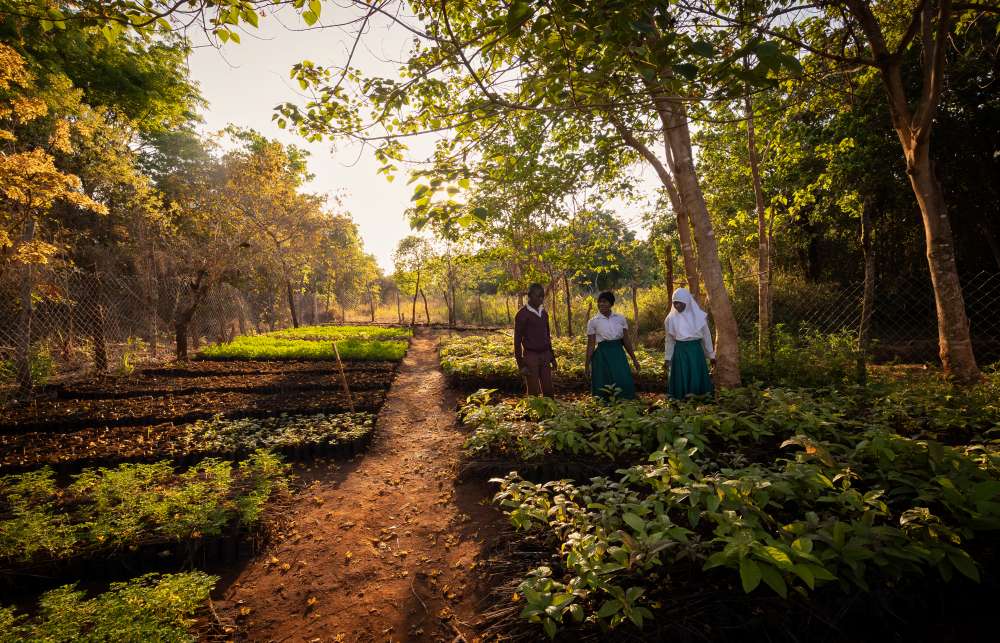
As the light fades at the tree nursery site, children from Mchomoro Secondary gather their possessions, the air noisy with the chorus of frogs. Golden rays from the setting sun slip across the neat rows of saplings. The future is taking root here, both in the small trees and in the minds of the young learners growing up with a deeper understanding of the land and our connection to it.
We are proud to support partners like these in their efforts to improve community livelihoods and conservation initiatives in Southern Tanzania. This Giving Tuesday, consider making a donation to Asilia Giving – the philanthropic arm of Asilia. Full donation amounts are used in support of our implementing partners, ensuring the longevity and reach of their programmes.