In the late afternoon as the sun drops, the air cools by a fraction, enough to raise the smell of dust and crushed grass. You start to see the herds before you see the people, a slow movement of bodies and horns coming in from where they have been grazing. Bells clink. Sticks tap. Someone calls out, and the cattle bunch, then stretch again, pulling towards home.
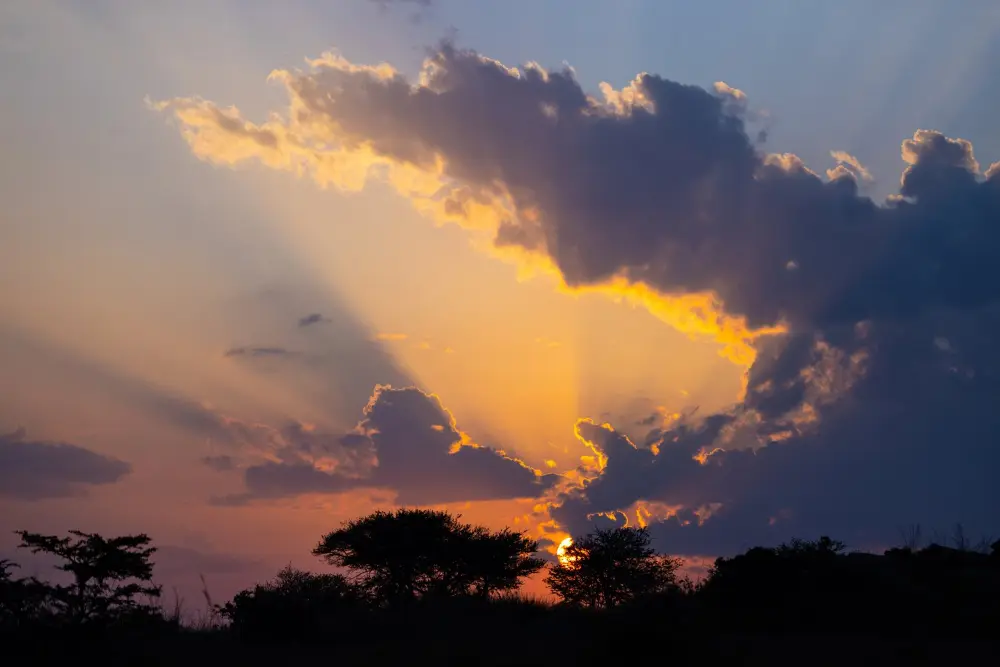
Beyond the village boundary, Ruaha National Park sits wide and open. It is Tanzania’s second largest national park, a sweep of miombo woodland, baobabs and river sand, with hills that rise out of the plains in broken lines of granite. It supports one of the largest remaining lion populations in the world, and as dusk falls over the miombo woodland that rolls towards the Great Ruaha River, a pride will be stirring. The edges of the park are unfenced, and lions move freely into community land.
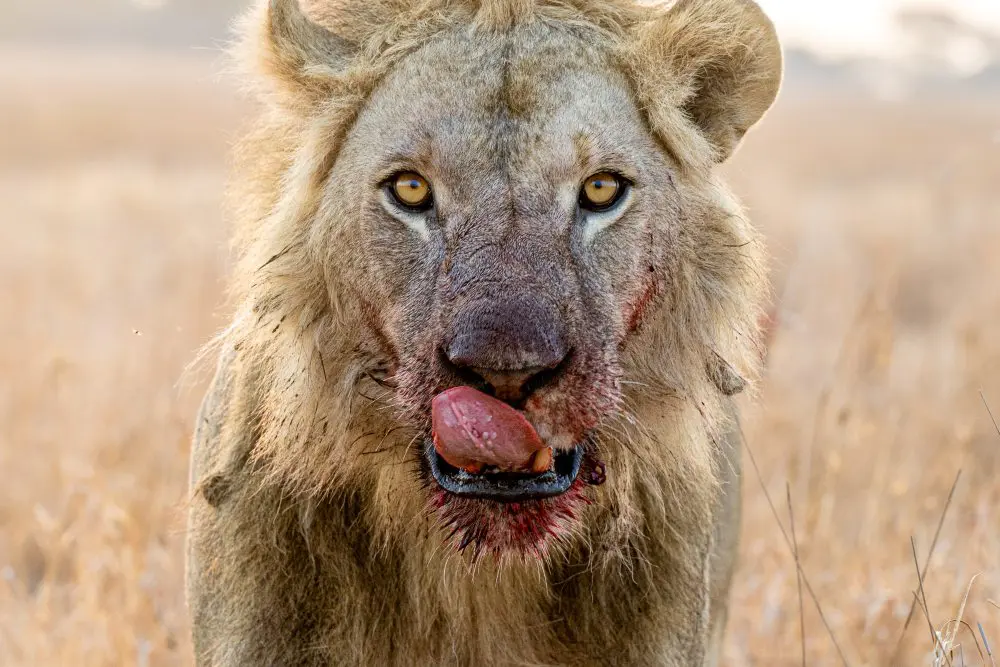
In this rural region where people and wildlife share space, livestock predation becomes a pressure point for human wildlife conflict. For families who keep cattle, goats, and sheep, a single loss can be hard. When livestock are killed, retaliation often follows. One act of anger can ripple across the food chain and a carcass laced with pesticide can wipe out not just a single lion, but a whole pride, along with other species such as hyenas and vultures.
Building Bomas
Predation tends to happen at night. Many traditional enclosures, known as bomas, are built from thorn branches and poles. As the thorn dries and breaks, holes open at ground level and a determined predator can easily find a weak point.
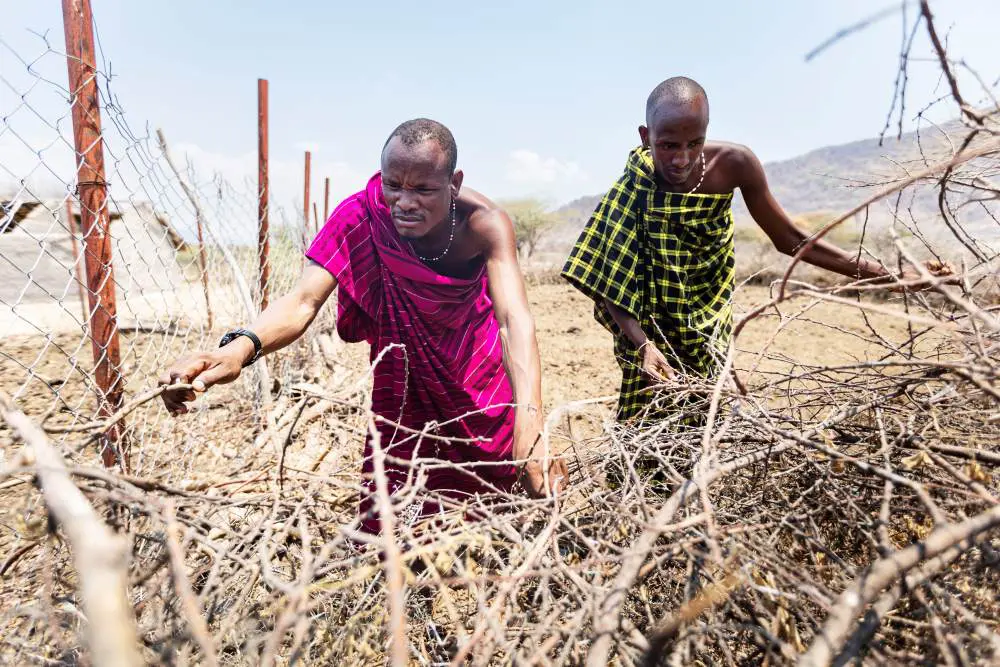
Lion Landscapes, one of our impact partners whose projects we fund in this region, focus on practical coexistence. They work with communities to reduce livestock losses, improve tolerance for carnivores, and prevent retaliation. Their own research has shown that most attacks on livestock happen within poorly protected enclosures, making boma reinforcement a key strategy within their livestock protection work.
Their work includes supporting pastoralists to build fortified livestock enclosures designed to keep carnivores out at night. In practice, that can mean chain-link fencing fixed to solid posts, extra wiring where animals try to push through, and careful attention to the base where predators test the perimeter. People sometimes still use thorn as part of the structure, building dense living walls that grow into an almost impenetrable barrier over time.

In 2025, their community-based liaisons, referred to as Lion Defenders, reinforced 107 bomas in Ruaha using a mix of traditional materials and wire, targeting households and hotspots where conflict risk runs highest. This matches the on-the-ground pattern their team tracks, whereby night-time attacks cluster around weak enclosures and repeat in the same places until something changes. The pastoralists are asked to contribute towards the materials, as cost-sharing has been shown to support a sense of ownership and long-term upkeep ensuring the structure stays strong. Results have been positive, with a 94% reduction in livestock predation documented where bomas were improved.
The role of Lion Defenders
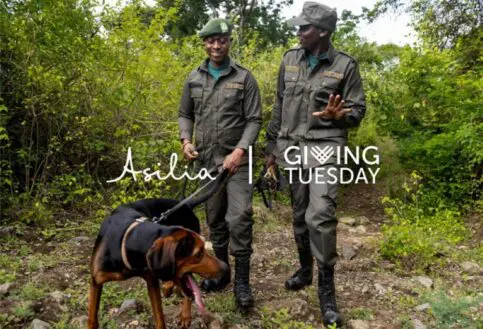
Lion Defenders, who live in the same villages as the livestock owners, understand the rhythms of herding, grazing, and risk. Their role includes household visits to inspect bomas, identify weak points, and organise reinforcement before predation happens. They also respond when conflict occurs, recording incidents and helping de-escalate the aftermath.

Their day might include a visit to a boma requiring reinforcement materials, checking where the fencing has started to lift, or where a goat has been slipping through and widening a gap. It can also look like walking the edge of a village the morning after an incident, following tracks to confirm what happened. Even with better enclosures and better herding, losses still happen. Lion Defenders document the incident, confirm the predator involved where possible, and work with the household to strengthen the enclosure immediately. The practical goal is to stop repeat attacks, since predators will often return to a place where they have found an easy meal. Response also focuses on what comes next socially, because retaliatory killing can follow quickly if people feel unsupported. Conflict mitigation works best when it recognises this full context.
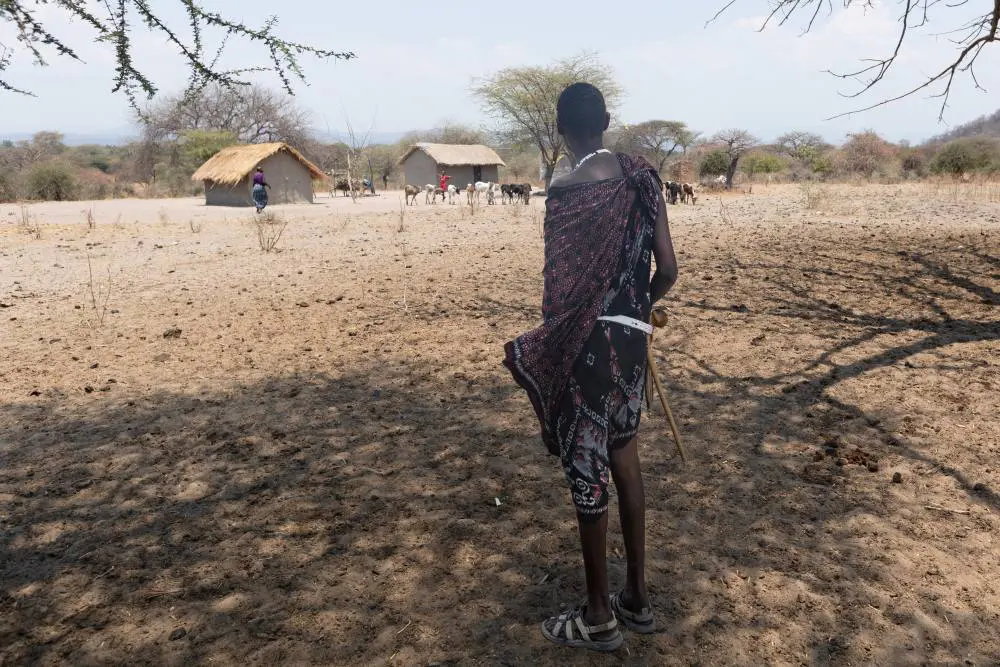
As the light fades and the smoke from cooking fires drifts across the village, boma gates are secured and checked. Beyond the edge of habitation, lions begin to move, unseen but heard as a low call rolls across the landscape stretching into the dark.
People and predators need to live in shared spaces on the margins of Tanzania’s wilderness areas, and it’s the practical measures that lower the risk of loss for families that make this possible.
Every night a guest spends in an Asilia property generates US$20 for Asilia Giving, our philanthropic arm that contributes to conservation initiatives across East Africa. Choose to travel responsibly.