The morning mist hangs low over the steep hills surrounding Bwindi Impenetrable Forest, threading through valleys and softening the landscape’s edges. On the forest’s border, Mzabarimda Edison walks among his beehives carefully positioned on a tree-lined slope.

A Lost Connection
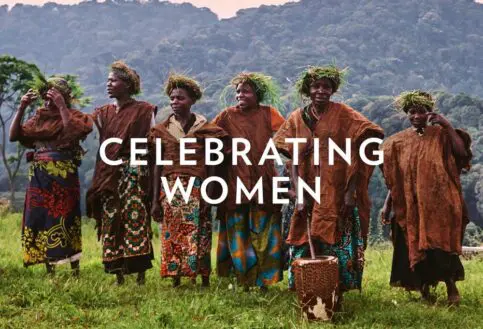
For generations, the Batwa were forest dwellers, hunter-gatherers whose existence intertwined with Bwindi’s dense ecosystem. They understood nature’s rhythm in ways few could comprehend. Of the many resources they utilised within the forest, they have always held a particular affection for honey.
They would gather wild honey from the forest, understanding the nuanced differences between bee species. Honey was seen as offering almost spiritual sustenance, believed to carry the medicinal properties of every flower and plant the bees had visited. Collected with reverence, honey became a cornerstone of their diet, a tool for fermentation, and a remedy for ailments. A gift from the natural world.
Edison’s lean, muscular frame moves through the foliage with the practiced ease of a man who has spent his life reading the forest’s rhythms. At 36, he represents a generation of Batwa people reimagining their relationship with the wilderness that was once their entire world.
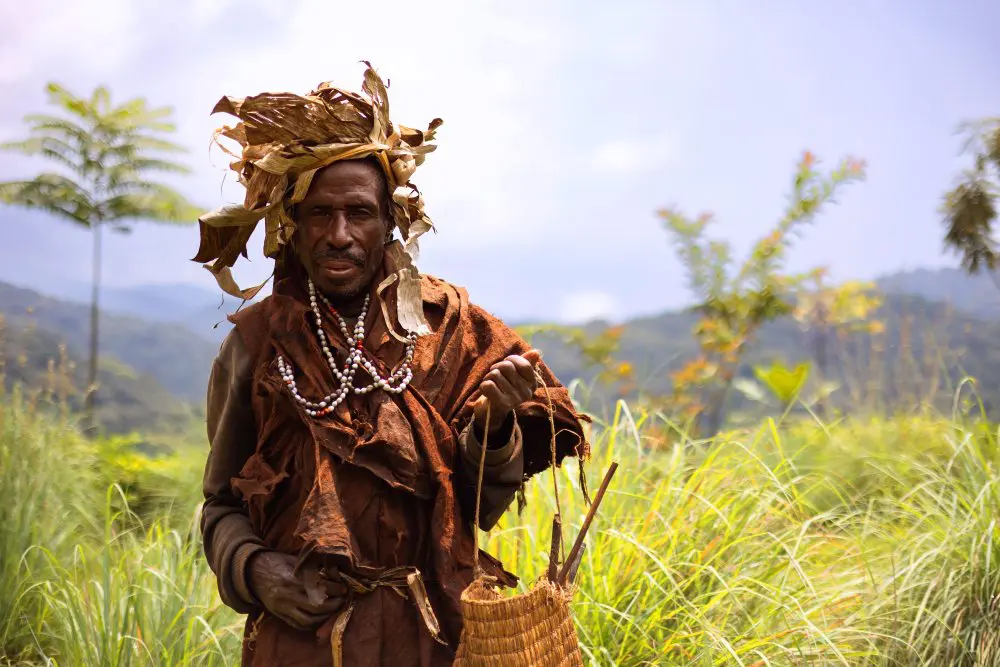
After losing access to the forest, the Batwa’s connection to wild honey faltered and many struggled to adapt to a new way of life. Many continued to enter the forest to collect leaves for medicine or wild fruits to eat. Edison recalls a family member arrested for collecting firewood. “Why work all day to buy fuel,” he would ask, “when the forest provides?” This perspective reflects a generational belief that the forest is not just a place, but a provider of life itself.
A Natural Solution
Punitive approaches to keep the Batwa out of the national park were ineffective, not addressing the need for an income to support the loss of the resources they found in the forest. A nature-positive solution needed to be found that would provide them with sustainable livelihood, whilst remaining true to their traditional beliefs and way of life. Their love for honey offered one such opportunity, combining their ancestral knowledge with modern beekeeping practices.

Change a Life Bwindi started working with the Batwa on a beekeeping project, supporting them with provisions of hives and training. Edison joined the programme five years ago. From harvesting wild honey in the forest, he now tends to his own bees and talks passionately about the delicate art of creating the perfect hive environment and the production of organic honey.
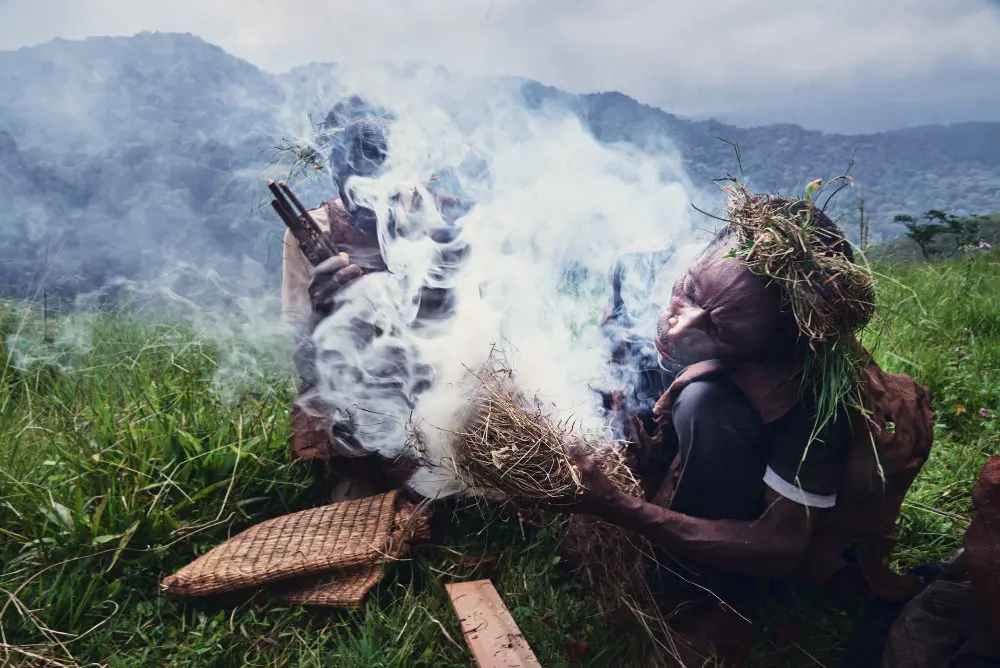
“I have learned so much about bee keeping,” Edison says as he begins lighting a fire in preparation to show us his honey. A long thin stick spins rapidly between his palms, creating a spark in a method passed down through generations. He gathers the ember carefully, blowing gently as he lifts it into a smoking device. Selecting a hive, he uses smoke to sedate the bees before pulling out a large honeycomb. Golden, viscous honey drips slowly, catching the light.
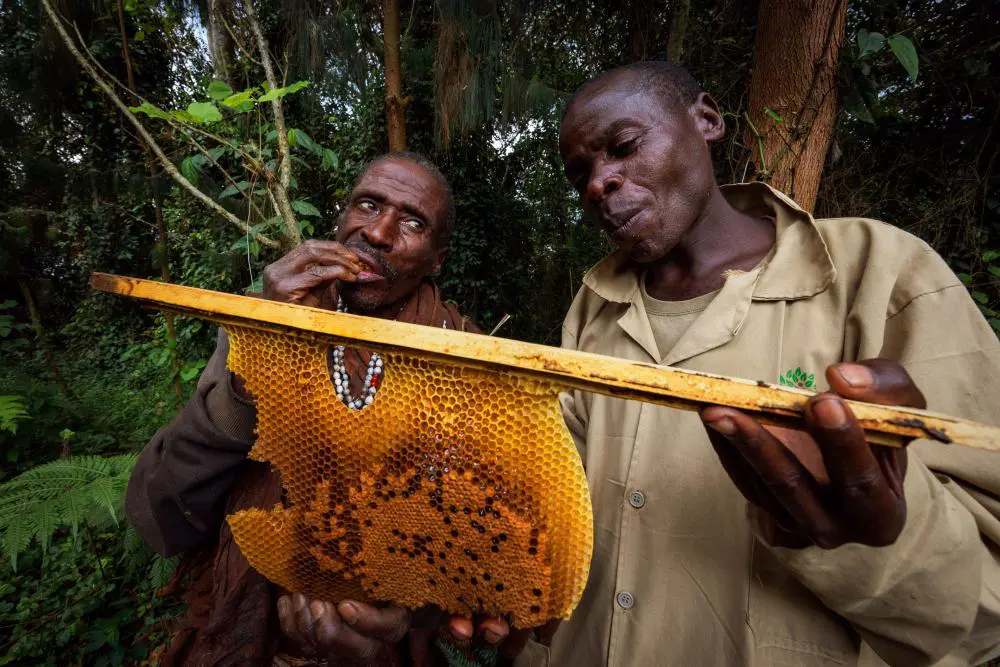
Hive Challenges
“Initially I was given a donated transitional timber hive” he explains, “but we found these aren’t good for the bees here in Bwindi. The temperature gets too cold, and this type of hive isn’t well insulated.”
They experimented with materials, adding an iron-roof which was found to trap moisture and created a noisy environment when it rained that disturbed the bees. Perhaps unsurprisingly they found the traditionally made hive, a hollowed tree trunk, remained the preferred environment for their bees. Edison explains how specific timber types impact honey flavour, his ecological knowledge supporting this new livelihood.
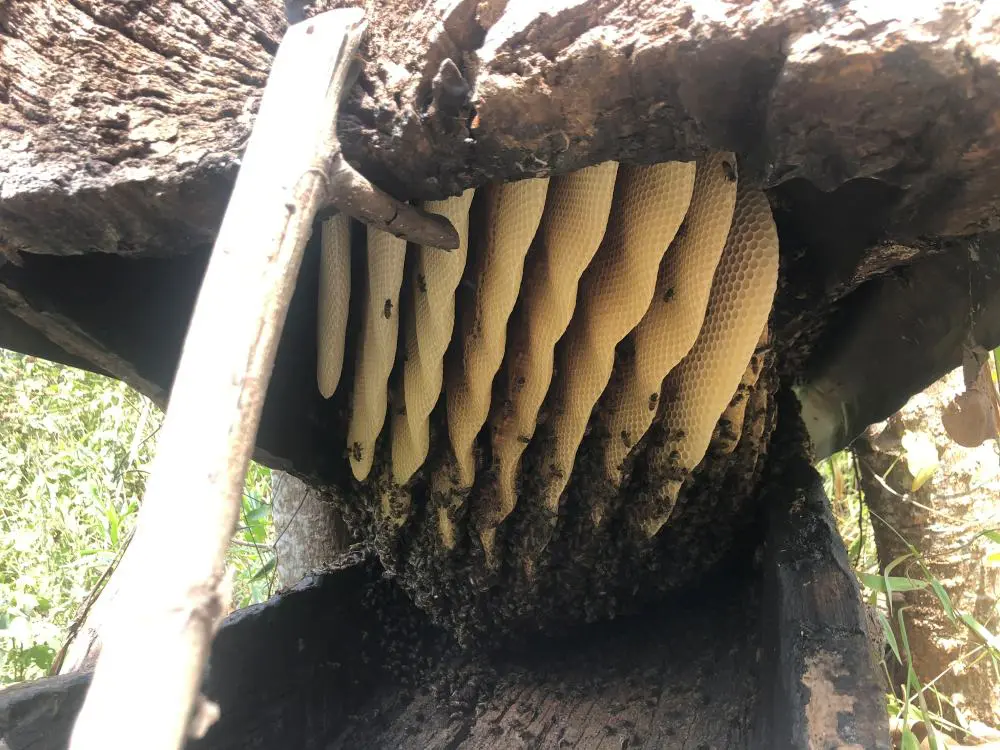

While he prefers the traditional hives, he is happy to embrace new equipment like protective suits and smokers. “It is good to have the bee suit and smoker, it makes collecting the honey easier,” he explains, “but I don’t mind an occasional bee sting. It is a form of medicine and all part of nature’s balance.” As Edison moves between hives the air fills with the earthy tang of smoke and the faint sweetness of honey and it’s clear that despite making use of modern techniques, his traditional beliefs and connection to nature remains strong.
Challenges of Transformation
The path isn’t smooth. Aside from a long period of trial and error with the types of hive to use, there have been plenty of other challenges. Pesticides and chemical sprays used on nearby tea plantations weakens the bee colonies, while climate change creates unpredictable weather patterns that disrupt the honey harvest. The biggest challenge they’ve faced is finding appropriate land for their hives.
Hives need to be in an area where there are plenty of flowering plants and proximity to water. They also need to be accessible so the Batwa can tend to them but located far enough away from the community to avoid conflict. Edison recounts how a farmer burned hives that were situated too close to where he was working after being stung.
Looking Forward
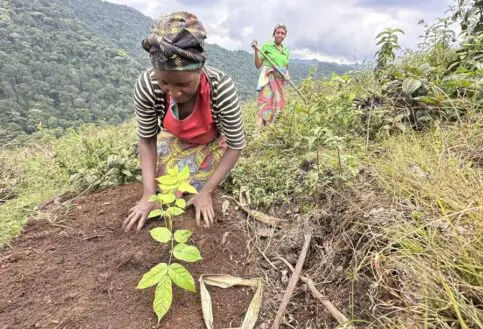
Working alongside Change a Life Bwindi, we have started work on our plans to establish a reforested buffer zone bordering Bwindi Impenetrable Forest, restoring large tracts of indigenous vegetation, allowing the forest to reclaim the hills. At the heart of our reforestation project is the construction of our new lodge, Erebero Hills. Both the emerging forest and new lodge hold excitement and hope for the Batwa beekeepers.
The reforested area will provide a safe location for hives, away from pesticide-laden plantations and peoples’ homes. As the forest grows, timber will become available for creating new traditionally made hives, currently which are prohibitively expensive to buy.
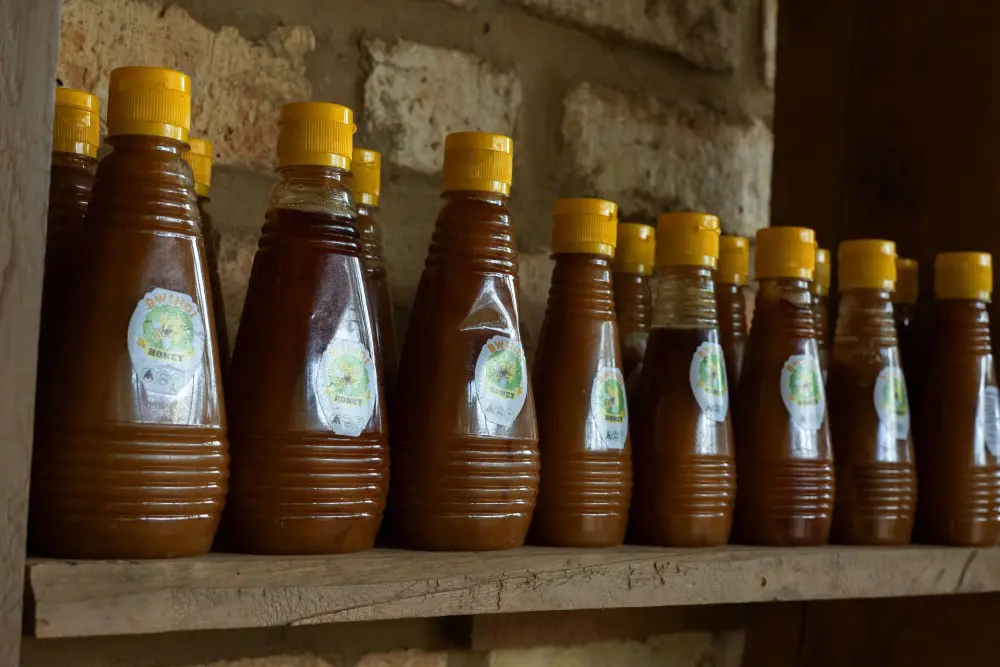
The biggest opportunity however comes from the creation of a new forest economy for the Batwa people. “We can create a lot of honey,” Edison explains, “the challenge is how we sell it”. The honey produced is exceptional. Rich in flavour and meticulously separated from comb it is of a high-quality, but the local market for it is limited. Tourism offers one possible solution, providing an outlet for their carefully crafted honey, giving them the opportunity to derive a sustainable income from their work.
As the mist lifts, revealing Bwindi’s hills in shifting light, Edison steps back from his hives leaving the bees humming softly, weaving their rhythms into the sounds of the forest. For the Batwa beekeeping represents a form of cultural preservation, a way to blend their traditional knowledge while adapting to new realities. Here, in the shadow of the forest that shaped their lives, their story continues as a balance between the old and the new, honouring their connection to the land while carving a path forward.
Start planning your adventure into Erebero Hills today.