A hundred thousand years ago people sat around fires for protection, as stars littered the night sky and danger lurked in the shadows. One hundred thousand years later and the world has changed so much that it is almost indistinguishable from its former self. Stars are replaced by lights, the skyline replaced by metropolises. But there are still places in the world unyielding to change. Places where the eternal struggle for survival and reproduction take front stage.
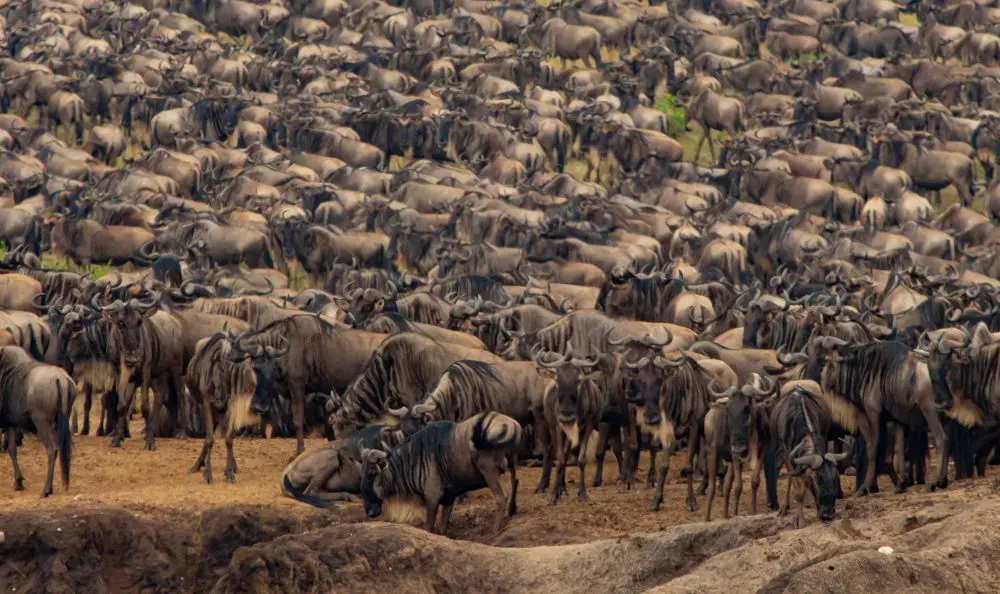
The Great Migration of the Serengeti Plains is possibly the most extraordinary representation of this life and death struggle. Every year millions of wildebeest and zebra perpetually move across the savanna in search of food and water. In the minds of many this cycle culminates along the Mara River where the migration has to negotiate steep cliffs, fast moving water and the gaping maws of Nile crocodiles.
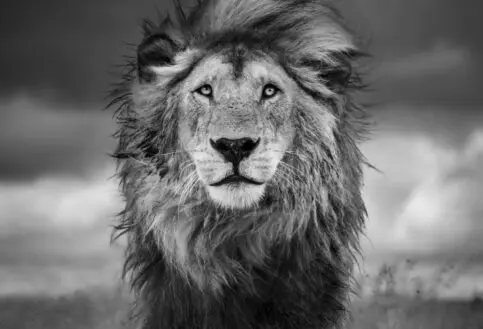
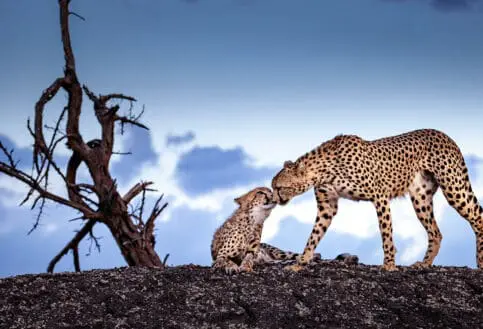
However, the migration is so much more than that. It all begins in the birthing months of January to March, when the great herds are found in southern Serengeti. Closely tied to the short rains, the wildebeest birth once the first cuts of green sprout from the dusty, barren landscape. From the moment calves are born, their life and death struggle begins. Lions, leopards, hyena, cheetah and jackals have all been waiting for this bountiful moment. A photographer’s dream of predator prey interactions plays out as far as the eye can see.
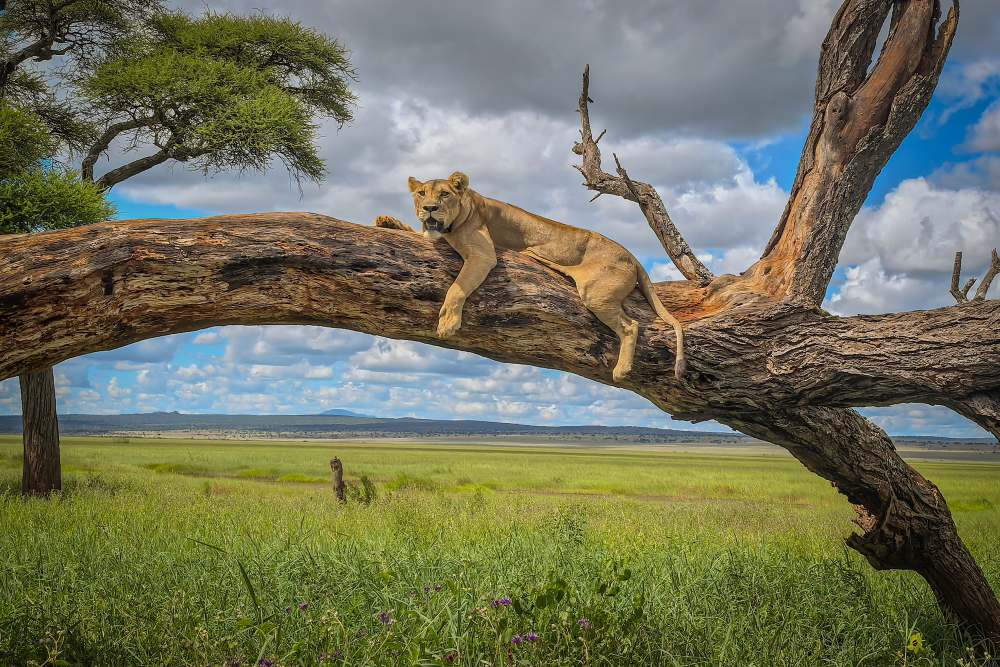
Following the calving season, the herds start trekking northwards, past Ngorongoro Conservation Area and into the central region of the Serengeti National Park, before finally arriving at the Mara River where nature plays yet another trick. Crocodiles, long starved of hardy meals for the past six months, suddenly find an abundance of prey, and it is this that draws millions of tourists from all corners of the globe every year. To see life and death’s struggle play out before your eyes is a moment never to be forgotten. And while this spectacle pulls at our heart strings, it is impossible to avert your eyes, or your lens.
In this light, we advise you to come prepared with the proper gear to capture a moment in time, so that once we age and our memories fade, we always have a reminder of that one brilliant flash where time stands still, and words escape us. It is true that a picture can be worth a thousand words, so let’s make it count! Whether you are venturing to the southern plains to capture the calving season, or north for the crossings of the Mara River, here are some tips around photographing The Great Migration.

After photographing wildlife for the past 30 years, I have come to a few conclusions that may assist you in your wildlife photography journey. Camera bodies come in such a vast array that it would be pointless to pick any one product. However, modern cameras have made giant leaps in technology these past few years, of which the new mirrorless ranges are proving to be head and shoulders above the rest. Unfortunately, new technology comes with a hefty price-tag, but do not fret. Yes, a camera body is important, but lenses are more so. If you are new to the game, focus your attention on getting the best possible lenses your budget will allow for. A great lens outweighs a fancy camera body.
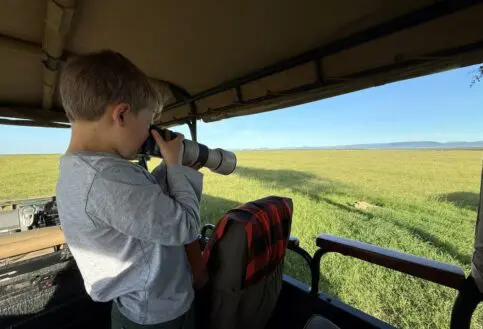
When it comes to wildlife photography, I personally carry three. A macro lens for closeups on nature’s finer details, a wide-angle lens to capture sweeping landscapes, and a 100mm-400mm Ultrasonic zoom lens for your closeups. The zoom lens is of particular importance when considering one of the most important photography secrets, getting down to eye-level with your subject.

How is this achieved? Vehicle positioning plays a crucial role in wildlife photography, and our guides receive photography specific training to ensure they have an understanding of light and angles. By positioning the vehicle further away from your subject, you are able to use your zoom lens to create the illusion of being lower to the ground. Imagine the angles involved. The closer you are to your subject, the more acute the angle from your subject to your camera in the elevated seat of the safari vehicle. Parking further away reduces the angle and allows the photographer to capture not only the subject, but the setting as well. Remember, a picture isn’t just about the animal, but where it is and what it is doing. Using this technique will allow you to capture a story in a single frame.
Another important tip is to consider the rule of thirds. An easy way to explain this rule is to imagine a grid of lines on your screen, creating three rows and three columns, for a total of 9 blocks. Your subject should never fall into the centre of the centre block. Rather, the focal point of your subject should sit on one of the four corners of the centre block. This composition guideline is used to create more engaging and visually balanced images. Many modern cameras have a function where you can activate the grid and have a visual representation visible through your viewfinder or on screen.

When photographing wildebeest crossings along the Mara River, try to seek out a natural bend in the river that allows you to get a ninety-degree view down river, rather than parking directly opposite your subject. This allows for more depth in your images as well as a side-profile of the crossing. The benefits of this are two-fold. Firstly, you can park further away from the action offering less interference to the animals and secondly, your 400mm+ lens brings the angle down to create the illusion you are eye level with the action, creating a far more dramatic scene.
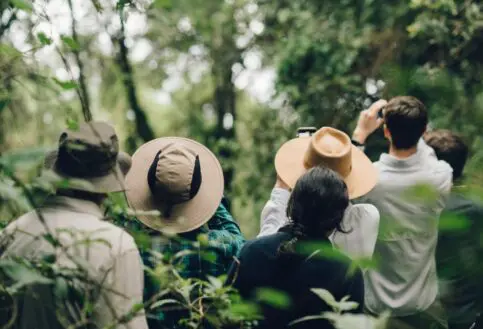
Asilia guides are all trained with a basic understanding of photography and how best to guide photographers, considering vehicle placement, lighting, and angles. For many safari enthusiasts, witnessing the Great Migration may be a once in a lifetime opportunity, which is why it is so important to have a guide that understands your needs and can best set you up for success. However, it is equally important that this goes hand in hand with a code of ethics to ensure that no stress to either wildlife or the environment is caused through the pursuit of that perfect photograph. At Asilia, we strive to teach, train, observe, and improve our ethos and our offering, to provide our guests with not only the trip of a lifetime, but also the digital and emotional memories that come with it.
Start planning your photographic safari to East Africa today. Chat to us about our guide training and the availability of specialist photography guides and customised photographic vehicles.