The Grey-headed Kingfisher was settled on a low branch at the edge of a woodland thicket, an insect trapped within it’s vivid red-orange bill. It stayed on its perch, completely at ease as we crept towards it.
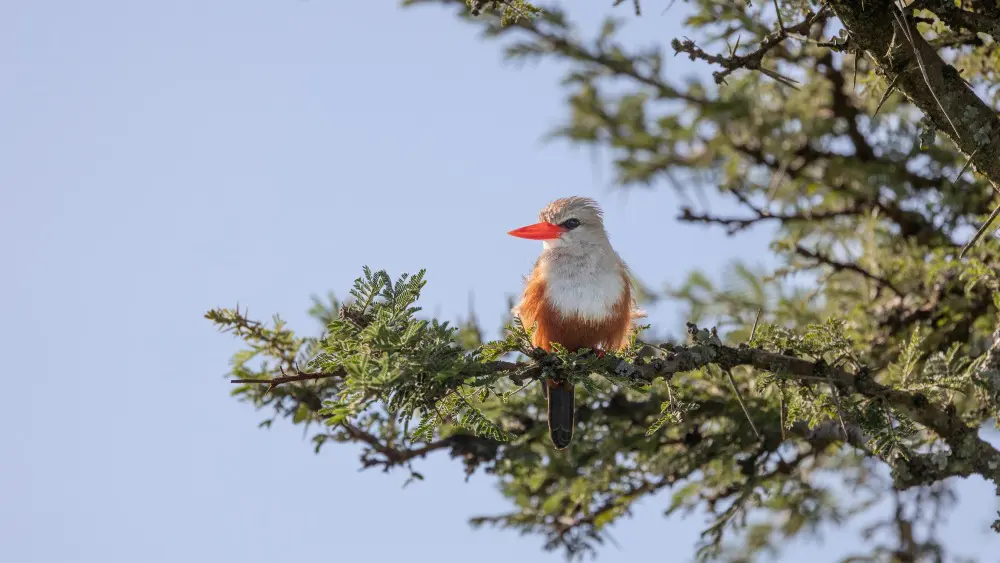
Grey-headed Kingfishers are common enough across the Maasai Mara, but I’d never been this close to one before. Normally they take flight with a flurry of turquoise-blue wings, but this one seemed to barely register our presence. Something we’d noticed of other birds during this game drive. It was because we had arrived silently, with no noisy announcement of our presence.
Our electric powered vehicle had rolled quietly along the track before easing to a stop. There was no diesel engine idling beneath us, no vibration through the floor, no need to switch the engine off to enjoy the moment. The melodic chattering of Superb Starlings filled the air, while leaves rustled in the breeze. Our guide spoke in little more than a whisper. Watching that kingfisher, I found myself thinking that this is probably what safari was always supposed to sound like.
Reducing carbon emissions is one of the main reasons we’re investing in electric vehicles. Diesel accounts for the majority of our Scope 1 emissions and transitioning our fleet is the single biggest step we can take towards our target of reducing those emissions by 90% by 2037. But the move to electric also makes safaris quieter, calmer and more immersive. It allows the sounds of East Africa to become the soundtrack to our guest’s game drives.
Investing in new technology
We’ve committed to transitioning our safari fleet over the next decade, but we quickly realised the vehicle we wanted didn’t exist. There are now plenty of electric vehicle manufacturers and conversion companies entering the market. Almost all of them are designing around road cars. They focus on long motorway journeys, maximum battery range, rapid charging and urban infrastructure, but safari vehicles have very different jobs to do.
Most travel only 50 to 60 kilometres a day. They spend hours moving slowly over rough tracks, stopping every few hundred metres to watch wildlife. They need huge amounts of torque at very low speed, excellent off-road capability and absolute reliability in places where the nearest specialist workshop may be hundreds of kilometres away.
They also need to make financial sense. Converting one vehicle is relatively easy. Converting an entire fleet of around 180 vehicles requires a solution that is affordable, simple to maintain and practical to install in camp workshops by experienced mechanics, rather than specialist EV engineers.
We’ve learnt that safari vehicles don’t need many of the things road cars do. They don’t need enormous battery packs capable of travelling hundreds of kilometres without charging. They don’t need ultra-fast charging infrastructure. Carrying all that extra battery weight simply adds cost without improving the safari itself.
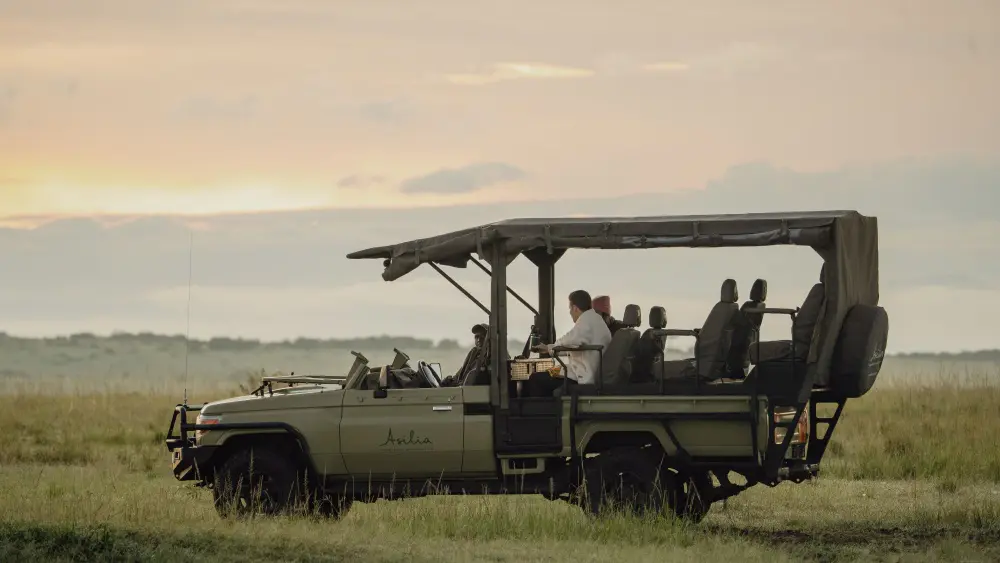
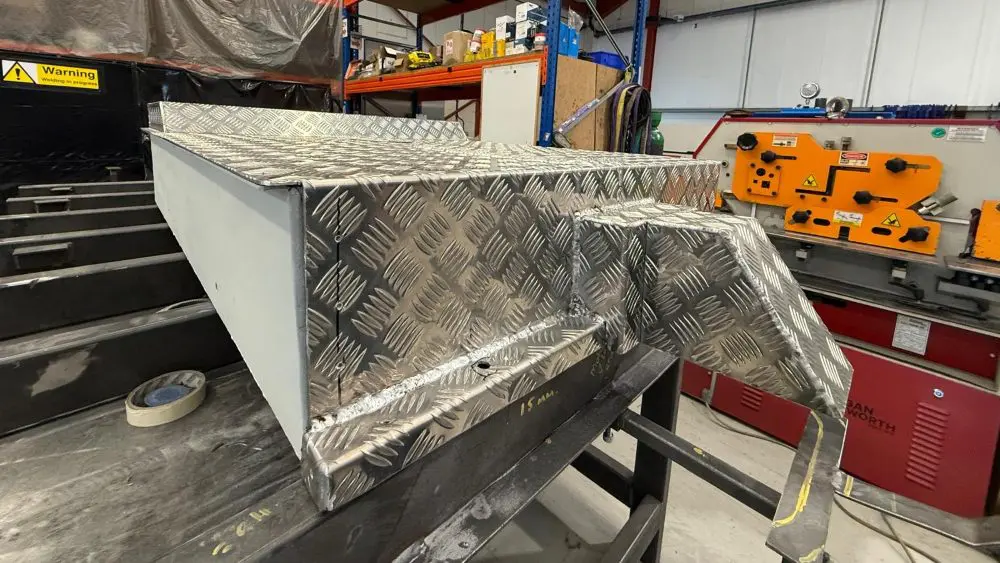
To get the solution we were looking for, we realised we’d need to invest in technology and help develop it. Currently we’re working with four different EV specialist partners to develop conversion kits designed around our Land Cruiser vehicles and the realities of operating in the bush. We’re currently in a phase of trialling different conversion systems, collecting operational data and gradually building a picture of what works best before we scale the technology across our fleet.
Challenges and learnings
We started exploring electric vehicles in 2018, when the technology was still in its early stages. Our first conversion took months to complete and, while it proved the concept, the reliability and technical support simply weren’t where they needed to be. We continued operating that vehicle for more than six years before eventually passing it on to another safari operator after our supplier shifted its focus and support away from safari vehicles.
Along the way we’ve explored other technologies too. We trialled ethanol-powered vehicles in southern Tanzania. They worked, but supplying ethanol reliably into such a remote location proved difficult. The vehicles also required a dedicated specialist mechanic and the distinctive smell of ethanol didn’t benefit the guest experience. Each project taught us something and gradually narrowed our focus.
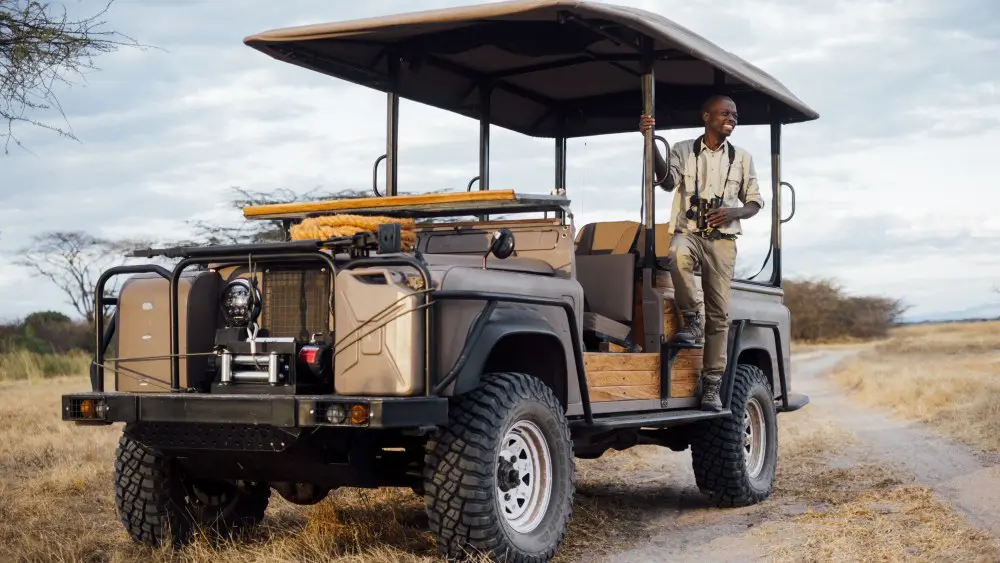
Some of the lessons have been less obvious. One of our converted vehicles consistently received a less than warm reception from elephants. It wasn’t aggressive behaviour, but they clearly didn’t like it. Eventually we traced the problem to a high-frequency sound produced by the electric drivetrain. People couldn’t hear it, but the elephants could. The manufacturer has since modified the system for us to the relief of the elephants we encounter in the bush.
We also invited Ashley Revay, a conservation biology master’s student from Miami University, to spend a month in Kenya studying how wildlife responds to electric safari vehicles compared with diesel ones. The work is part of a growing body of research looking at how quieter vehicles influence animal behaviour and how we can design them with wildlife, as well as guests, in mind.
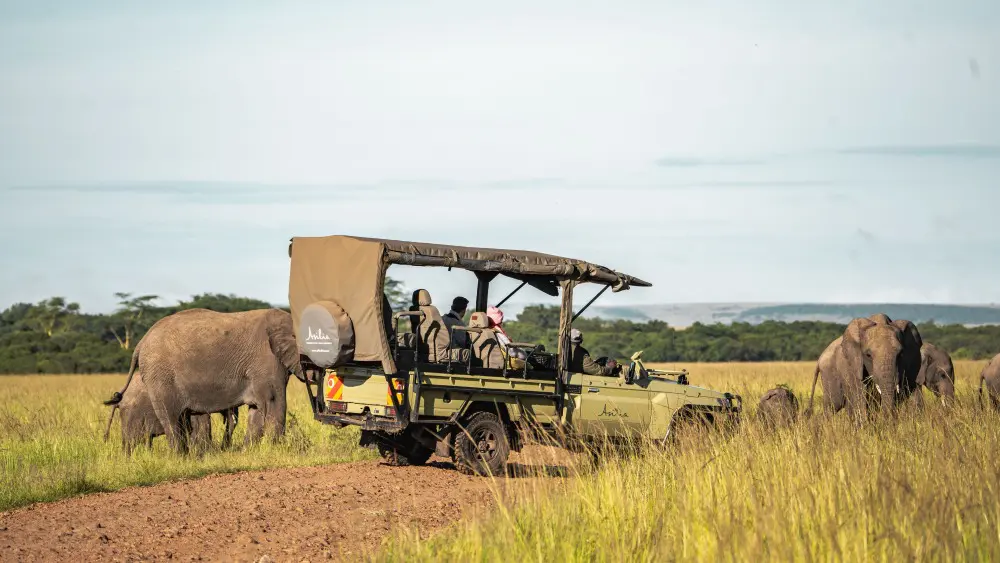
Rhinos taught us something different. With poor eyesight but excellent hearing, they occasionally reacted with surprise when an electric vehicle appeared without warning. Our guides quickly adapted, approaching from upwind to ensure the rhinos picked up the gentle sound of tyres on the track and scent of the approaching vehicle. Small adaptations like that become part of our learning as to how electric safaris fit naturally into the bush.
The environmental benefits also extend well beyond emissions. Electric vehicles recover energy through regenerative braking, slowing the vehicle using the motor rather than relying solely on conventional brake pads. The result is dramatically less brake wear. Brake dust is increasingly recognised as an important source of non-exhaust pollution. Tiny particles containing metals such as copper, iron and antimony become airborne or settle onto surrounding vegetation and soils. On safari, where vehicles are constantly slowing for wildlife sightings, regenerative braking can reduce brake wear by up to and estimated 80%, cutting another source of pollution that often goes unnoticed.
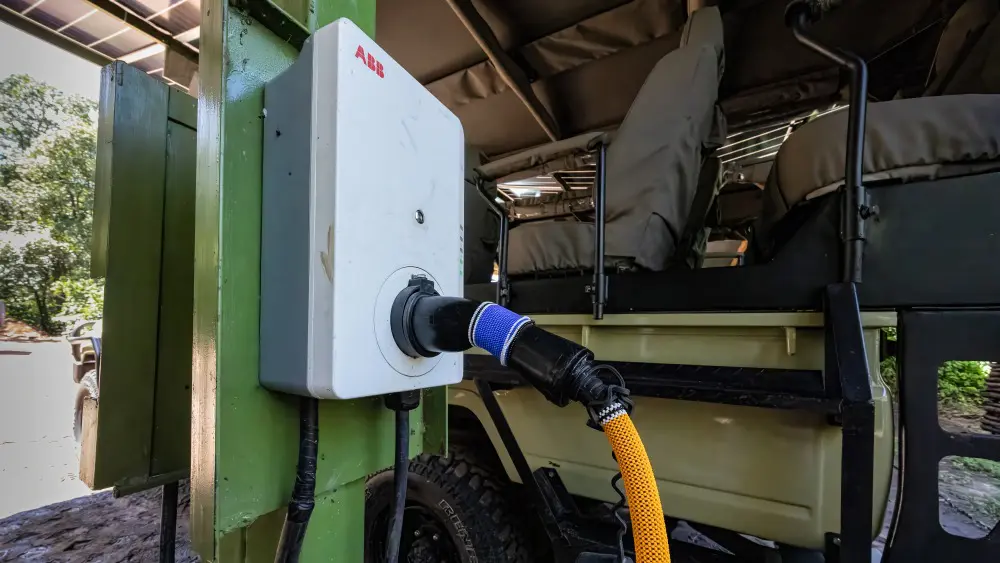
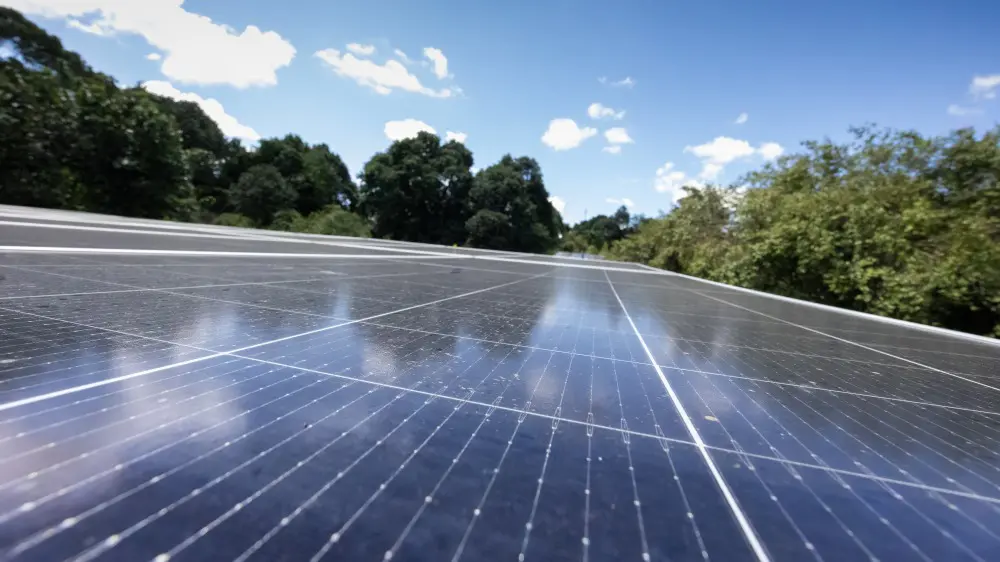
Fleet electrification is also changing how we think about energy. As our camps generate more electricity from solar power, our vehicles can increasingly be charged using renewable energy produced where they operate. That reduces dependence on diesel deliveries into remote protected areas and provides greater stability in a future where fuel prices and supply chains are becoming less predictable.
There is still plenty to learn and the technology continues to evolve. We expect the vehicles operating across our fleet in ten years’ time to look very different from those we’re testing today as we help to shape the future of electric vehicles within the safari industry.
Choose to travel sustainably for your next East Africa safari.