Ronald, my driver guide, seemed more nervous for the day than I was, and he wasn’t even trekking. “Have you got your permit and a facemask? Have you got enough water? Do you have your lunch?” He asked me these questions repeatedly, as though perhaps my answer would somehow change from the last time he asked, roughly 30 seconds prior.
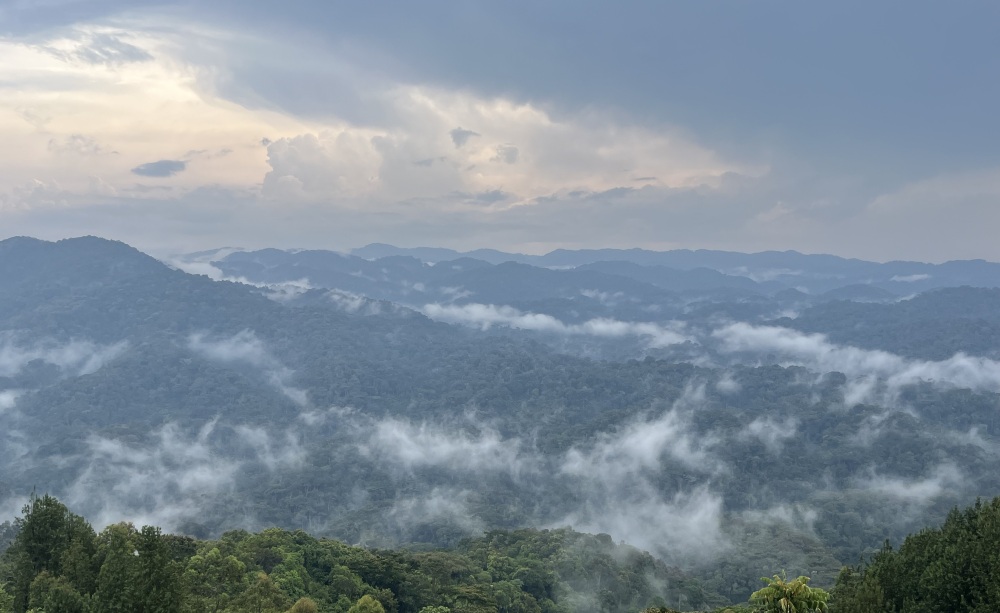
I am on the northern fringes of Bwindi Impenetrable Forest, a UNESCO World Heritage Site in southwestern Uganda. Gorilla trekking has been a lifelong bucket list experience for me, up there with viewing The Northern Lights, summiting Kilimanjaro, or driving a campervan across the US, following Route 66. I am here now, and today is the day. Unlike Ronald, I am feeling calm, knowing that I am prepared for this adventure and am about to have a day that will provide me with lifelong memories. That said, I am also filled with excited energy.
Ronald drives me along the bumpy road to the Ruhija sector headquarters, where I will be signed in and allocated to a trekking group. It’s a quiet morning at Ruhija, and there are only seven guests trekking today. We go through final preparations: retying laces and adding a double knot, tucking trousers into socks, and selecting a walking stick best suited to my height. The moment has come; we set off to track the Mukiza Family of gorillas in the Bwindi Impenetrable Forest.
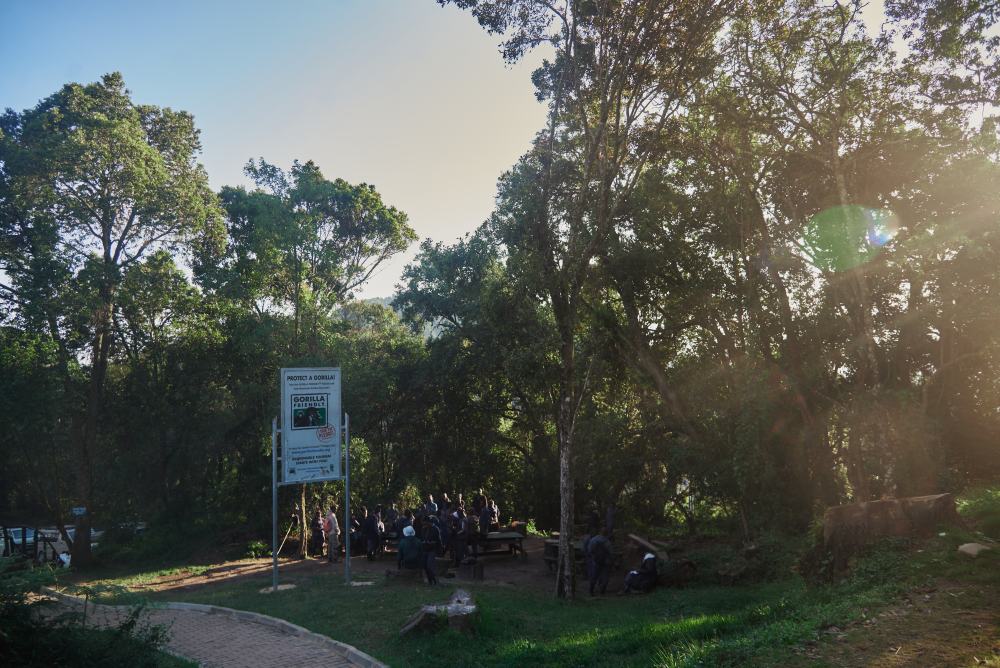
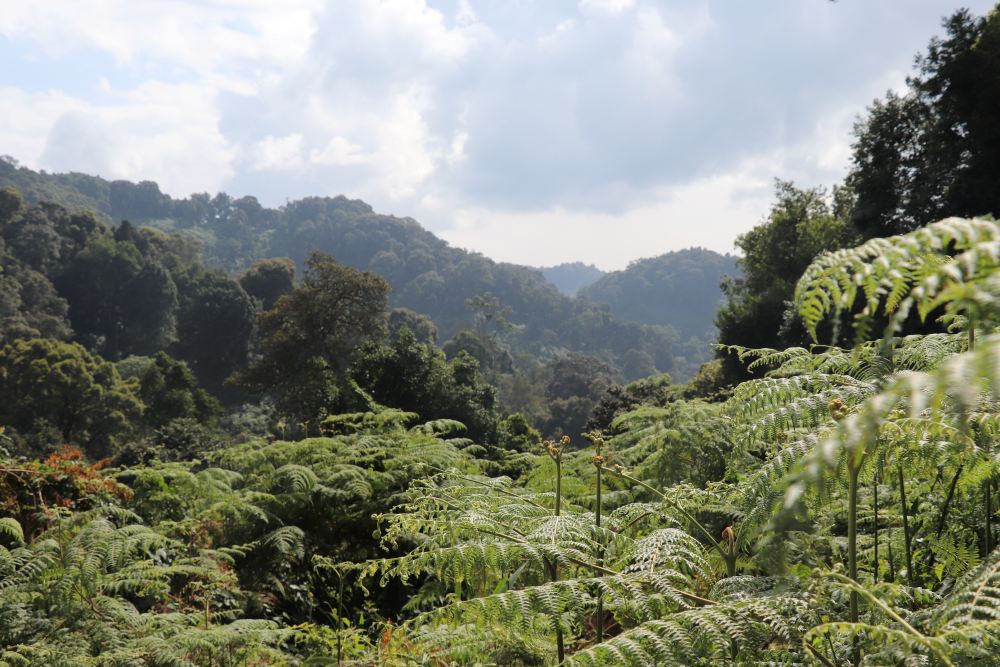
Even if there were no gorillas living in this forest, it would still be a remarkable privilege to walk the paths within this ancient ecosystem. The forest is dense, with vegetation sprawling on either side of the trail, which at times itself is covered by opportunistic greenery hoping to take hold between the daily footsteps that walk these paths. Overhead, the canopies of ancient trees block out the sky, allowing only the occasional ray of sunshine to penetrate to the forest floor. All around, the sound of cicadas echoes through the undergrowth, while the call of the Great Blue Turaco comes from the treetops. The forest is primal, alive, and raw in its astounding natural beauty. From the patterns of the ferns (of which there are 100 species) to the forested valleys thick with greenery. It’s impossible to accurately describe the experience of Bwindi Forest. It’s a tangible connection to the past, an experience that transcends what can be expressed in writing. It must be felt to be understood.

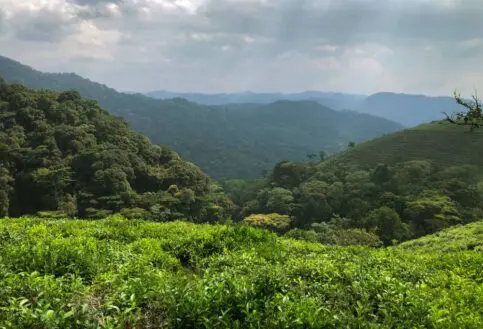
The trail climbs steep ascents, only to be followed by equally steep descents as we make our way over the hills through the forest. We stop on a hilltop to take in the view which stretches as far as my eyes can see over the sprawling mass of greenery covering valleys and hills. Never in my life have I experienced a forest of this enormity. Our guide, Davis, points across the valley to the opposite slope. He has spotted a lone bull elephant moving slowly between the trees. Elephant in Bwindi are the same as the savannah elephants found on the plains in Murchison Falls National Park, but they have evolved slightly to better suit their environment. A thin layer of fur grows on their bodies to combat the high-altitude temperatures, and their tusks tend to curve inwards to allow for easier movement through the dense foliage. There are a few forest elephants in Uganda, but they can only be found in Maghinga National Park to the south.
We continue our hike, pausing for breath on the climbs. At 2,300 meters above sea level, the altitude is noticeable for the coastline dweller that I am. Up ahead on the trail, a group of trackers are waiting for us. They have been out since first light, returning to the last known location of the gorilla family, then tracking them across the forest to where they are now. We extract cameras and facemasks from our bags, before leaving them in the undergrowth as we continue to where the family are resting. Ever since the Covid-19 pandemic, facemasks have been a requirement when viewing gorillas, both to protect us from them, and them from us, due to the ability for us to share diseases. Excitement mounts as we leave the path and follow Davis as he hacks a trail with his machete into the vegetation.
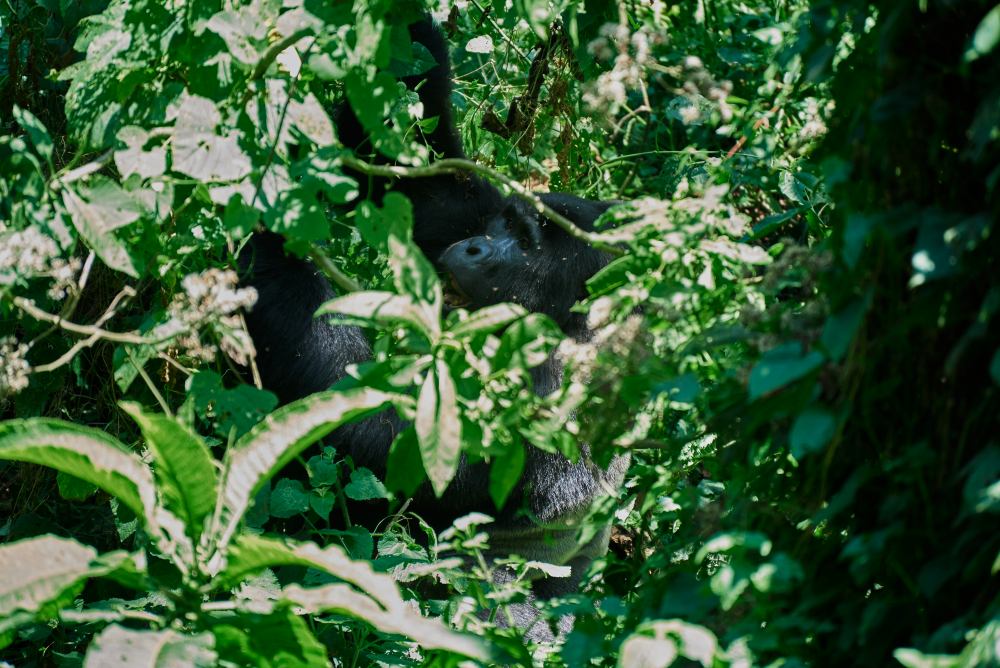
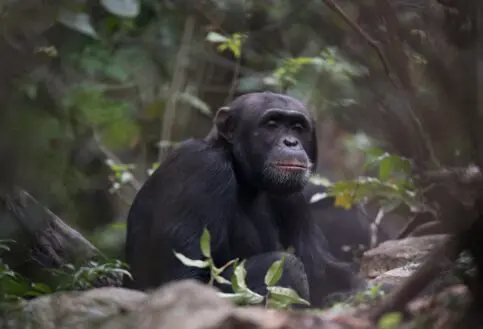
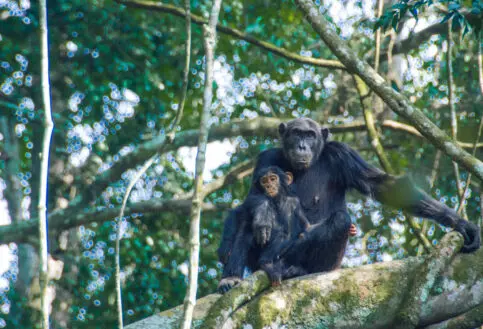
It’s a strange sensation. Time seems to stand still as this lifelong dream materialises. I lose myself in the movements of their fingers, the interactions between mothers, daughters, and infants, and the overwhelming dominance of the silverback whose penetrating gaze demands respect. We are in his territory now; there’s no mistaking that. Completely trigger-happy and devoted to capturing the moment, I juggle my DSLR camera and cell phone, alternating between video and stills on each device, frantically trying to cement the moment in a digital format. At last, and thankfully, I surface into the present. Into the moment I had only dreamt of for so many years. Studying their movements, their eyes, and their interactions with my own eyes without the digital filter obscuring my view.
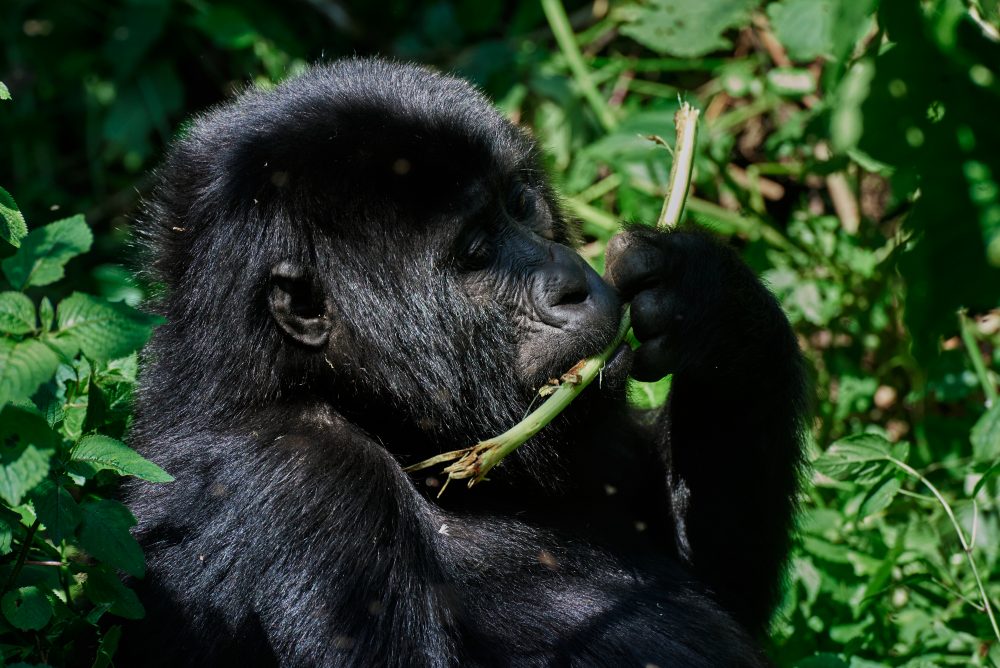
With such a limited time window available, my natural instinct was to capture as many videos and images of the experience as possible. But, ultimately, the beauty of the experience was in the unobstructed observation. The teasing rivalry between siblings, the almost imperceptible head movement of the silverback instructing the playful youngster to leave him alone, and the constant pushing and pulling of your typical family dynamic.
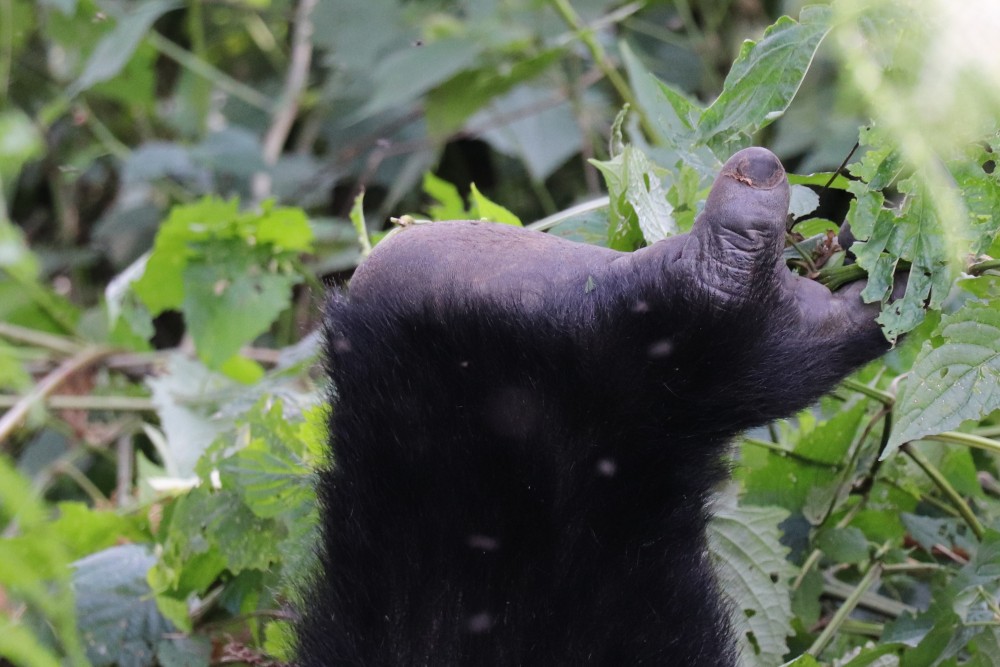
All too soon, Davis was softly letting us know that we had just five minutes remaining. Rudyard Kipling spoke of “the unforgiving minute” in his poem, “If”, and never before has time felt more against me. There was no slowing it, and this precious hour passed all too quickly. But I know each minute of that hour was filled “with sixty seconds’ worth of distance run”.
Spirits were high on the return journey. Even up the steep hills, as we all struggled to suck in enough air, there were jokes amongst our small group of adventurers. We had witnessed the extraordinary – a remarkable species fighting to survive against the threats of man and a shrinking habitat. I have been fortunate enough to experience some phenomenal safaris across East Africa each offering unique and diverse wildlife sightings, but, for me, none of those previous experiences come close to the raw emotion evoked from witnessing these giants in their natural habitat.
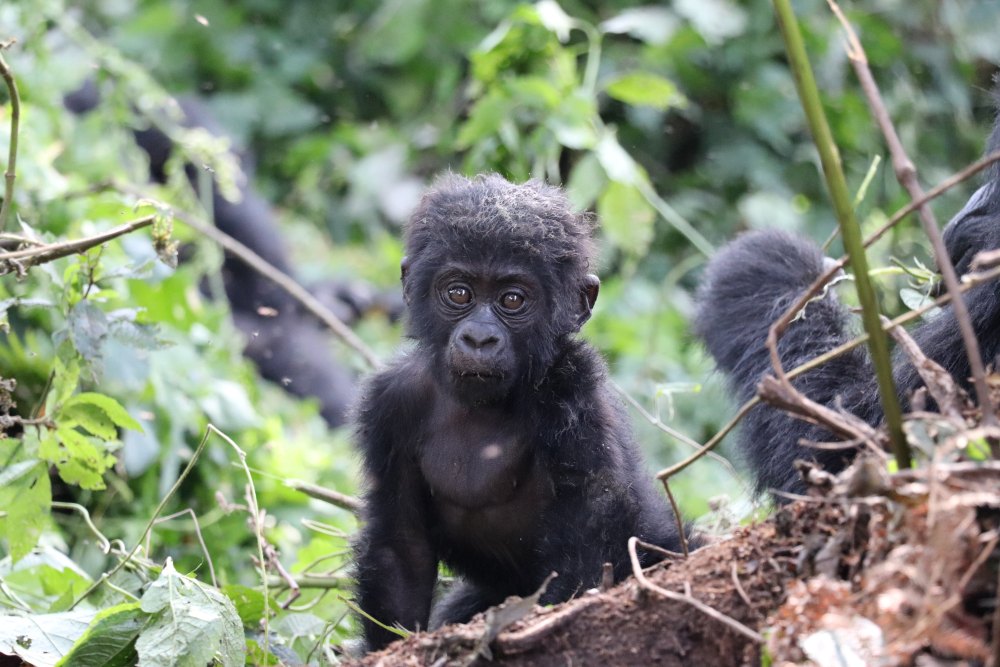
If you are considering an East Africa safari, consider Uganda. The national parks of Murchison Falls and Queen Elizabeth offer the traditional wildlife safari experience, while Bwindi Impenetrable Forest offers the experience you will never forget.
Start planning your adventure into Uganda today