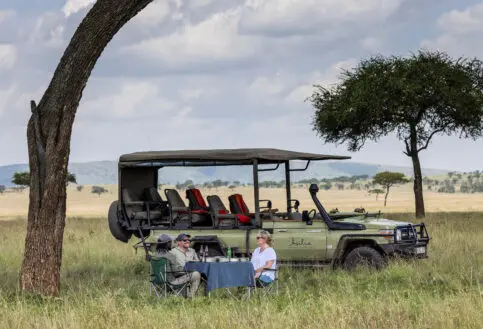
- PACK: Muted browns, olive, khaki, light grey.
- AVOID: Bright colours, black and blue.
Do you really need to adopt safari fashion when it comes to packing for a trip into the African wilderness?
In the fashion sense, safari style is recognised as an adventurous look and enduring trend. Characterised by the colour khaki, lightweight fabrics, and utilitarian elements, it’s a look inspired by the clothing worn by explorers and adventurers in Africa, popularised by designers like Yves Saint Laurent.
Colour
Your safari adventure will most likely start with the sun already high in the sky as your plane touches down at a bush airstrip. Stepping out into the brightness the air will be filled with the dry scent of dust, as around you the bush stretches in all directions. As your waiting guide takes your bag and gestures toward the open-sided Land Cruiser you may well notice they are dressed in a red Shuka that flaps gently in the breeze.
That Shuka, isn’t just for show. The traditional red cloth worn by many Maasai has long been thought to keep lions at bay. For generations, Maasai moved with their cattle through lion territory, and stories told through generations led to the belief that lions feared the colour red. Scientifically, it’s a bit more complicated. Lions, like most cats, are dichromats meaning they can’t distinguish red from green or brown. What matters more is movement and contrast.
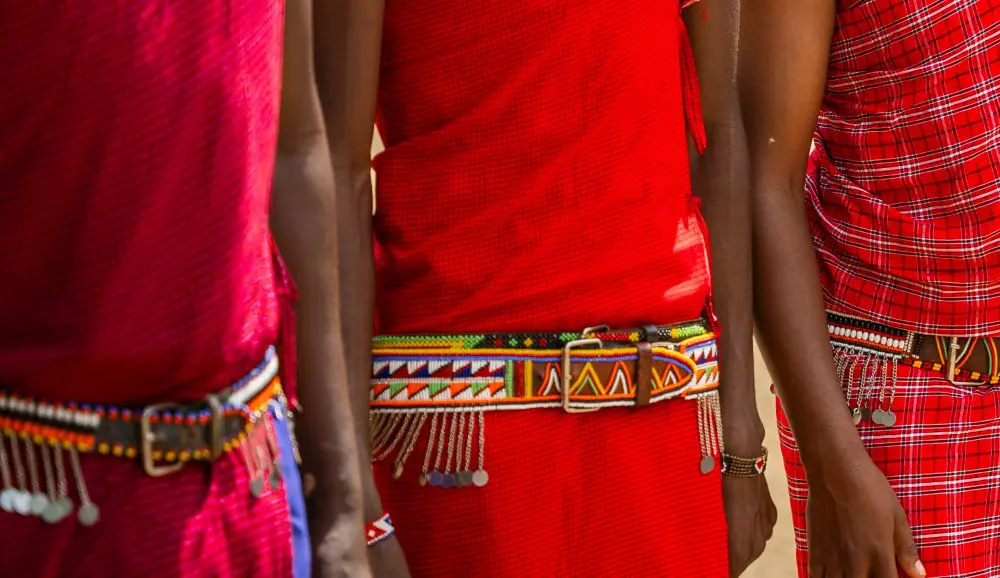
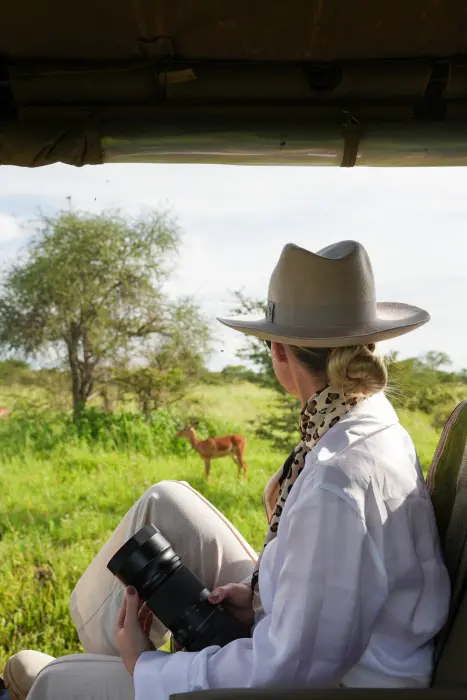
While red is seen as culturally iconic in East Africa, it draws attention. If your guide’s heritage calls for a Shuka, it’s understandable. But on guests, it’s best left at home. Red, orange, and other luminous colours should be avoided, as bright coloured clothing makes you conspicuous to wildlife and other guests.
Blue might seem innocuous, yet it’s a magnet for tsetse flies. In some parts of East Africa you may notice blue fabric banners, sometimes coated with insecticide to render the flies sterile upon contact. The flies are drawn to the colour blue and will often land on it, and these traps have proven to be effective in reducing tsetse fly populations. You want to avoid wearing the very same colour they are drawn to, which could result in some uncomfortable bites and welts.
Tsetse flies land on black nearly as much as on blue. Combine that with the midday heat and you’ve got a recipe for discomfort. Black attracts heat, mosquitoes and tsetse’s in equal measure. Wear it and you’ll sweat, swat, and regret.
Although white shirts and trousers will often feature prominently across influencer accounts and safari themed photo shoots, the reality is that it very quickly becomes dirty. Safari vehicles kick up clouds of dust which can coat vehicle interiors and occupants alike, forcing your pristine whites to rapidly adopt the colours of the dusty landscape.
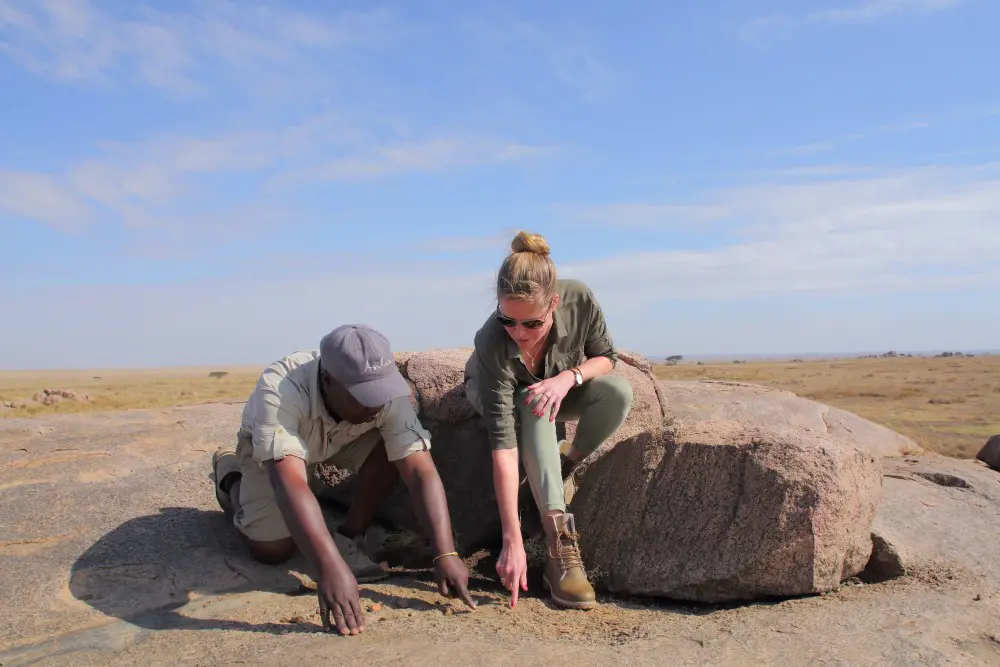
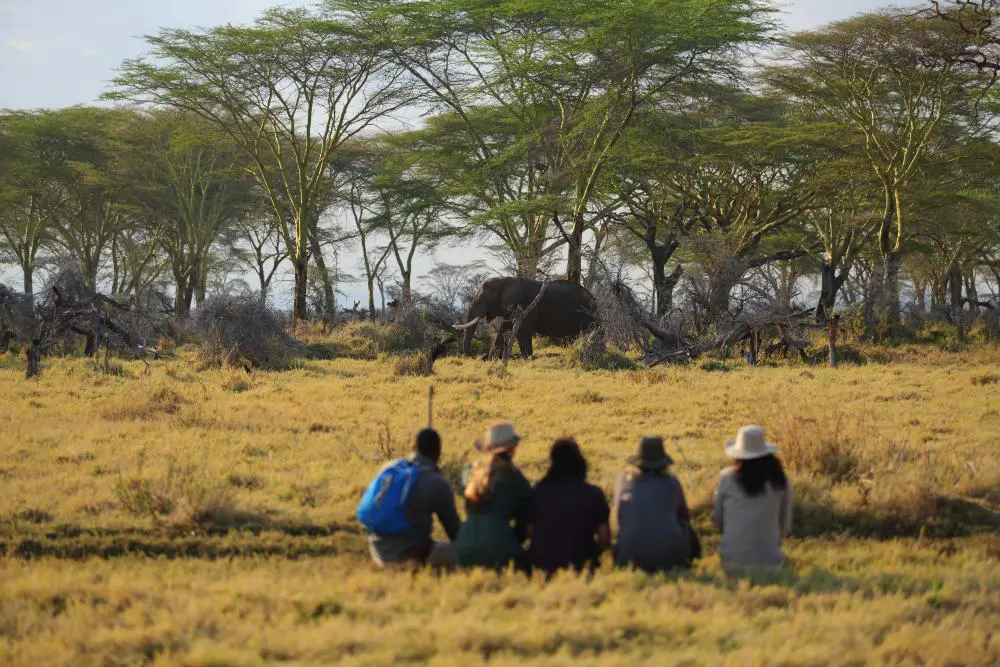
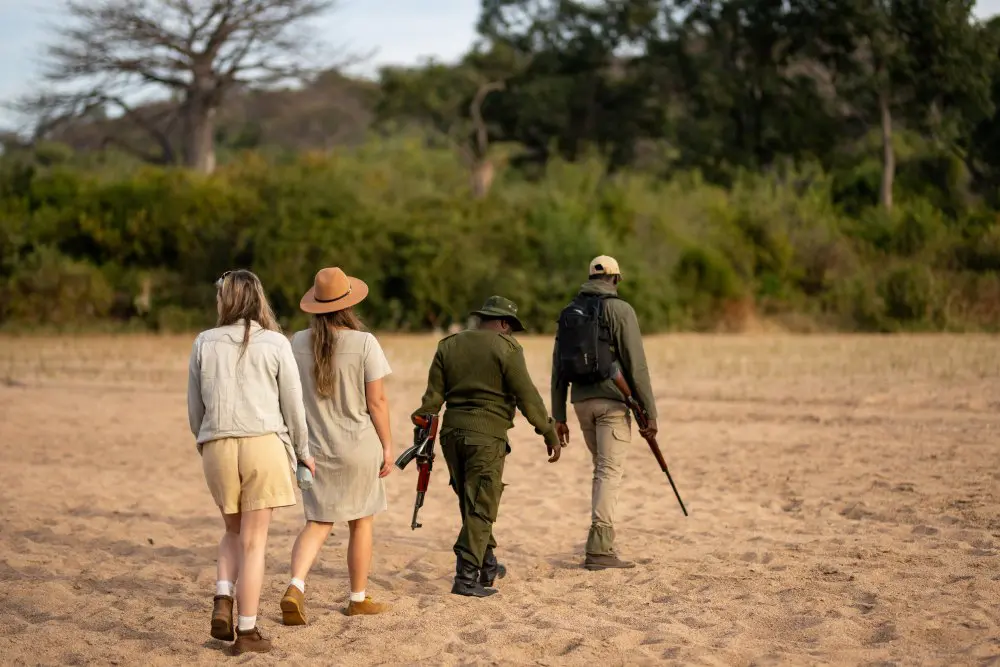
The best colours are the ones that don’t shout. Khaki. Olive. Dusty greys. Soft, muted tones that blend in with the landscape. You’re not just dressing to avoid insects, you’re dressing to be ignored. By wildlife, yes, but also by other guests. No one wants to be on a game drive with someone in fluorescent gym gear.
Fabrics
Considered clothing choice isn’t just about avoiding insects and blending in. Fabric type is just as important. Think layers of lightweight cotton or linen trousers, long‑sleeve breathable tops, and moisture‑wicking blends.
Temperatures drop in the early hours, even near the equator, only to soar by mid‑morning. The wind cuts through you as you bump along the track before first light, scanning for lion prints or hyena tracks. Plan to set off in your open vehicle for an early morning game drive in a fleece or a soft-shell over a base layer, then peel off as the sun rises.
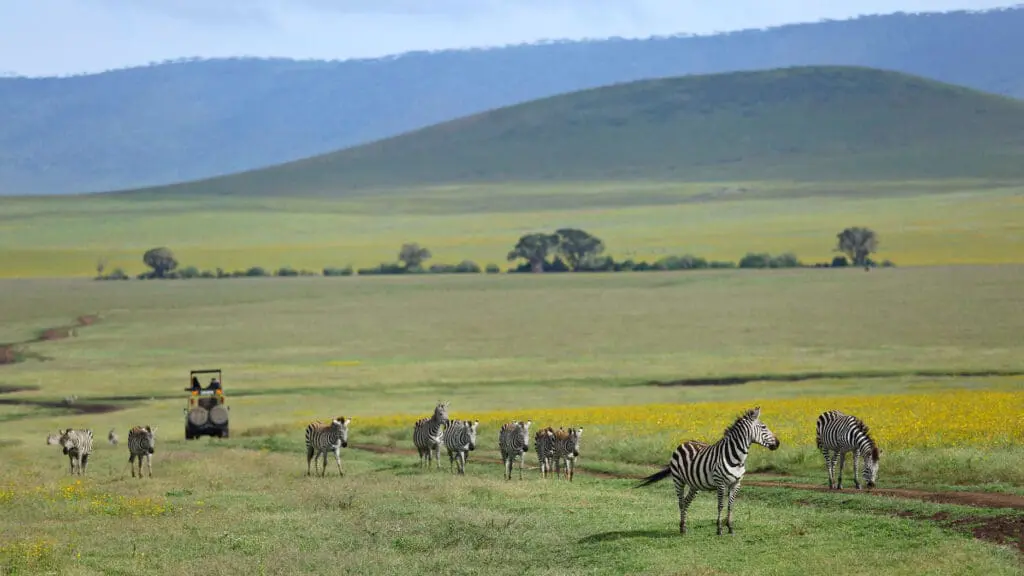
A scarf, buff, or beanie hat can be a welcome addition, especially in high‑altitude areas or places like Ngorongoro Conservation Area in Tanzania where the temperature swings are dramatic and mornings especially cold. A buff can also double as a dust-mask when driving through some of the busy areas of the Serengeti National Park, like Seronera, where billowing dust clouds follow passing vehicles.
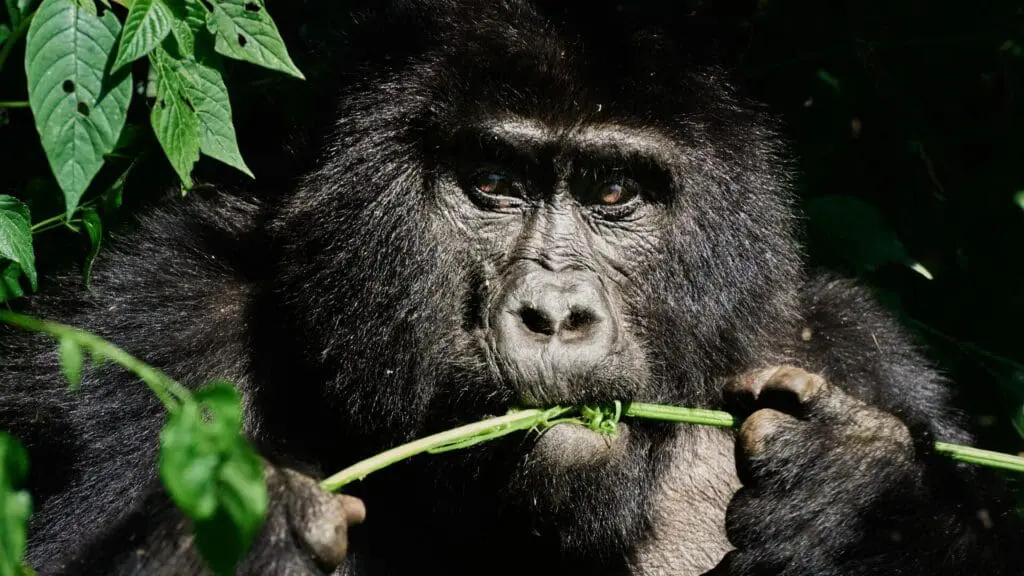
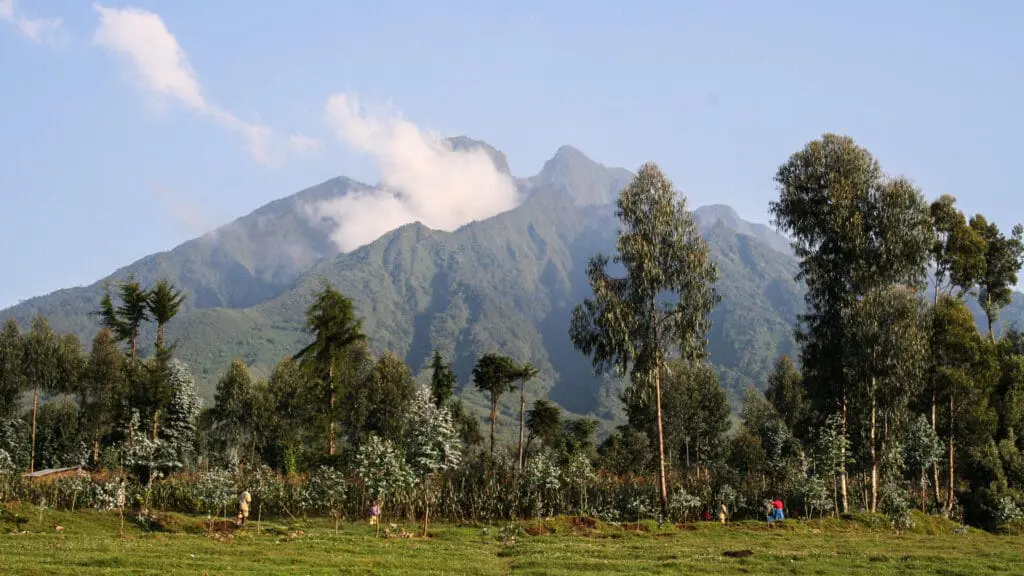
If you are heading to Uganda or Rwanda for gorilla trekking, there are a few extras you’ll need to consider. You’ll be pushing through dense undergrowth, dealing with steep slopes, and navigating muddy trails. Lightweight, waterproof trousers offer essential protection against nettle stings while gardening gloves help when pushing through the undergrowth. You’ll sweat, scramble, and slide. You’ll also never forget it.
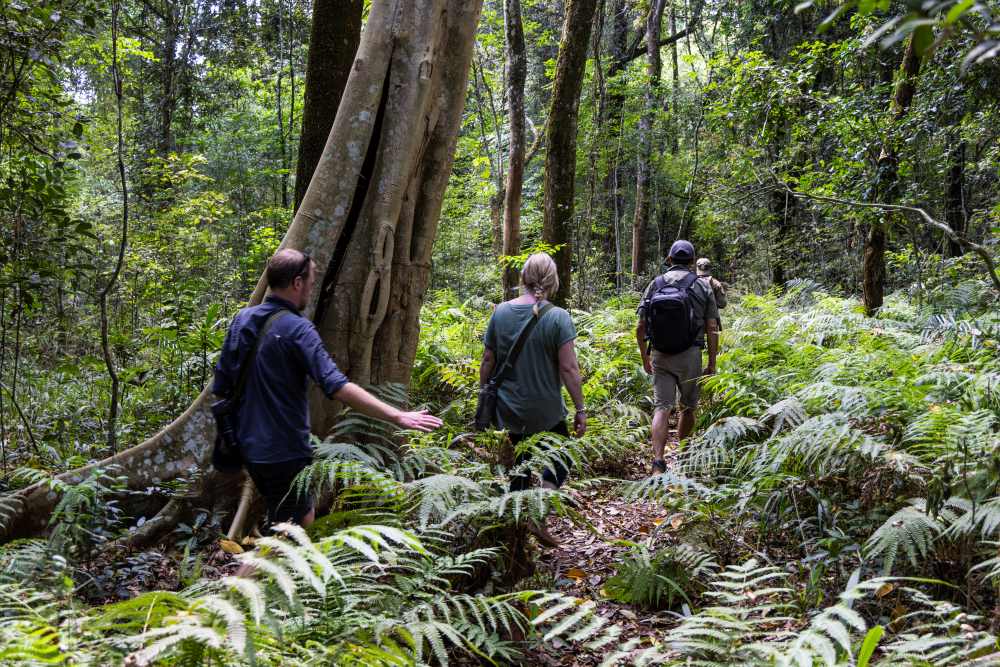
Long sleeve safari shirts, often made from polyester and treated with ultra-violet protection, are considered the best option for good reasons. The material is lightweight and quick drying, taking up minimal space in your weight restricted luggage and offering a quick turnaround time when washing. The long sleeves provide an additional layer of warmth in the cool mornings and can be rolled up when the temperatures begin to climb, while the collar offers sun-protection for the back of your neck and the moisture wicking fabric helps keep you cool during the hottest hours of the day.
- PACK: Cotton, linen, and synthetic materials that are quick-drying and comfortable in warm weather but can be layered when it is cool. Add lightweight waterproof trousers for gorilla trekking.
- AVOID: Denim might seem rugged, but jeans are heavy, slow to dry, and brutal in the heat.
Fit and Footwear
The best style for safari isn’t necessarily what looks good, but what feels good and is practical. You may find yourself needing to stop and “inspect the rear tyres” aka visit the bush toilet. This isn’t the time for a jump suit or tight clothing that you need to wriggle in and out of. Loose-fitting shirts with pockets and buttons are ideal, while long sleeves and lightweight trousers help provide protection against the strong midday sun.
Footwear is equally important. In most cases, you’ll be fine with comfortable walking shoes or trainers, but they need to be well-worn and supportive. In camp, a pair of sandals or slip-ons makes life easy, but avoid anything open-toed when you head any further than the camp dining area. When you step out of your vehicle for that end of day sundowner, you don’t want to be wearing flip flops.
- PACK: Clothes you can move easily in that feel comfortable.
- AVOID: Tight restrictive clothing.
Accessories
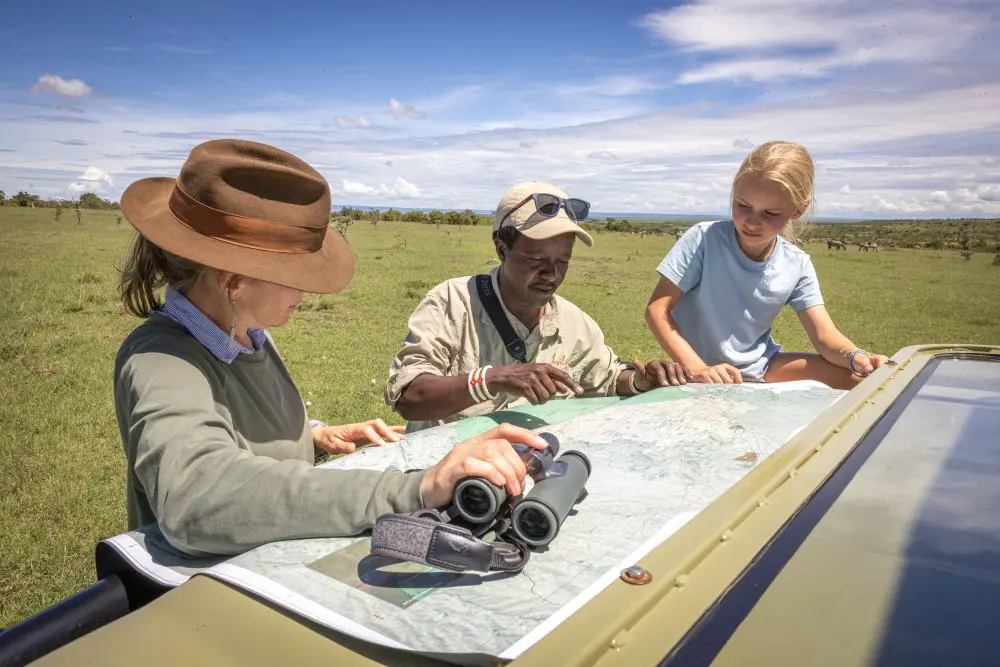
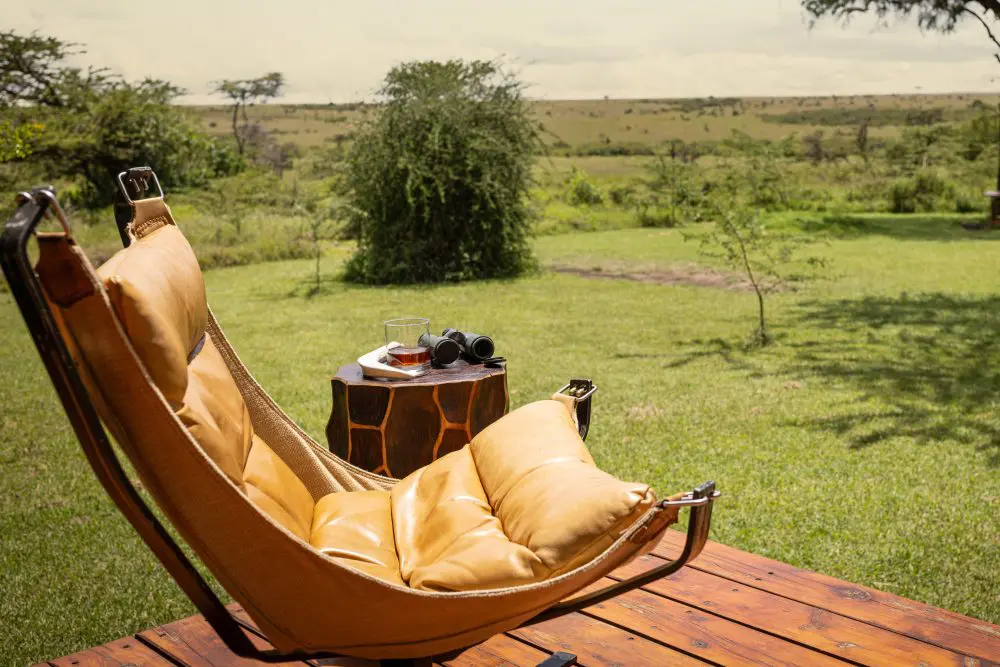
Safari isn’t a place for sparkle. Leave the necklaces, the long earrings and the jewellery you keep for best occasions at home. Dust gets into everything. The only accessories worth their weight are binoculars and a decent hat. A wide brim helps with sun and rain, while your binoculars will be with you almost 100% of the time, always close at hand for the moment they are needed. Polarised sunglasses are another essential, cutting glare and sharpening every detail on the horizon. Consider adding a lens cloth to your camera or binoculars bag to give your gear an evening clean before the next day’s adventures. These are accessories worth their weight in gold.
- PACK: A good hat, sunglasses and binoculars.
- AVOID: Expensive jewellery.
Think Sustainably
Before you rush out to buy an entire safari wardrobe, raid your existing one. It is not necessary to purchase an entire wardrobe of khaki-themed safari clothing for your safari. Most people already own what they need: neutral clothes, light layers, trail shoes. They’re all perfect safari attire. If you need a few key pieces choose fabrics that last, colours that suit the landscape, and items that won’t need replacing after one trip.
Safari isn’t a fashion show. Nobody’s judging your style choices when there’s a leopard stalking through the undergrowth fifty metres away. Comfort, practicality, and blending in are what matter.
- PACK: Clothing you already have. Something new with longevity beyond this trip.
- AVOID: Buying new clothing you are unlikely to wear again.
Remember
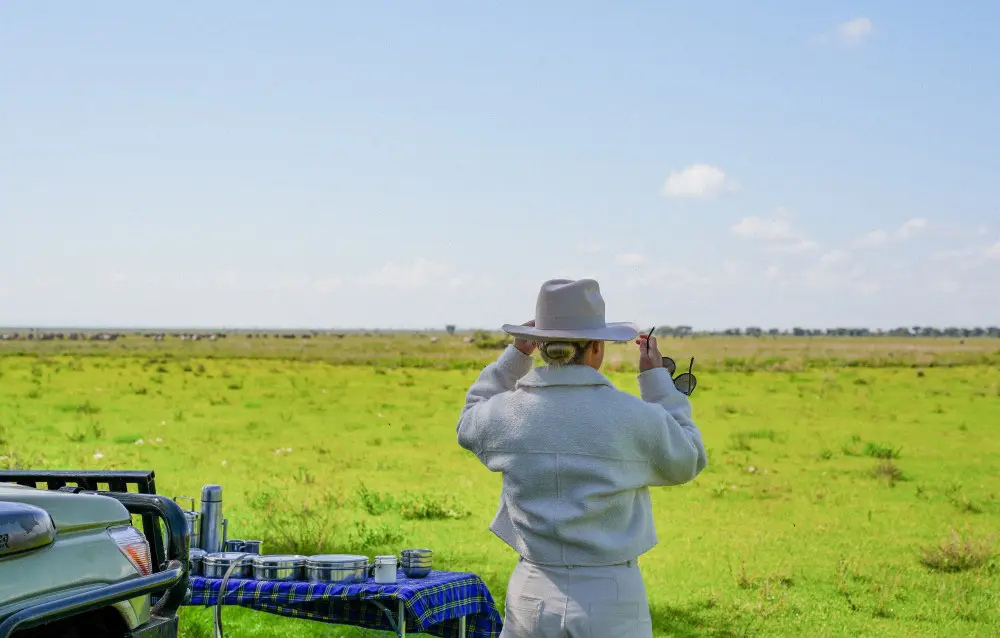
On safari, you’re not the show. The landscape and animals are. Your goal is to disappear into the background, both literally and figuratively, just enough to witness it properly. Wear clothes that keep you warm or keep you cool, let you crouch, climb, sit, walk, swat, breathe, and, occasionally, squat. Keep it functional, comfortable and low‑profile. Out here, what you wear isn’t about style. It’s about seeing, and not being seen.
Now that you know what to wear, it’s time to start planning your dream East Africa safari.