Few wildlife encounters are as moving as seeing a rhino in the wild. As one of Africa’s most threatened animals, the white rhino has become a powerful symbol of both conservation loss and extraordinary recovery. And their story is one every safari traveller should know.

Two distinct species of white rhino exist: the critically endangered northern white rhino, of which just two individuals remain on earth, and the southern white rhino, which has rebounded from the brink of extinction through decades of dedicated conservation. Understanding the difference between them and the fragile state of each offers a profound new dimension to any East African safari.
Conservation areas like Ol Pejeta Conservancy in Kenya are integral to preserving habitats and protecting these vulnerable animals while offering travellers to Kenya unmatched wildlife experiences and the chance to witness conservation in action.
What Is the Difference Between Northern and Southern White Rhinos?
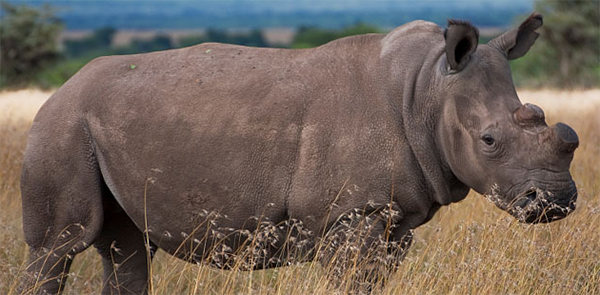
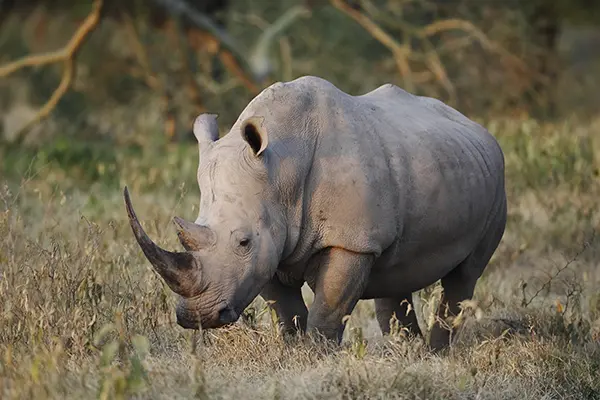
Northern and southern white rhinos were once considered subspecies of the same animal. Scientists now classify them as two separate species, distinguished by physical characteristics, range, and, most alarmingly, population size.
| Northern white rhino | Southern white rhino |
| Smaller, weighing 1400-1600 kg (adult male) | Larger, weighing 2000-2400 kg (adult male) |
| Straight back | Concave back and prominent shoulder hump |
| Flat skull | Concave skull |
| No grooves between ribs | May have distinct vertical grooves between ribs |
| Hairier ears and tails | More body hair |
| Shorter front horn; | Longer front horn |
Did You Know? White rhinos aren’t actually white in colour. The name derives from the Afrikaans word ‘wyd’, meaning ‘wide’ – a reference to the animal’s broad, square mouth, adapted for grazing.
Population Differences
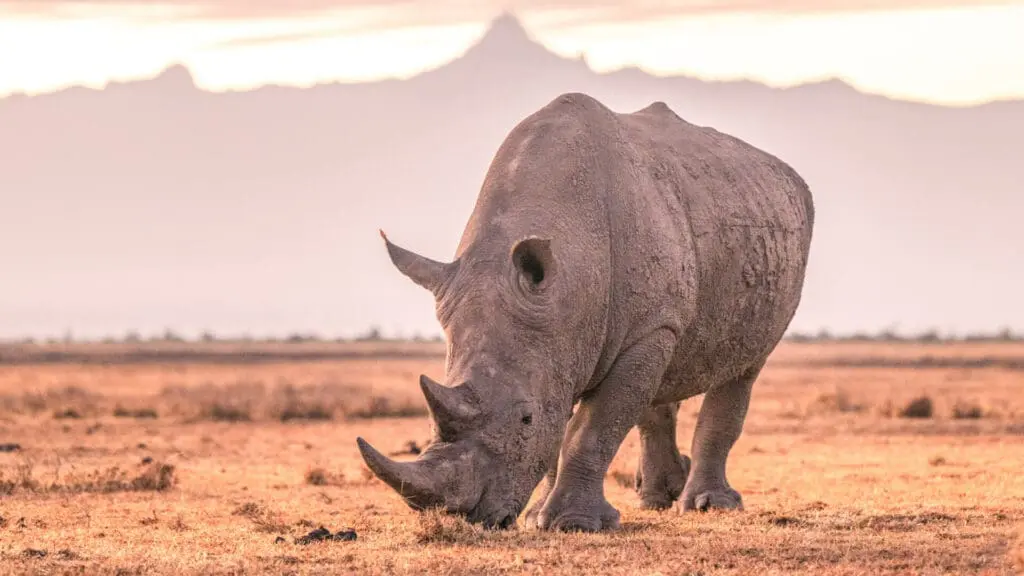
The southern white rhino is a conservation success story. In the late 19th century, their numbers hovered alarmingly at around 50 individuals. Today, the population has recovered to over 15,000 individuals – a direct result of sustained protection, anti-poaching efforts, and carefully managed conservation programmes across eastern and southern Africa.
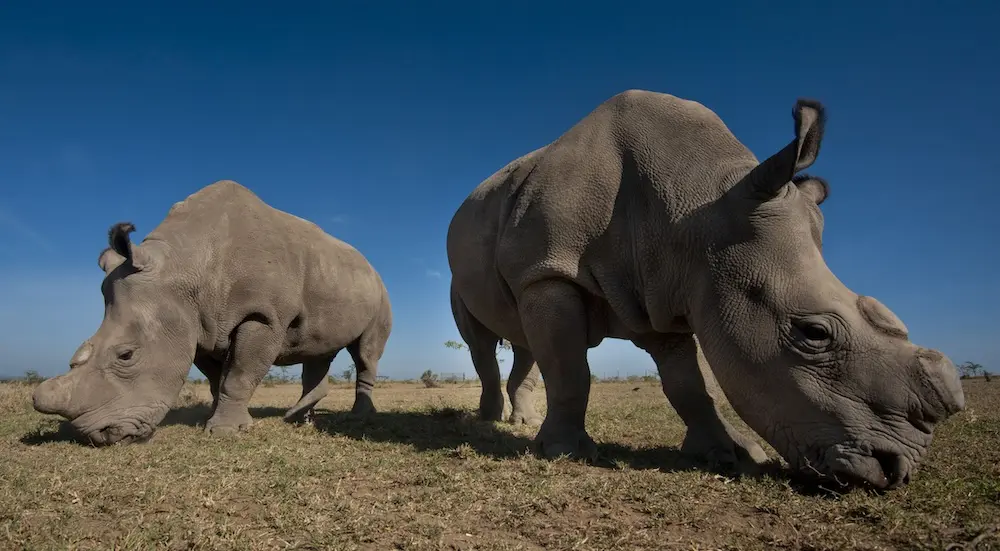
The northern white rhino, however, is a vastly different story. Decades of rampant poaching and civil unrest across central Africa resulted in the population being decimated. Now considered functionally extinct in the wild, the last two remaining individuals – a mother (Najin) and daughter (Fatu) – live under 24-hour armed guard at Ol Pejeta Conservancy in Kenya.
Habitat and Range
Southern white rhinos are found in several protected areas across eastern and southern Africa, including Kenya, Tanzania and parts of southern Africa. As conservation efforts have yielded positive results, their range has expanded, and new populations are being established in suitable habitats.
The last two northern white rhinos live under constant protection at Ol Pejeta. Their ancestral range, including Uganda, Chad, Sudan, the Central African Republic, and the Democratic Republic of the Congo have long been without this species.
Why Northern White Rhinos Matter
The northern white rhino’s near-disappearance represents one of the most significant conservation losses of modern times. This species was brought to the brink by human actions: relentless poaching driven by demand for their horns, and decades of instability across their home range.
In 2018, the world saw the death of Sudan, the last remaining male northern white rhino. He was 45 when he died, after living at Ol Pejeta for many years, where he was cared for by a dedicated team of rangers and keepers. With his passing, only the females Najin and Fatu were left, marking the functional extinction of the species as natural reproduction was no longer possible.
That said, the story isn’t over just yet. Scientists are working on advanced reproductive technologies, using genetic material from Sudan and other individuals, to create embryos that could be carried by southern white rhino surrogates. It’s painstaking and uncertain work, but it represents the best chance we have to bring a species back from the brink of extinction.
For travellers, understanding this turns a simple rhino sighting into something far more meaningful than a tick on a game-drive checklist.
Visiting Ol Pejeta Conservancy and the Last Northern White Rhinos
What is Ol Pejeta?
Ol Pejeta Conservancy is a private wildlife conservancy set on 90,000 acres in Kenya’s Laikipia County, between Mount Kenya and the Aberdare Range. It’s one of the most important wildlife sanctuaries in East Africa. Not only is it a Big 5 destination, home to lion, leopard, buffalo, elephant, and the largest population of black rhino in East Africa, but it’s also home to the last two remaining northern white rhinos on the planet.
Ol Pejeta was established with conservation at its core and is today internationally recognised as a model for community-based conservation. Here, tourism revenue funds serious wildlife protection through anti-poaching operations and community development programmes.
Why It Matters Globally
Ol Pejeta is home to Najin and Fatu, the last two northern white rhinos on earth. They’re a reminder of what the world has already lost but also of what remains worth protecting. They live under constant guard while scientific institutions work to ensure the species can continue through scientifically aided reproduction.
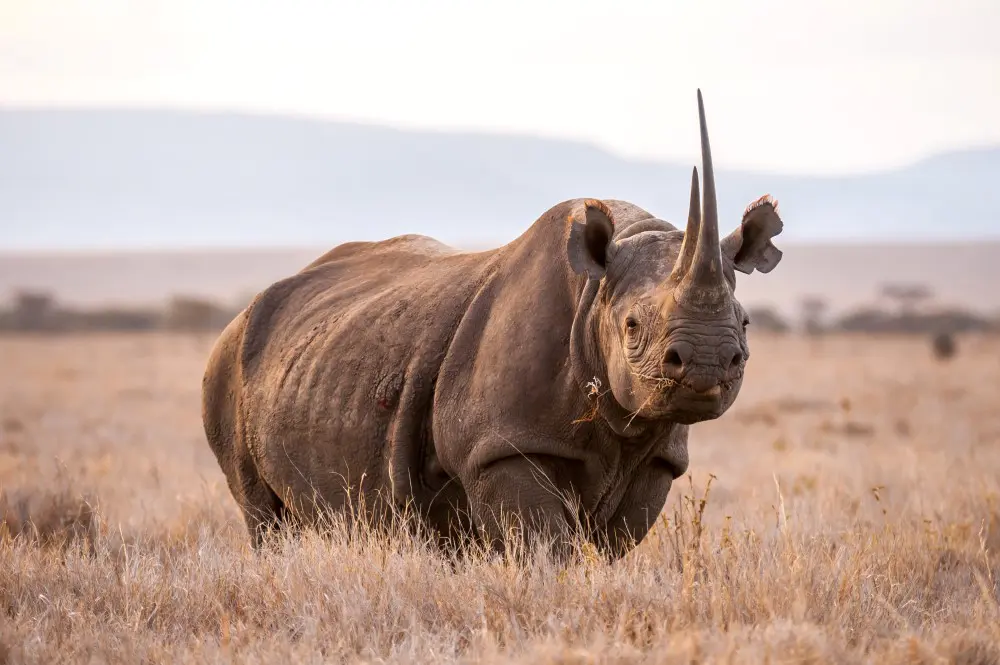
Beyond this, Ol Pejeta is home to the largest population of black rhino in East Africa. The reserve is also home to southern white rhino and African wild dog, Grevy’s zebra, and other threatened species.
What Travellers Experience
Visiting Ol Pejeta is a unique experience. While the wildlife viewing is exceptional, the real draw for any guests is the depth of conservation context on offer.
Highlights include:
- Seeing northern white rhinos at close range in the endangered species enclosure is truly remarkable.
- Meet Baraka, Ol Pejeta’s famous blind black rhino – a rare opportunity for an up-close encounter with one of Africa’s most elusive creatures.
- Guides are truly passionate and knowledgeable about the full story of the northern white rhino crisis. Hearing them describe the tireless efforts.
It’s hard to visit Najin and Fatu without getting emotional. Especially when you hear the stories of Sudan from guides and keepers, and hear their hope for the conservation now underway. A visit here is, without question, one of the most stirring experiences in East Africa.
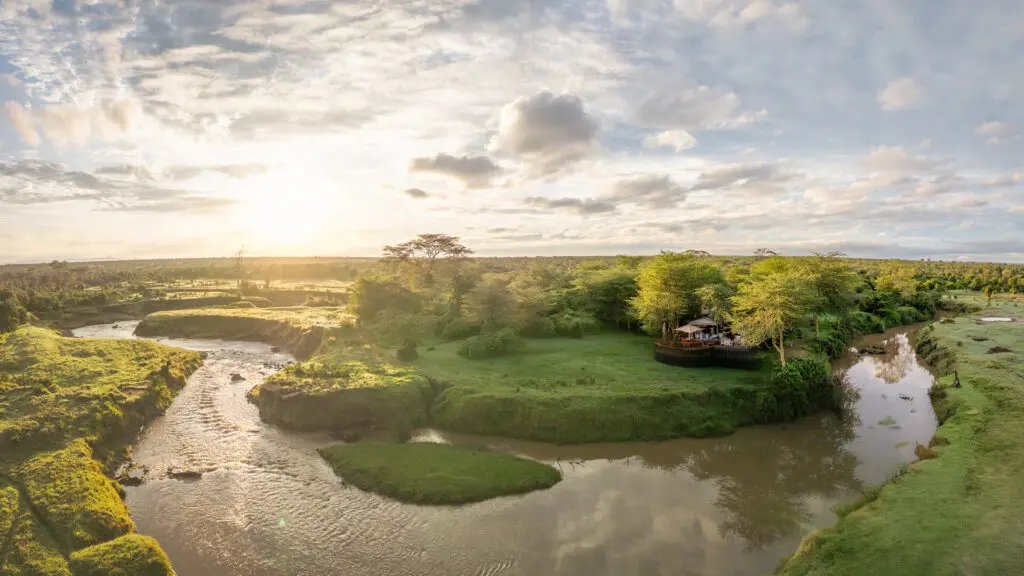
Ol Pejeta is accessible from Asilia’s Ol Pejeta Bush Camp, an intimate, family-friendly property on the conservancy grounds.
What Is It Like Seeing Rhinos on Safari?
Rhino sightings are rare, so when they do happen, they are so much more special and leave a lasting impression.
Experienced guides will often detect signs of rhino long before guests do – a distinctive track in the dust, a patch of flattened grass. The build-up to a sighting is just as exciting as the encounter itself.
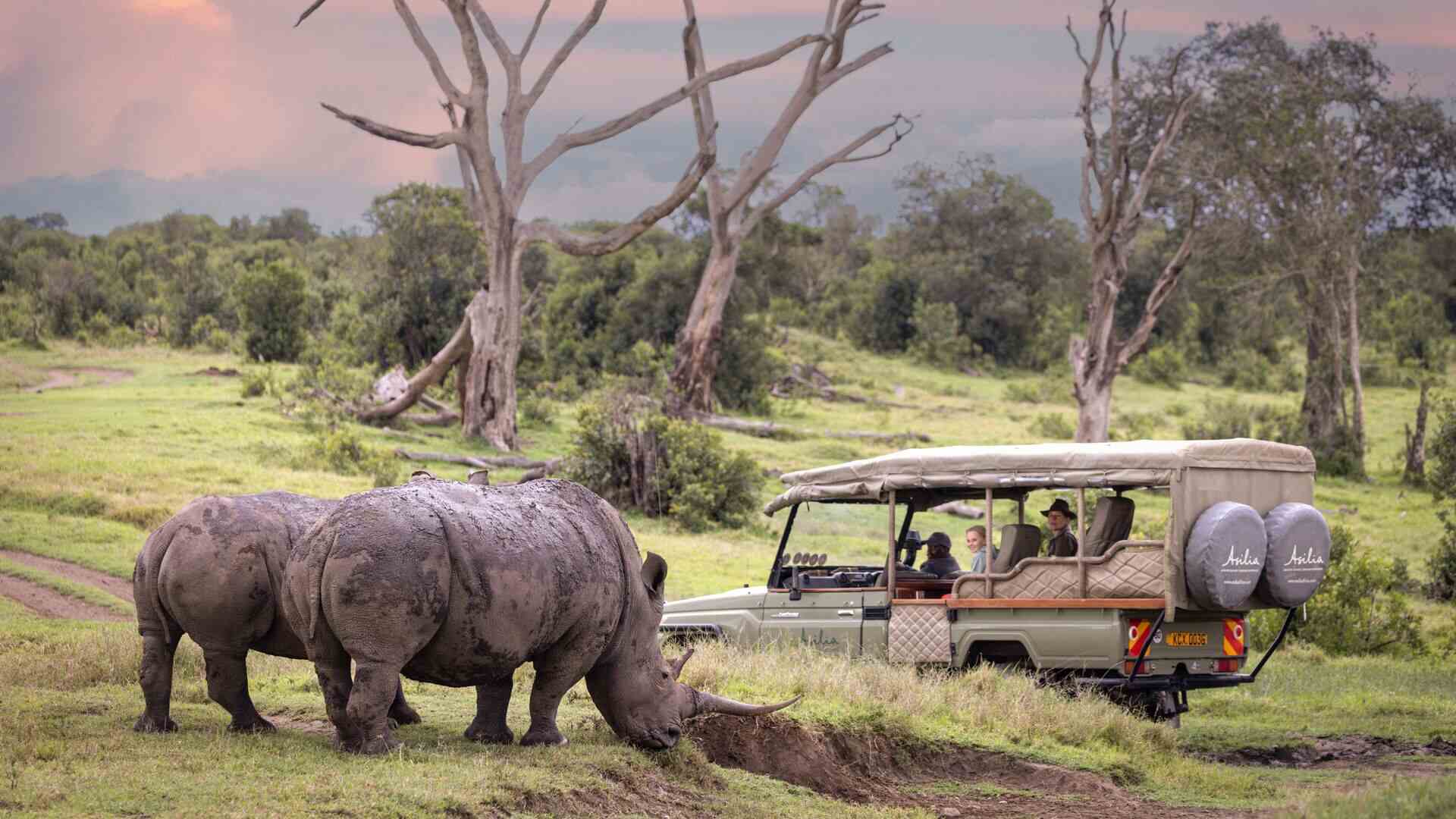
At close range, the scale of a white rhino is extraordinary. They’re short-sighted, relying heavily on smell and sound. So, as long as you’re downwind and very quiet, the rhino will be unaware of your presence and will go about its business undisturbed – a truly rare and memorable experience. Your guide will explain behaviour as it occurs – grazing patterns, territorial marking, calf dynamics.
How Safari Tourism Supports Rhino Conservation
Conservation relies heavily on funding. Throughout East Africa, the link between responsible tourism and wildlife protection is direct and significant.
Tourism revenue funds anti-poaching ranger teams who patrol conservancies 24 hours a day, the monitoring programmes that track rhino movements and health, and the veterinary care that allows injured and sick animals to be treated and returned to the wild. At Ol Pejeta, tourism income also supports community programmes that give local landowners and villages a genuine stake in the conservancy’s success – an approach that has proven critical to long-term conservation outcomes./p>
When guests choose to stay in conservancies, the financial contribution is even more direct. Conservancy fees, accommodation revenues, and the operational costs of premium safari camps all flow back into the ecosystems that sustain the wildlife.
Asilia guests contribute $10 per guest per night to conservation programmes across the properties where we operate. It’s a small figure per booking, but meaningful at scale – and it reflects a broader philosophy: that the best safaris are the ones that leave the landscape better than they found it.
Where Can You See White Rhinos in East Africa?
East Africa has several exceptional destinations for rhino viewing. For more details, see our guide to rhinos in Kenya and Tanzania. In short:
- Ol Pejeta Conservancy, Kenya – home to the last two northern white rhinos, the largest black rhino population in East Africa, a significant number of southern white rhinos, and excellent Big 5 game viewing.
- Lewa Wildlife Conservancy, Tanzania – pioneering wildlife sanctuary with 255 black and white rhinos.
- Ngorongoro Conservation Area, Tanzania – rhino sightings possible on the crater floor, against one of Africa’s most dramatic backdrops.
- Akagera National Park, Rwanda – growing black rhino populations following successful reintroduction efforts.
Best Time to See Rhinos on Safari
Rhinos can be seen year-round in East Africa, but the dry season between June and October offers the best conditions in both Kenya and Tanzania. During the dry season, vegetation is sparser, and most species gather around the remaining water sources, so it’s much easier to find and spot rhinos.
The wet season doesn’t preclude sightings; you simply need to be on your toes to find them in the dense foliage.
For visitors hoping to combine a rhino safari with the Great Migration, July to October offers peak migration crossings in the Mara and optimal rhino viewing conditions in Ol Pejeta.
Is a Rhino Safari Good for First-Time Safari Travellers?
A rhino safari is a great choice for first-time visitors, particularly at a conservancy like Ol Pejeta. Aside from ;the wildlife, the conservation angle truly enriches the experience and leads to much greater appreciation of nature and our place within it.
Rhino encounters are also a fantastic option for families travelling with older children and teenagers. At Ol Pejeta, the plight of the northern white rhino after Sudan’s passing, the real-world narrative, and the role of science in the future of the species tend to leave a lasting impression.
From a photography perspective, well-managed conservancies offer the opportunity to photograph rhinos up close.
Frequently Asked Questions
Yes. The last two northern white rhinos – Najin and Fatu – live under armed protection at Ol Pejeta Conservancy in Kenya.
Southern white rhinos can be seen at several protected areas across southern and eastern Africa, including Ol Pejeta, Lewa, and the Ngorongoro Conservation Area. The only place in the world where northern white rhinos can still be seen is at Ol Pejeta Conservancy in Kenya.
Absolutely! Ol Pejeta is a Big 5 destination that offers sightings of both black and white rhino. Every visit contributes not only to conservation of the area but also, more specifically, to the protection of the last two remaining northern white rhinos in existence.
Yes, particularly for older children and teenagers with an interest in wildlife or conservation. Asilia’s guides are skilled at engaging younger guests and bringing conservation into context.
Safari tourism directly supports ranger programmes, anti-poaching operations, habitat protection, veterinary care, and community partnerships. Often, tourism revenue is the primary funding mechanism for the work that keeps threatened species alive.
No. At one time, they were classified as subspecies of the same species, but they are now considered separate and distinct species. They differ in size, physical characteristics, range, and population (the southern white rhino has a population of over 15,000 individuals, while only two northern white rhinos remain).
Scientists are working to develop embryos using stored genetic material taken from the last males of the species before they died. It’s technically complex, and the outcome is uncertain, but it’s the most promising path to prevent losing the species altogether.
Plan Your Rhino Safari in East Africa