Imagine feeling the morning dew brush against your boots as you follow fresh leopard tracks through the African bush. Picture yourself pausing to examine the intricate patterns of a dung beetle rolling its precious cargo, or catching the faint scent of wild sage crushed underfoot. This is the magic of a walking safari – an intimate dance with nature that simply can’t be replicated from inside a vehicle.
While traditional game drives offer excellent wildlife viewing from the comfort of a 4×4, walking safaris invite you to become part of the landscape itself. It’s an adventure that awakens every sense, where the rustle of leaves might signal a nearby elephant, and understanding animal behaviour is essential. For those ready to trade the rumble of an engine for the whisper of wind through acacia trees, a walking safari offers a transformative way to experience East Africa’s wilderness.
What Is a Walking Safari?
Definition & Experience
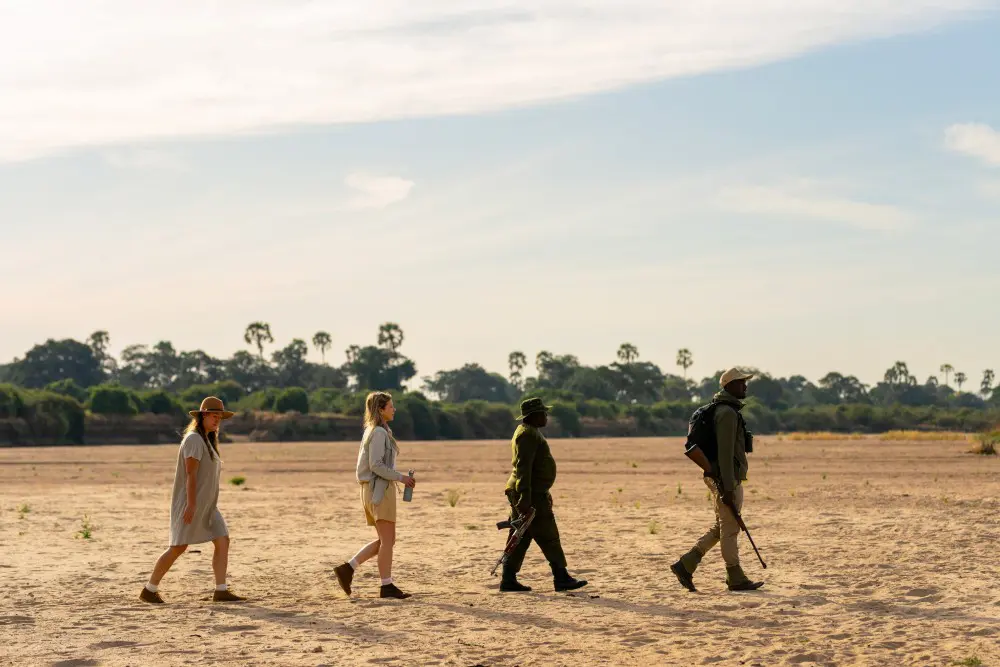
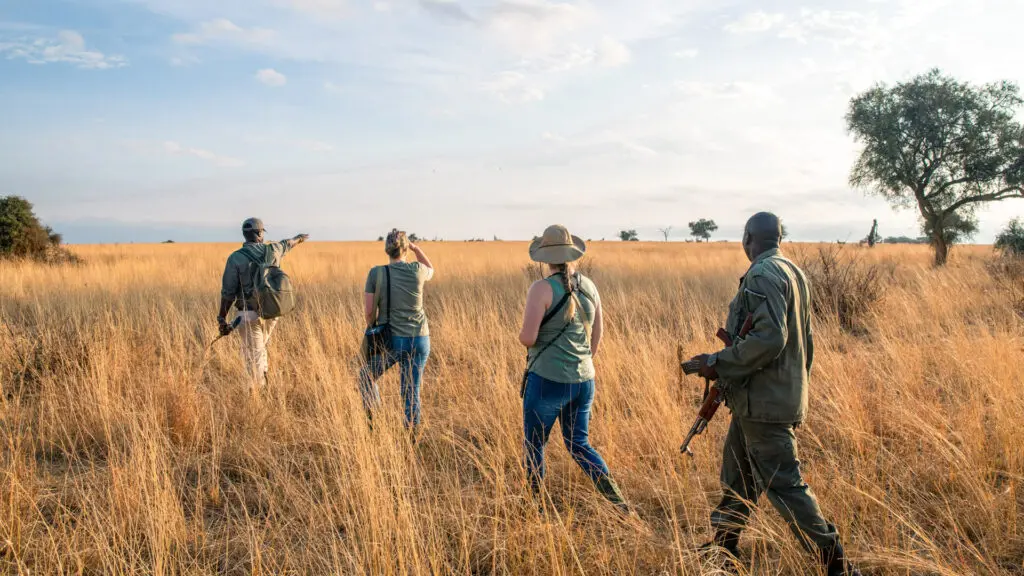
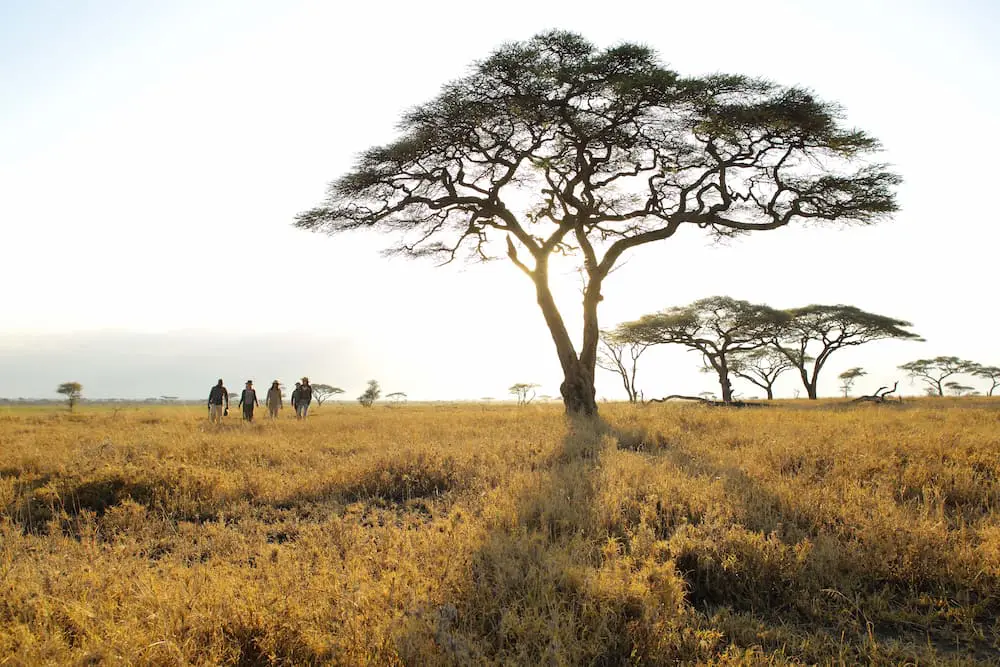
A waking safari is exactly what it sounds like – exploring the African bush on foot, accompanied by expert guides who reveal the secrets of the wilderness one step at a time. Unlike the fast-paced pursuit of the Big 5 from a vehicle, walking safaris embrace a slower, more contemplative rhythm. You’ll typically cover just a couple of kilometres over a few hours, stopping often to examine tracks, learn about medicinal plants, or simply absorb the ambient sounds of the bush.
This is not to be confused with a hike to reach a destination. It’s a journey in which each moment holds the potential for discovery. Your guide might kneel to show you how to age elephant dung, demonstrate which berries sustained early humans, or teach you to identify birds by their calls alone.
How It Differs from Game Drives
The difference between a walking safari and a game drive can be likened to the contrast between reading a book and living inside its pages. From a vehicle, you’re an observer – protected, elevated, and somewhat separate from the environment. On foot, you become a participant in the ecosystem.
Your perspective shifts dramatically when you’re at eye level with the action. From a vehicle, a termite mound is a bump in the landscape; on foot, it’s a complex civilisation. And when you do encounter larger animals, the experience is electrifying in a way that simply cannot be matched from within a vehicle.
Why Choose a Walking Safari in East Africa?
Immersive Nature Connection
When you walk through the bush, you engage all your senses in a way that you rarely do in your modern life. You’ll learn to read the landscape like a book – fresh scratches on tree bark tell of elephants passing by, while a sudden silence among birds could indicate a nearby predator. The small wonders often steal the show – from iridescent beetles, delicate spider webs, or the perfect symmetry of animal tracks in soft sand.
Unique Regions for Walking Safaris
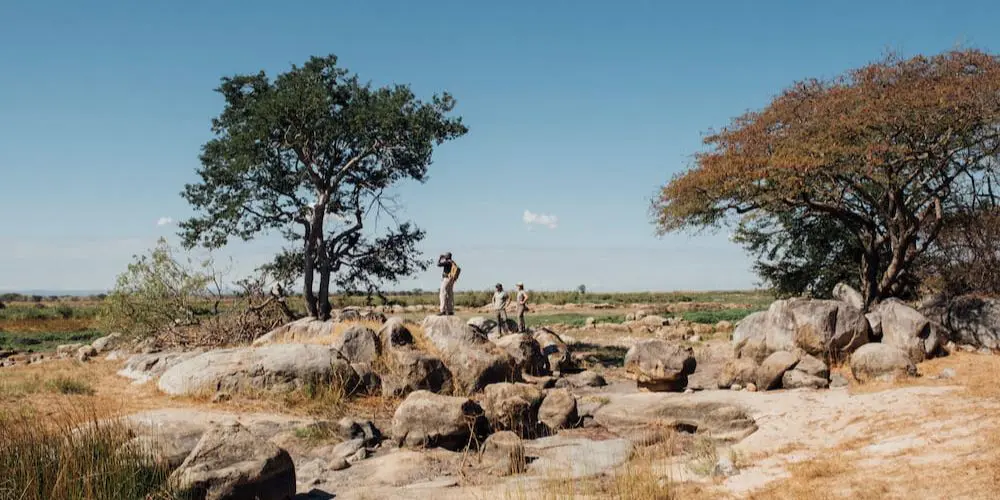
East Africa offers some of the world’s finest walking safari destinations, each with its own character. Walking safaris in national parks are generally not permitted but are nearly always available in the private reserves nearby. In Kenya, private conservancies like Mara Naboisho are renowned for offering exceptional walking safaris, while in Tanzania, Tarangire offers a magical opportunity of walking through an iconic baobab-studded landscape.
When Is The Best Time to Go?
Seasonal Factors
The dry season from June to October transforms East Africa into a walking safari paradise. Grass is shorter, making wildlife easier to spot, and animals congregate around water sources, creating natural viewing opportunities. The weather is also more predictable at this time, with cooler mornings perfect for walking.
Don’t dismiss other seasons too quickly, though! The green season offers fewer tourists, plenty of baby animals, and a landscape bursting with life. If you’re into birding, then the arrival of the migratory species in November makes walks even more spectacular.
Tailored Timing for a Walking Safari Experience
Tanzania’s southern circuit, particularly Ruaha, maintains excellent walking conditions even during the green season. The park’s diverse topography means wildlife remains visible and paths stay navigable even after rain.
If you’re drawn to the great migration zones, the timing becomes more crucial. Walking in areas adjacent to the migration route during peak movement (July – October for northern Serengeti) adds an incredible dimension.
How to Prepare & What to Pack
Essential Gear
When preparing for your walking safari, ensure you have all the essentials packed. In addition to a wide-brimmed hat, comfortable walking shoes, and a good high-SPF sunscreen, bring a lightweight fleece for those crisp, chilly mornings. Of course, you’ll want to bring your camera and maybe even a pair of quality binoculars.
Recommended Clothing
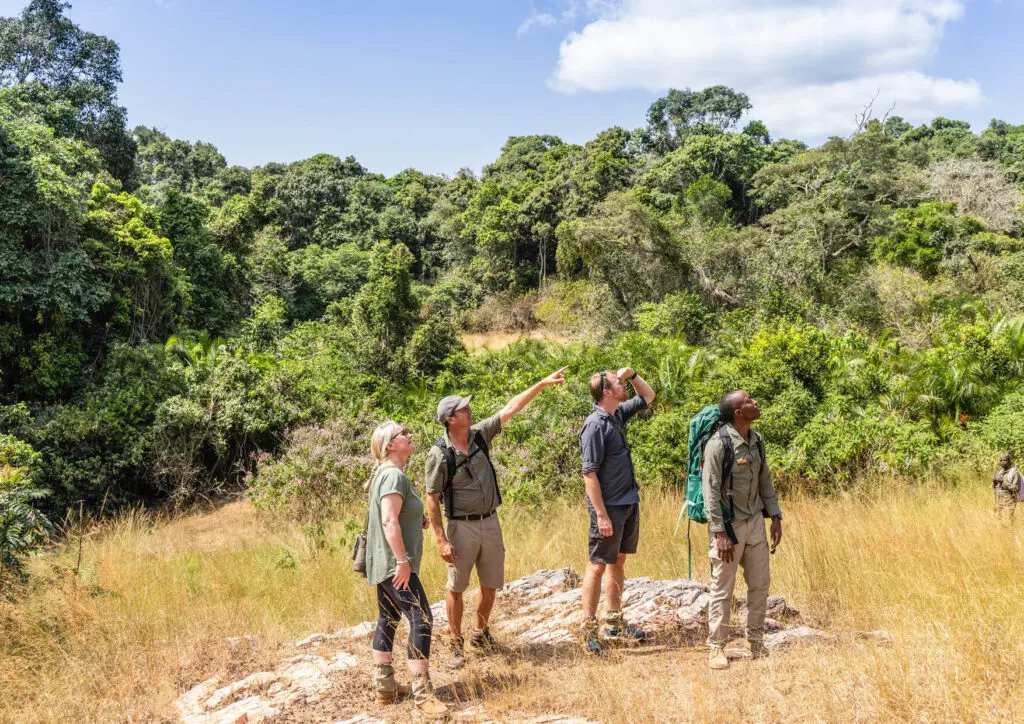
Clothing choice on safari is surprisingly important. Stick to neutral tones like khaki, brown and grey to make sure you don’t stand out too much. White may keep you cool, but it’s highly visible and hard to keep clean. Dark blue and black tend to attract tsetse flies and should be avoided. Opt for light, breathable fabrics and layer these so you can adjust to the temperature changes during the day.
As you’ll be walking, your footwear is of high importance. Closed, comfortable walking shoes or lightweight hiking boots are essential. It’s a good idea to break in any new shoes before your trip to avoid having to deal with blisters in the wild. Long pants are ideal as they will protect your legs from thorns and insects.
Are Walking Safaris Safe
Guided Approach & Protocols
Professional guides are the cornerstone of walking safari safety. They aren’t just wildlife enthusiasts, but highly trained professionals who’ve spent years learning animal behaviour, bushcraft, and safety protocols. These guides are also trained in rifle use and armed, but this is purely for safety purposes in the rare event that a situation may require it. The goal is always to avoid any situation that may require weapon use.
Walks follow established protocols, including pre-walk safety briefings, maintaining single file when moving, and using clear hand signals for communication. Your guide will constantly read the environment, adjusting routes based on wind direction, animal behaviour, and terrain.
Wildlife Risks & Responsible Behaviour
Walking where wild animals roam carries inherent risks. But these risks, while very real, are manageable through respectful behaviour and vigilance. Most animals prefer to avoid humans and will move away if given the opportunity.
Your guide will teach you essential safety behaviours like staying together as a group, avoiding sudden movements, and never running from an animal. The key is understanding that you’re a visitor in their home.
What Wildlife Can You Expect to See?
Large Wildlife
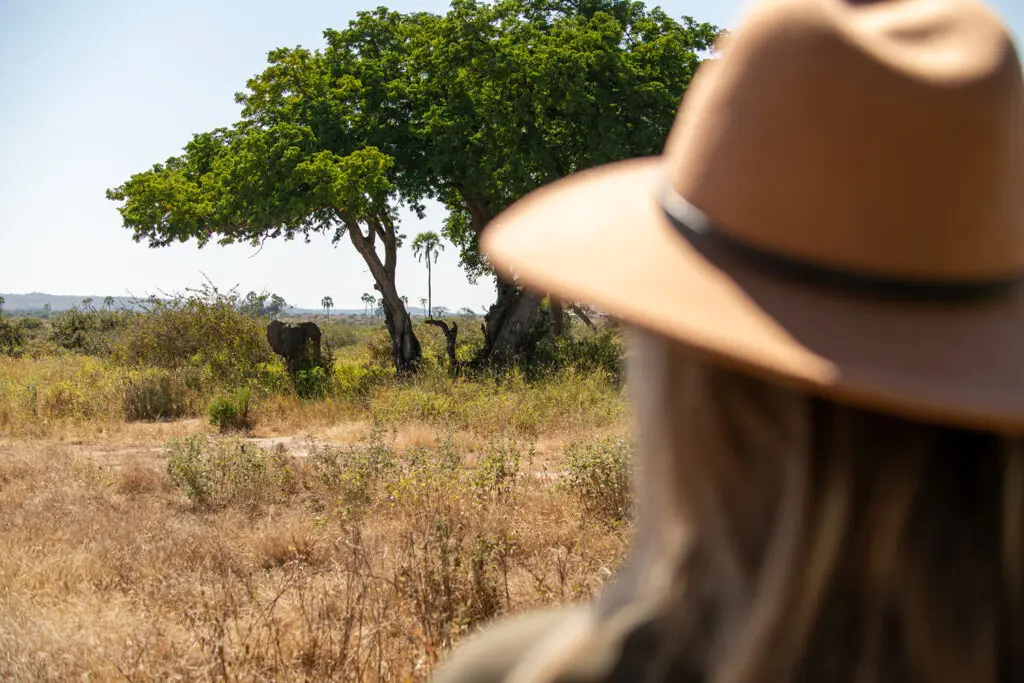
Walking safaris offer thrilling encounters with large mammals. When you’re on the ground at a respectful distance from an elephant, their size becomes that much more magnificent. Giraffes, typically skittish when they hear a vehicle, sometimes allow a closer approach on foot if you move slowly and calmly. Plains game like zebras, antelopes, and gazelles are commonly encountered, allowing you to observe them undisturbed by engine noise.
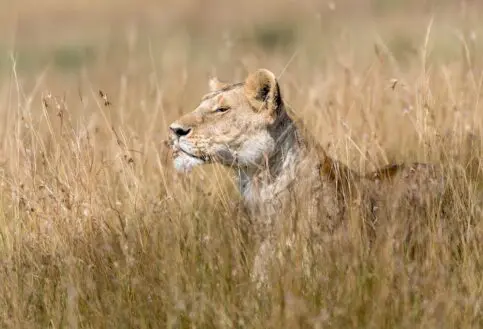
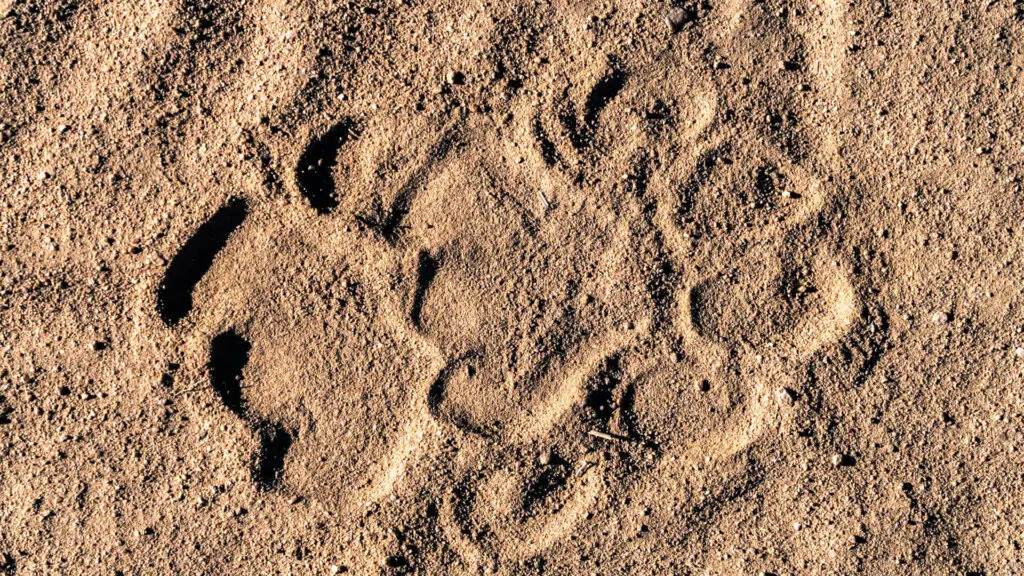
Predator sightings, while less frequent on foot, are unforgettable when they do occur. Lions are occasionally observed from a safe distance, especially in the early morning. Other cats, like leopards, are much more secretive, and you may follow their tracks for a while, even if the cat remains unseen.
Hidden Ecosystem Details
The true magic of a walking safari lies in the details you’d speed past in a vehicle. Your guide might show you how to identify different animals by their droppings, revealing who passed by and when. You’ll discover the fascinating world of dung beetles, whose tireless work recycling nutrients keeps the ecosystem functioning.
Bird life takes centre stage on foot, from tiny sunbirds flashing incredible colours to massive ground hornbills strutting through the grass. Each track tells a story, the tell-tale signs of a recent passersby – porcupine quills, claw marks in tree bark, branches snapped by larger animals moving through the bush.
Who Can Join a Walking Safari?
Fitness Levels & Age Requirements
Don’t let fitness concerns deter you unnecessarily. Most walking safaris are designed for people with average fitness levels. Typical walks cover 3-5 kilometres over 2-4 hours, maintaining a pace that allows for observation and photography.
Age restrictions can vary by location and operator, but the minimum age for walking safaris is usually between 12 and 16, for safety reasons. That said, walking safaris are one of the major answer to the question: ‘What to do on safari with teenagers?‘ There’s no upper age limit for a walking safari, but it’s essential to communicate with your operator and guide about your fitness level and any concerns you may have.
How Long Are Walking Safaris Typically
Walking safari durations vary greatly, catering to different interests and fitness levels. Half-day walks (3-4 hours) are perfect for getting a taste of the experience without committing to longer options. These typically start early, returning to camp for a late breakfast.
Full-day walks include a bush picnic and cover more ground, allowing for deeper exploration. The ultimate experience? Multi-day walking safaris with fly camps (lightweight camps set up along your route) offering total immersion in the bush for between 3-5 days.
Where in East Africa Are Walking Safaris Best?
Tanzania’s Prime Zones
Tanzania offers extraordinary diversity for walking safari enthusiasts. Some areas of the Serengeti and it’s surrounding private conservancies allow access on foot to this world-famous ecosystem.
Tarangire National Park offers a different experience, including ancient baobab forests and regular elephant sightings.
For those seeking the road less travelled, Tanzania’s southern circuit is unmatched. Ruaha National Park is vast and wild, attracting a mere fraction of the visitor numbers of the northern circuit. Here, walks feel truly pioneering, following sandy riverbeds where lions rest in the shade and wild dogs hunt in large packs. The absence of crowds means the wildlife behaves naturally, offering a truly authentic encounter.
Maasai Mara Conservancies
While you’re not able to enjoy a walking safari within the Maasai Mara Reserve, the surrounding private conservancies offer incredible opportunities. These community-owned lands offer some of Kenya’s best walking experiences, often with local Maasai guides who add cultural depth to these walks.
Conservancies like Mara Naboisho offer varied terrain, including open grasslands where cheetahs prowl and riverine forests where elephants roam.

How Much Does It Cost & Booking Tips
Premium Pricing & What is Included
Walking safaris in East Africa are a premium experience, and the pricing generally reflects factors including expertise required from the guide, access to pristine areas, and small group size (usually around 6-8 guests maximum).
You’re not just paying for accommodation and meals, but you’re also investing in expert guiding, exclusive experiences, and the conservation of these remarkable ecosystems.
Booking in Advance & Seasonality
Walking safaris require planning. Fly camps and specialised walking guides are limited resources, often booked months ahead for peak season. Start planning 6-12 months before you wish to travel, especially if you wish to travel between July and October.
Consider shoulder season (November-December or March-May) for better availability and potential cost savings.
Ready to put boot to Earth? Start planning your East African walking safari today. Whether you dream of following elephant paths through Tarangire or tracking lions across the Mara conservancies, we’ll help you step into the wild.