Trekking mountain gorillas is an interesting experience. The combination of the forest, the people, and gorillas, provides a mix of wonder, humility, exhilaration and a bit of awe.
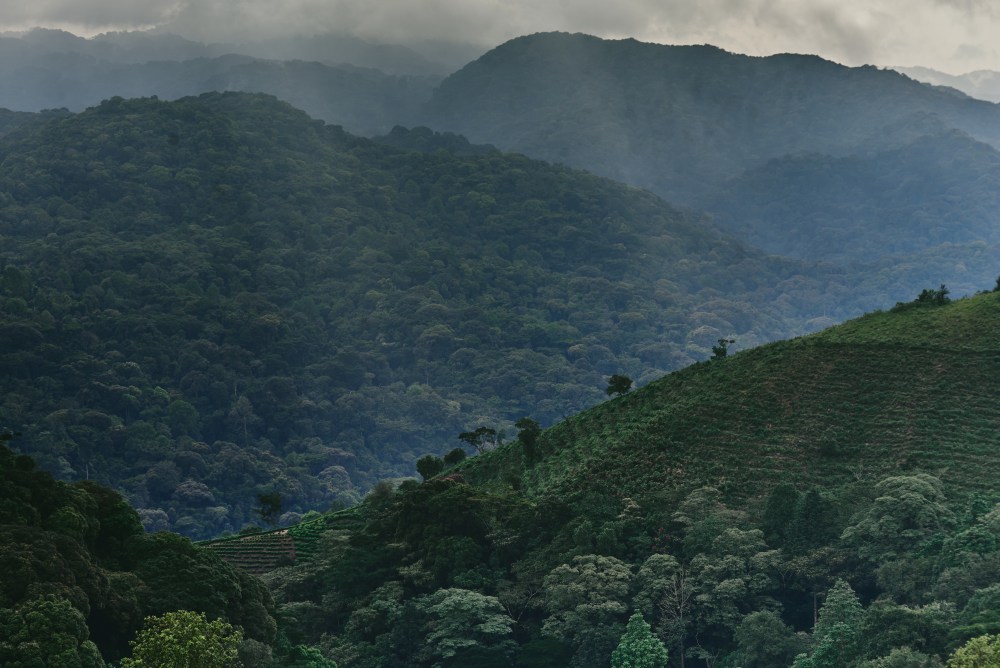
Bwindi Impenetrable Forest is a lush tropical rainforest located in Uganda, a UNESCO World Heritage Site and home to about half of the worlds mountain gorillas that still live in their natural habitat. Bwindi does not look as mountainous, compared to the Virunga ranges. However, don’t let these rolling hills deceive you. Bwindi forms a series of ranges, which on average are about 2,000m above sea level with the highest point being 2,700m above sea level.
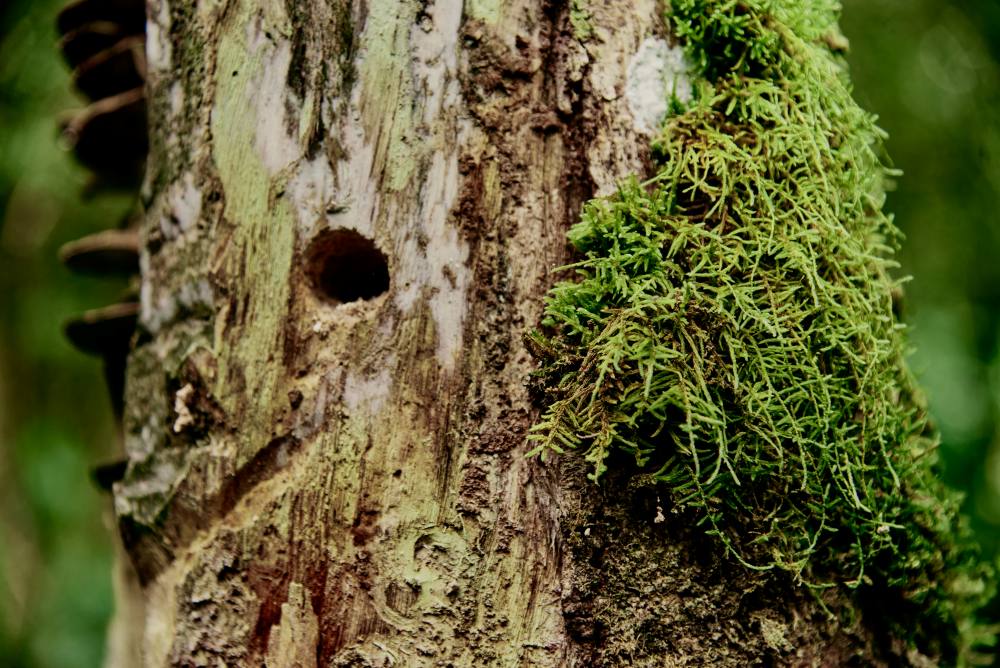
I was amazed by the vegetation. It varies from lowland tropical rainforests to bamboo forests and montane rainforests; the vegetation is just shy of afro-alpine rainforests. The montane rainforests are known for lichen commonly known as the “old man’s beard”. This lichen typically grows at high altitudes and very slowly, it trails down trees giving the look of a wiry beard running down the tree.
The forest commonly has clouds, or a low-lying mist, that settles over its valleys during sunrise, which left me with the impression of a magic man brewing potion over it, with the silver smoke smouldering above the treetops. Hiding the magic beneath the tree canopies. The forest felt like it is part of an ancient cycle.
This same magic can be felt when one meets the gorillas. However, the starting point of this process was a long time before that magic was felt. Before I went anywhere near the forest, I first had to face the administrative hurdle of securing a permit. In all honesty it was not a difficult process, it only required advance planning. The slots are limited, because of the restricted number of people permitted to visit a gorilla family, the availability of times to visit, and the limited number of habituated mountain gorillas in the wild.
But, permit in hand, boots on my feet, long sleeve shirt protecting my skin from stinging nettles, water in my bag, a packed lunch for sustenance, sun hat in case it is hot, rain jacket in the more likely event that the magicians cloudy potion spills onto us, and a face mask because it is possible to transmit diseases between mountain gorillas and humans, I am now ready. Oh, and my camera, take only memories and photos, leave nothing but footprints behind.
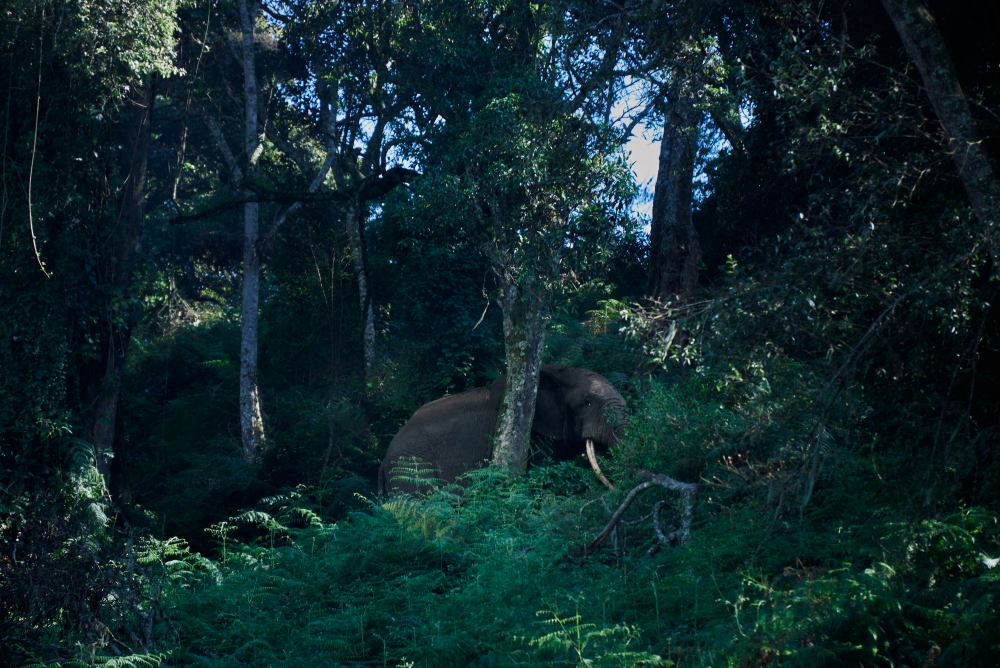
The hike started from a well-trodden, but beautiful trail, with just the right number of openings and clearings. It got steep, from time to time, although we found it manageable. We passed by an elephant’s droppings, and soon thereafter were fortunate enough to view an actual forest elephant. Tusks and all. Forest elephants are significantly smaller than the savanna elephant, but still considerably bigger than us humans. Its brown mud-caked hide stood out from the fifty shades of green. The elephant paid us no attention. It took a few steps into the thicket and over soon after disappeared over the hill.
When we got to the end of the trail, the second phase of the adventure began. Bushwhacking, off trail. It’s not like the gorillas are caged in the forest with a trail taking you straight to their home. Mountain gorillas are mobile, looking for the best spots to sunbathe and the freshest bamboo shoots to munch on, making it unlikely that there will be a neat little track that takes you to their doorstep. In all likelihood you will have to go off trail before you get to a family. And that’s what happened. Off trail for about 1 hour. There’s a small anxiety that I found myself experiencing. As you move through the trail, the person in front of you momentarily vanishes within the bushes and, just for a few seconds, the forest engulfs you and it feels like you are in the forest alone listening and trying to see where they went, before they appear again.
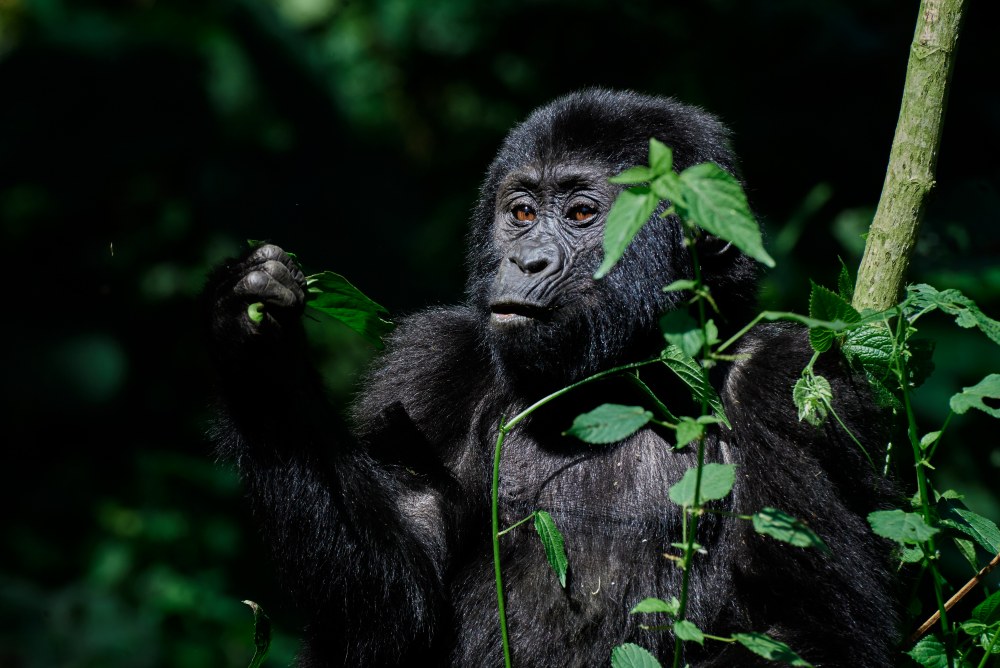
The experience took me back to the days of early explorers, navigating uncharted and impenetrable geographies. After listening to the calls between the trackers and rangers as they tried to find a common bearing, we eventually caught up with the trackers who had left 2 hours before we started trekking to find the last nest of the mountain gorillas from the night before. The trackers provided us with a final briefing of how we should behave in front of the gorillas. Put on your mask and don’t do anything if the gorilla charges you. The rest felt pretty reassuring: no flash photography, no noise, and just be cool.
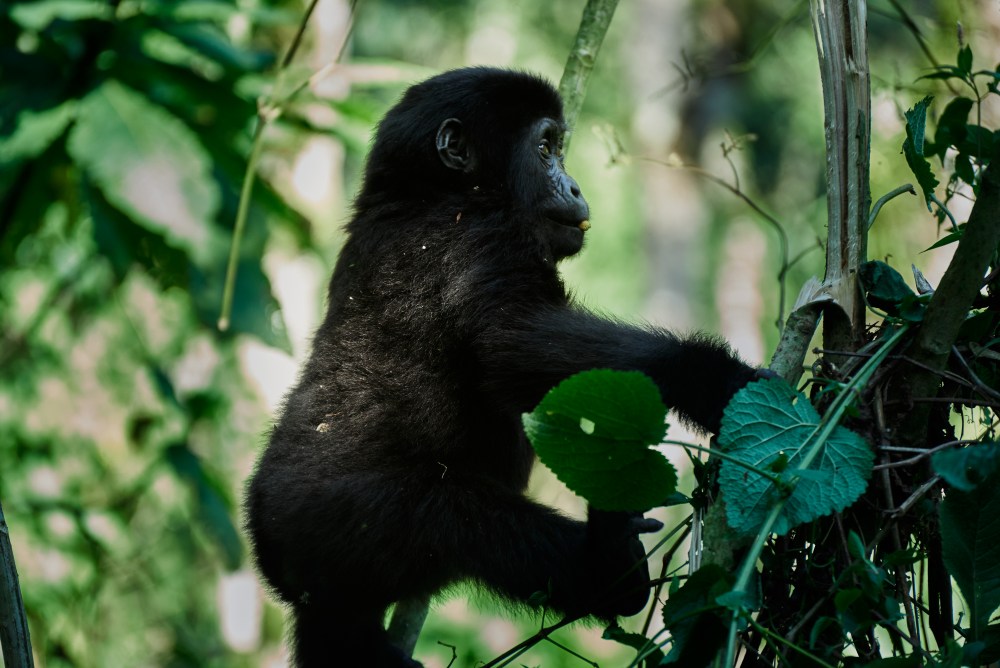
Mountain gorillas are, I would say, sensitive. There’s a camaraderie that any keen observer of human families can relate to. There are the young children, hanging upside down, showing off and seeking the attention of whoever can give it to them, unphased as long as their efforts are seen. There are the teenage siblings that are discovering their strengths and limits, poking at each other and wrestling as they attempt to assert dominance. The young mothers, cradling and nursing their infant children. The elderly aunties who give the aura of wisdom. And then the obelisk of dominance, one hundred and seventy kilograms of brute strength, silverback mountain gorilla.
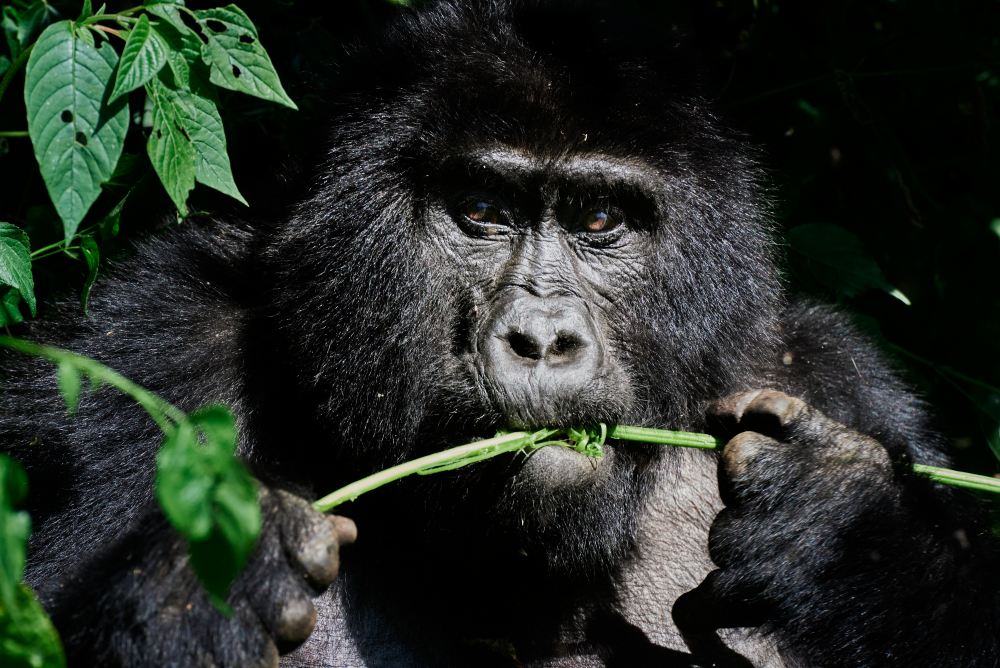
I may not be an expert at speaking mountain gorilla, but I could see the silverback of the Mukiza family was not too happy for us to be gawking at him. He kept grunting, deep grunts that seemed to come from the ground below it. Making us aware of his displeasure for visiting unannounced on that sunny Friday morning. If the Uganda Wildlife Authority ranger hadn’t told us to stand still and just be, I would have been running my 70-kilogram frame out of there. A few grunt responses from our trackers seemed to calm him down. And then the rest of the family warmed up to us, coming closer and continuing to munch the leafy greens, unbothered by the strangers watching them. Foraging and playing among themselves, it felt humbling, being in their presence.
There was a moment in between the bites that a gorilla looked me in the eye, and in that instant, I experienced a total silence. Not a single camera clicked, not a branch snapped. In those golden-brown eyes I saw the same curiosity looking back at me. And just like that, the silver hour was spent, and we had to head back out of the forest.
Up and down, back through the steep hills, and to the main trail. We made our way out from under the canopy, touched by the magic of these majestic beings and forever in awe of the Bwindi Impenetrable Forest.
The limited number of gorilla trekking permits available on a daily basis makes forward planning essential when considering a primate safari. Contact us today to start planning your Uganda safari and the opportunity to witness these remarkable beings.
Timothy Latim
Timothy is a local Ugandan photographer and architect with a deep passion for conservation. He is assisting Asilia in capturing the essence of Bwindi Impenetrable Forest, its wildlife, and the communities that live on the outskirts of its borders.