When planning a safari, you imagine the epic sightings and the magical moments, but the full shape of the day around those moments may be largely unclear – particularly for the first-time traveller.
Will you be on a game drive from dawn to dusk? What time does your day begin? When do you eat? Is there time to do nothing?
Yes, every safari is different, but most days follow the same rhythm. Big wildlife moments in the cooler hours, rest during the hottest portion of the day, and time to breathe in between. This is how a typical day on an East Africa safari actually unfolds.
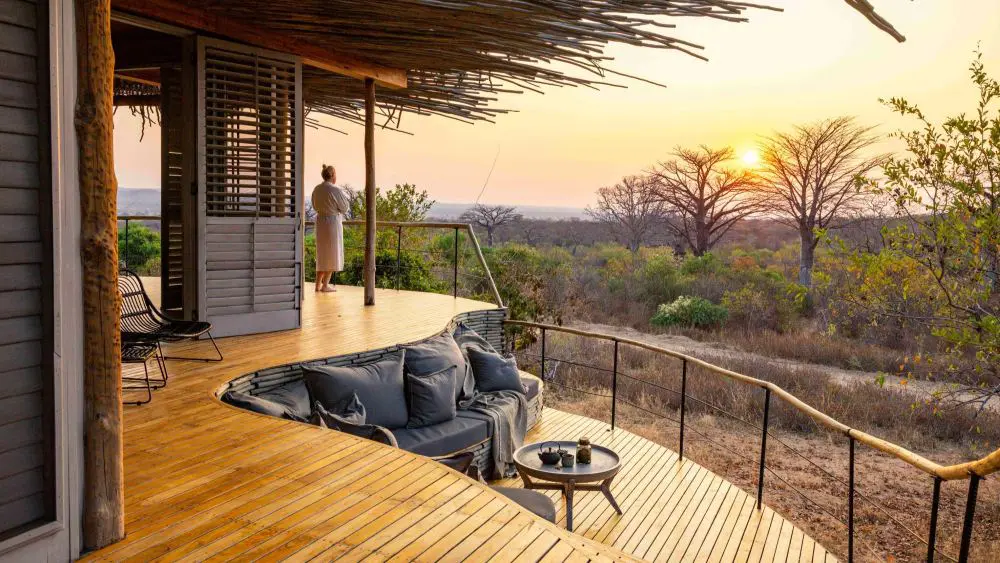
How Does a Typical Safari Day Work?
Before we walk through it hour by hour, here’s the shape of the typical day.
| Time | Typical Activity |
| Early morning | Wake-up call and game drive, or a walking safari |
| Mid-morning | Bush breakfast, or breakfast back at camp |
| Midday | Lunch and rest |
| Late afternoon | Game drive |
| Evening | Sundowners, dinner and a campfire |
The times shift with the season and the camp. The rhythm rarely does.
Early Morning – Why Safari Starts Before Sunrise
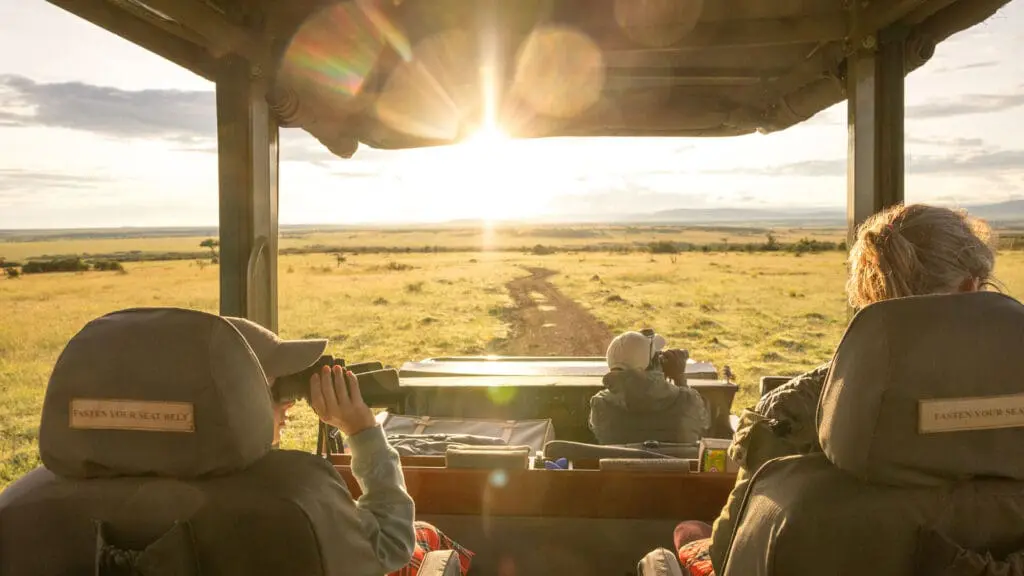
Safari mornings start early, often before sunrise, with a gentle knock on your door and a soft voice telling you a warm drink is waiting for you.
There’s a reason the days begin so early. Early morning game drives offer the greatest chance of seeing predators returning from a night’s hunt before the heat of the day compels them to rest in the cool of a shady spot.
The air in the early morning is cool and fresh. The light is low and golden. If you’re a photographer, this is your time. Birds call from every direction. By mid-morning, much of this settles down, so you go while the going is good.
Asilia Tip: Pack a fleece or warm layer for the first hour or so. It can be quite chilly early on in the day, but by breakfast it’s warm enough to go without it.
Bush Breakfasts – One of Safari’s Most Memorable Traditions
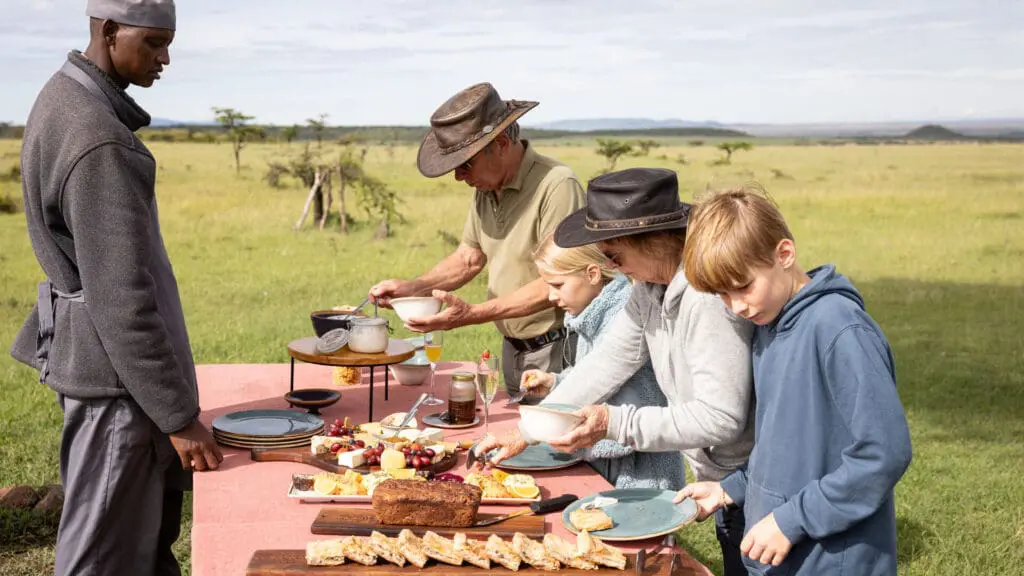
As the sun climbs and the morning warms up, you’ll find a scenic spot – beside a river, under a tree, on a sweeping plain that stretches as far as the eye can see – and you’ll stop for breakfast.
Most mornings, breakfast travels with you and is enjoyed with the engine off and the sound of the bush all around you. Hard-boiled eggs, cooked bacon, muffins, fresh fruit, cereal, and a coffee, juice, or tea appear as if from nowhere.
Some mornings there’s more. You round a corner and find a full setup waiting: a chef behind a gas-fired cooker, eggs made to order, the whole spread laid out and ready. This one is usually a surprise. It’s not the daily norm, and that’s part of what makes it so magical.
Either way, you’ll remember your breakfasts on safari. There’s just something about coffee in the open air, miles from anywhere, that no dining room can match.
Why the Middle of the Day is Slower
Here’s what surprises people: the middle of the day is the quietest. And that’s on purpose.
The higher the sun climbs, the less the animals tend to do. Lions sleep. Elephants find shade. The bush goes still. So does camp.
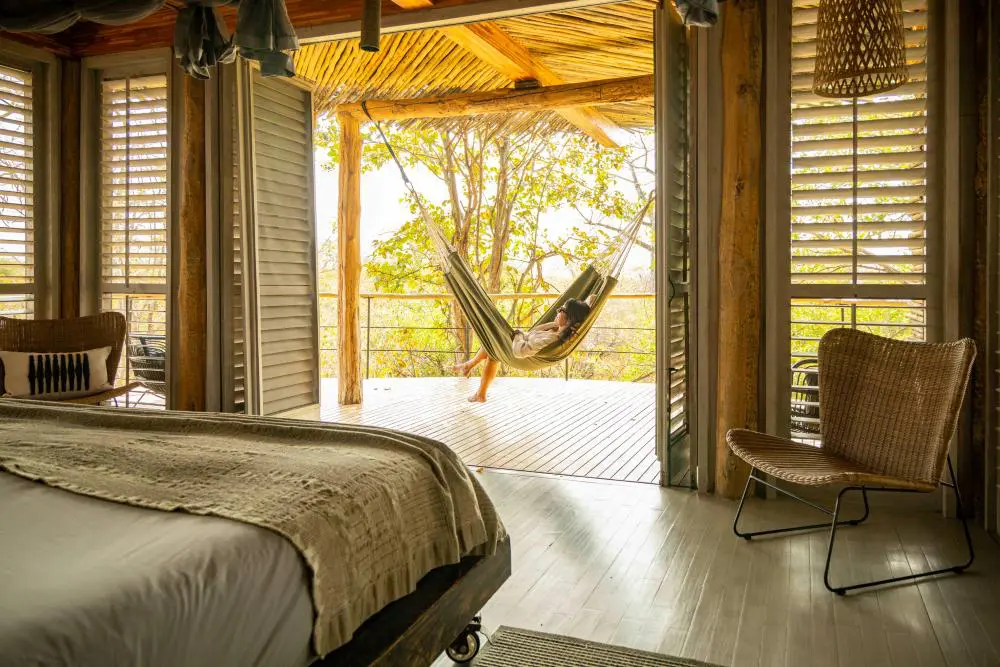
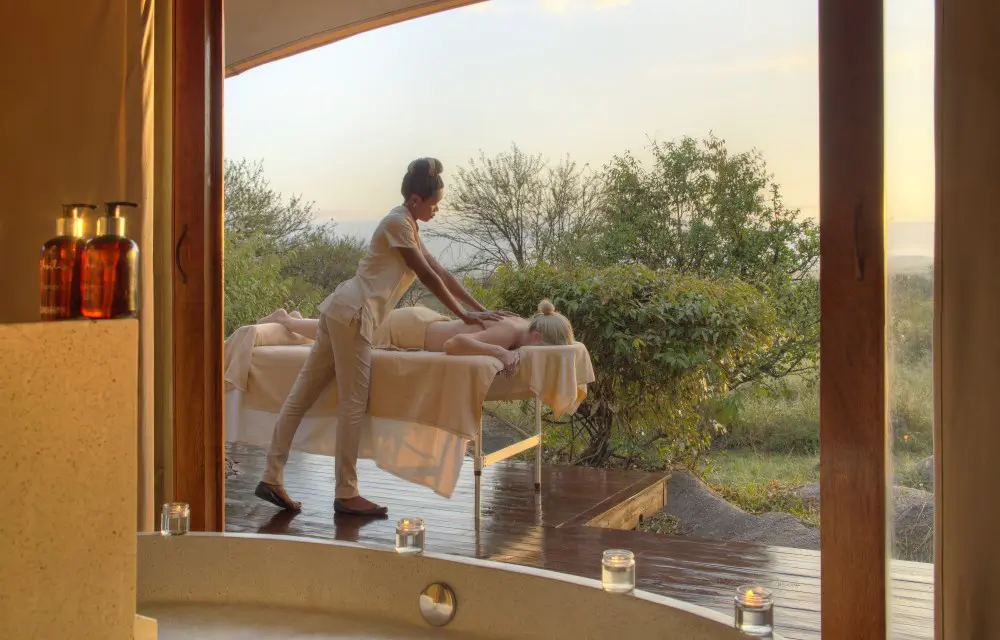
You’ll return to camp for lunch, and then the afternoon is yours to spend in the pool, reading on the deck, or savouring a spa treatment. Given the early starts, it’s often a time when guests enjoy a nap.
It’s not wasted time. It’s the luxury at the heart of a safari: space to stop and be.
Afternoon Game Drives and Golden Hour
As the heat breaks, the bush wakes again. You head out for the second drive, usually in the late afternoon.
This is golden hour. The light softens and turns a burned amber. Predators stir and begin their hunt. Elephants amble to the water for a drink. The entire landscape changes colour as the sun dips, and every sighting looks better for it.
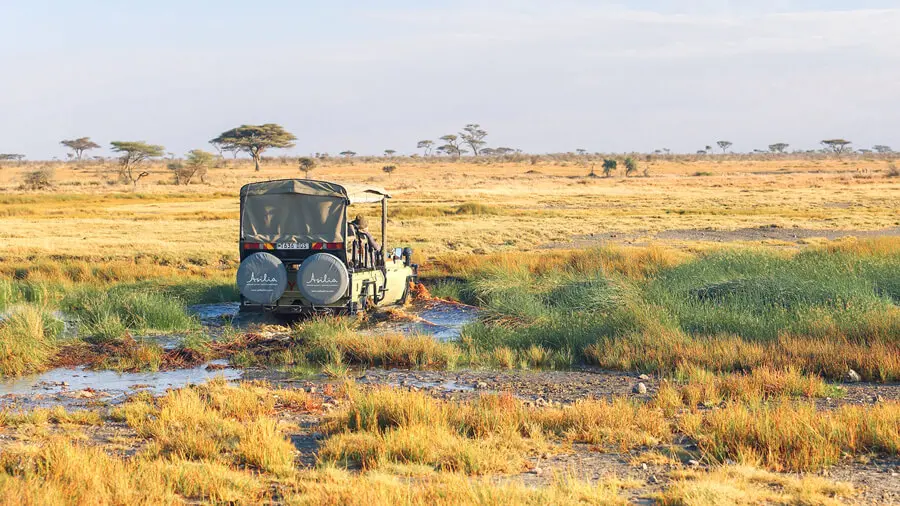
Where you are shapes what you do; a classic camp like Dunia in the central Serengeti is built around game drives. Elsewhere, your afternoon activity might not be a drive at all – a walk, a boat trip, or a visit to a nearby community.
Evenings Around Camp
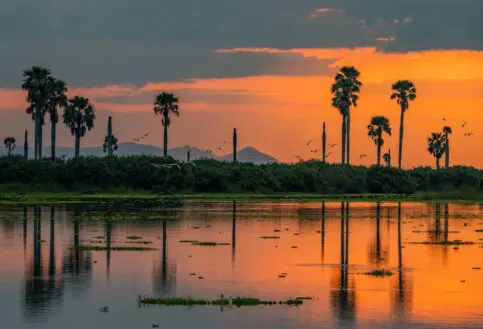
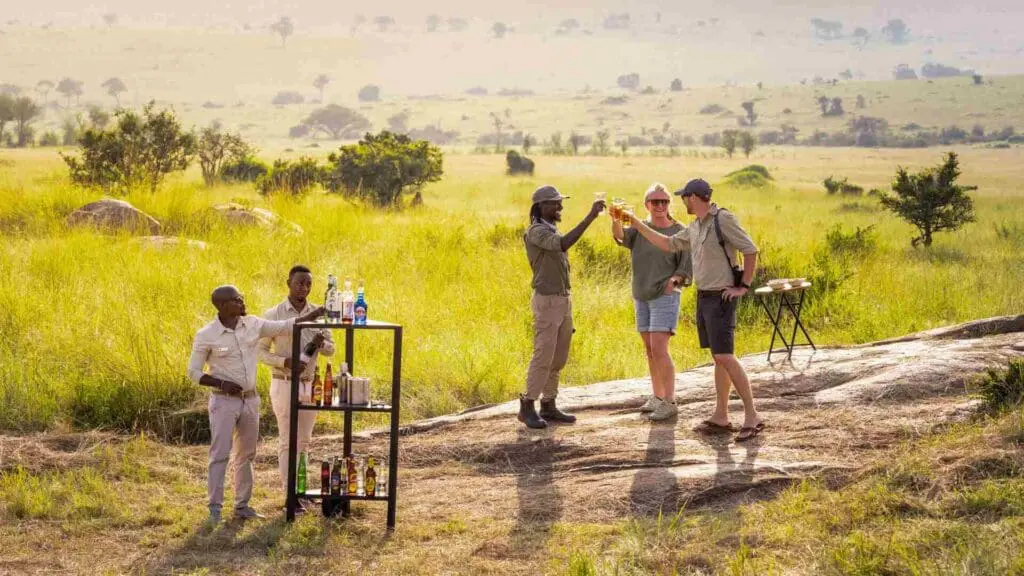
The day ends where the light does. You’ll often pause for a sundowner: a drink in hand as the sun sinks and the sky burns orange, then pink, then dark.
You return to camp for dinner, before you make your way to gather around the fire. This is when the guides share stories, guests compare sightings, and before you realise it, the sky is showing a scattering of stars unlike any you’ve ever seen.
Your day ends as you drift off to sleep to the sounds of a distant hyena, or a lion calling into the darkness.
Will Every Safari Day Be the Same?
No two days on safari are ever the same. A single sighting can change it all. The weather transforms the mood of the landscape. The season moves the wildlife. The Great Migration turns one region into the busiest stage in Africa, and then moves on.
How you choose to travel matters too – with a private vehicle, the day bends to you and your timing. Chase the light, head back early, or stay at a sighting just a little bit longer.
The framework of your day in camp remains largely the same, but the encounters and the experiences will never be repeated.

Can You Relax on Safari?
Yes, more than you’d expect.
Safari sounds busy on paper: early starts, long drives, full days. But in reality, there are hours in the day that are yours to do nothing with.
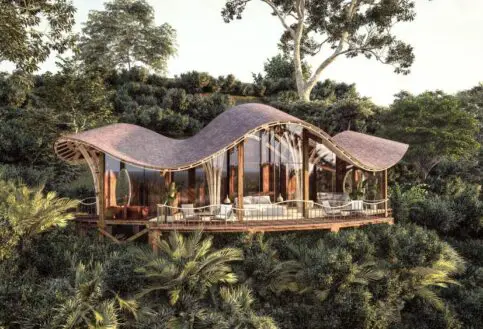
Many camps have pools. Some have spas. All have a quiet corner with a view. And often you don’t even have to leave your seat to see wildlife. The bush comes to you.
Travelling alone and wondering what that feels like? Our solo female safari guide walks you through it.
What Surprises First-Time Safari Travellers?
- How much wildlife you see from camp, without going anywhere
- How quickly the early mornings stop feeling early
- How good the food is even in such a remote location
- How comfortable the camps are – from the beds to the showers and the service.
- How different every game drive feels, even on the same area of land
- The silence. Real silence, the kind most of us never hear at home.
How Different Safari Activities Change Your Day
Game drives are the backbone of safari. They aren’t all of it, though. Add in one of these activities and your whole day changes.
Walking Safaris
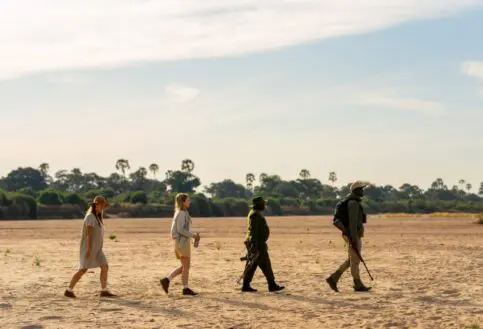
On foot, the pace slows, and the detail sharpens. You learn to read tracks, follow smells, notice the small things a vehicle often drives past. Walks go out in the cool of early morning and run for a couple of hours. Oliver’s Camp in Tarangire built its name on them, and over in Kenya, Naboisho offers walking with a different landscape and cast of characters.
Boating Safaris
Water changes everything. You drift instead of drive, and you meet wildlife from a new angle: coming eye-to-eye with elephants as they drink, passing lazing crocodiles, and even seeing incredible birdlife up close. Roho ya Selous in the Nyerere National Park is a great destination to include if boating is on your wishlist.

Hot-Air Balloon Safaris
An even earlier start, and worth it. You lift off at first light and float over the plains as the sun comes up, herds moving beneath you. Most hot-air balloon flights land to a champagne breakfast in the bush: a splurge, and a memory.
Night Drives
Where they’re allowed, night drives push the day later and open a different world. Under a spotlight, you’ll find the animals that hide by day – genets, bushbabies, the odd hunting leopard.
Frequently Asked Questions About a Typical Safari Day
Usually between 5:30 and 6:30 am, so you’re out for the best of the morning. Your guide sets the exact time the night before, based on the season and the plan.
Two on a typical day: one in the early morning and one in the later afternoon. Some days you’ll swap in a walk, a boat trip or a full-day drive instead.
Around three to four hours, though it varies. A big sighting can stretch it. A quiet stretch can shorten it. Full-day drives run longer and include a packed lunch in the bush.
Yes, most days. You return for lunch and rest during the hot midday hours, then head out again in the afternoon. On a full-day drive, you stay out and eat in the field.
Plenty. The middle of the day is built for it – for swimming, reading, a spa treatment or a nap. Safari is far less relentless than it sounds.
Expect cooked breakfasts, fresh lunches and multi-course dinners, often with wine. Bush breakfasts and picnic lunches are part of the fun. Tell your camp in advance of any dietary needs or allergies.
Yes. Skip a drive and enjoy camp instead. On a private safari, the schedule is yours entirely.
Neutral colours – khaki, olive, beige. Layers for the cold morning start and the warm midday. A hat, sunglasses and closed shoes round it off. Skip bright colours and, in some areas, dark blue and black.
For game drives, not very. For walking safaris, you’ll need a reasonable level of fitness. Walks are usually at a very easy pace, but there’s an option for almost every level of fitness.
Often, but not always, and rarely fast. Many camps offer Wi-Fi in the main areas, but it can be unpredictable. Remote camps have little to no connectivity, which most guests come to enjoy.
Ready to picture your own safari days? Wild mornings, slow afternoons, and evenings under the stars are within reach.