Arguably one of safari’s most iconic moments – and one you’ll never forget – a hot-air balloon safari takes you to new heights over the African wilderness for a view unlike any other.
But is a hot-air balloon safari worth adding to your trip? For most travellers, yes. It shows you the wide-open plains in a way the ground never can. For many, it becomes the memory that outlasts every other.
This guide covers it all: what happens, where to fly, when to go, and how to plan it well.
What Is a Hot-Air Balloon Safari?
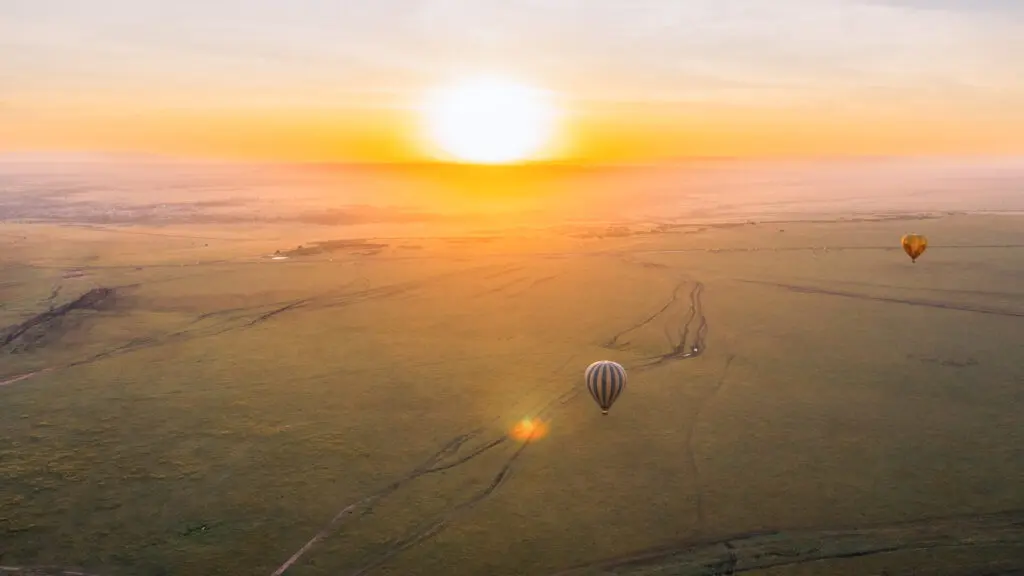
A hot-air balloon safari typically takes place at sunrise. You wake before dawn, transfer to the launch site, and watch your balloon fill with air. Then you climb aboard and rise with the first light.
Most flights last around an hour. You drift low over rivers and grasslands, then higher for the wider view. When you land, a champagne bush breakfast waits in the open. Afterwards, you head back to camp to relax after your early start, and enjoy some downtime ahead of lunch and the afternoon ahead.
For a fuller picture of the rhythm of a safari day, here’s what to expect on safari.
Is a Balloon Safari Worth It?
For most people, it’s an easy yes.
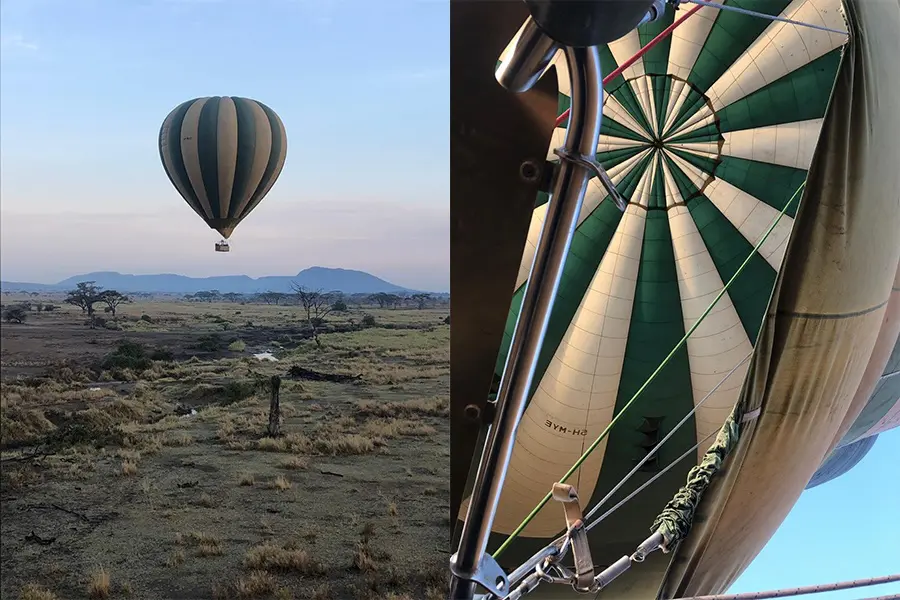
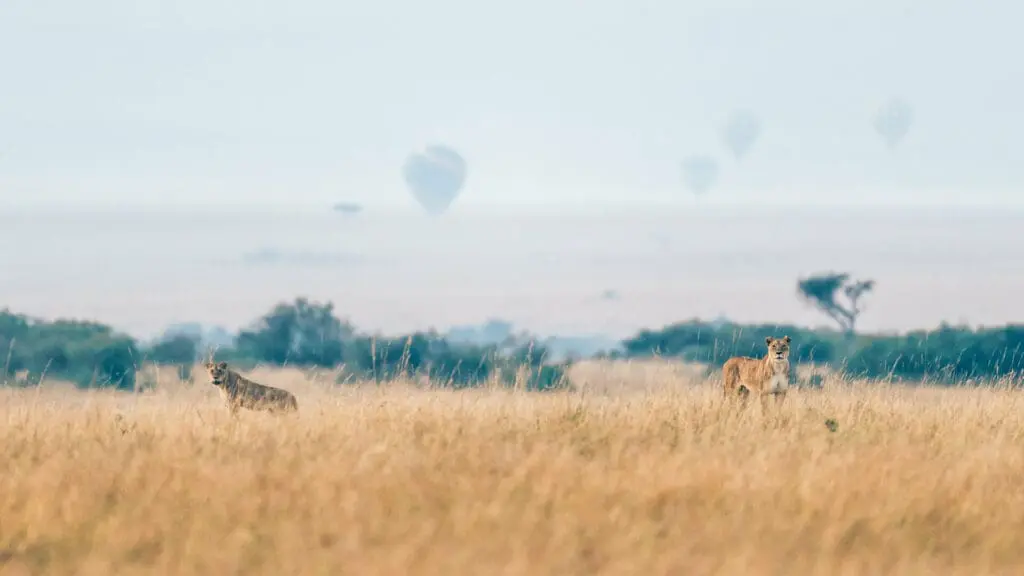
From above, the scale of the land hits you. You begin to grasp just how vast it is, something that no game drive vehicle will show you. Wildlife amble along far below you. The light turns soft and gold. And, between the roars of the burners, it’s quiet.
Photographers love it. So do honeymooners, families, and anyone chasing a bucket-list moment.
That said, a balloon safari costs extra. It’s heavily weather-dependent, so flights can be cancelled, delayed, or even called off entirely. And the wake-up call is early – often before 5 am. None of this should put you off, but it helps to know this before you book.
What Happens During a Balloon Safari?
Here’s how the morning typically unfolds:
Before Sunrise
Your day begins in the dark. A gentle wake-up call, then hot coffee to shake off the sleep. You transfer to the launch site, where more coffee awaits. A pilot gives a short safety briefing – calm, clear, reassuring.
Take-off
You watch from the sidelines as the balloon comes to life. The fabric swells, the burners roar, and the whole thing lifts upright. Flights typically wait for first light; you can’t take off in the dark. Then, gently, you leave the ground and climb into the morning.
The Flight
Now the magic. The wilderness spreads out below. You might spot animals moving through the grass. Your pilot shifts altitude to follow the land and the light. Keep your camera close.
The Champagne Bush Breakfast
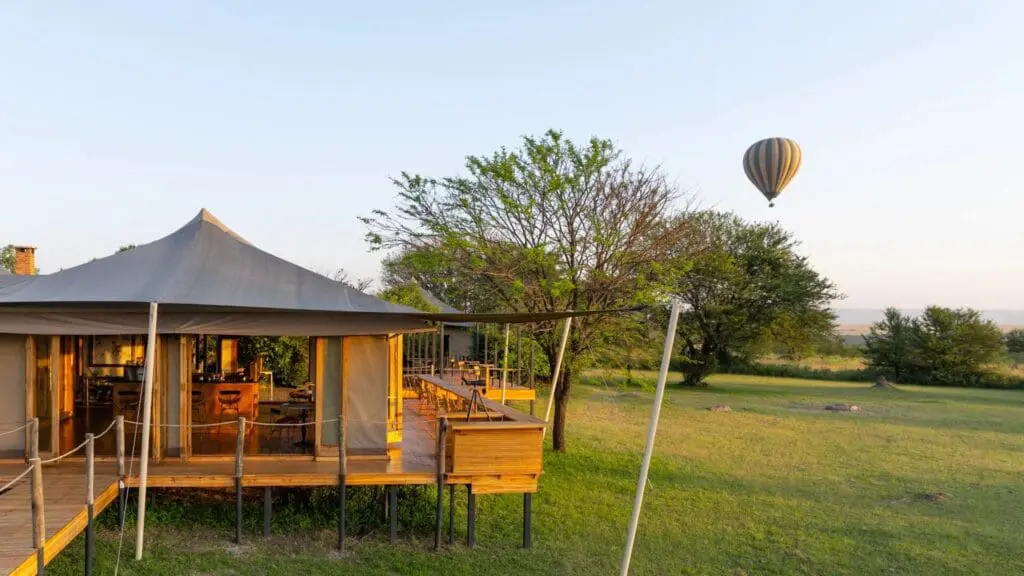
Landing isn’t the end. It’s the start of a treat. A table is set out in the open, and a full breakfast appears, with a glass of champagne to toast the flight. It’s an old ballooning tradition, and it’s included. This experience is certainly among the wild’s most remarkable dining experiences.
Where Are the Best Places for a Balloon Safari?
East Africa offers several, each offering something different. Here’s how to choose:
Serengeti National Park
Best for: the Great Migration, endless plains, and first-time visitors.
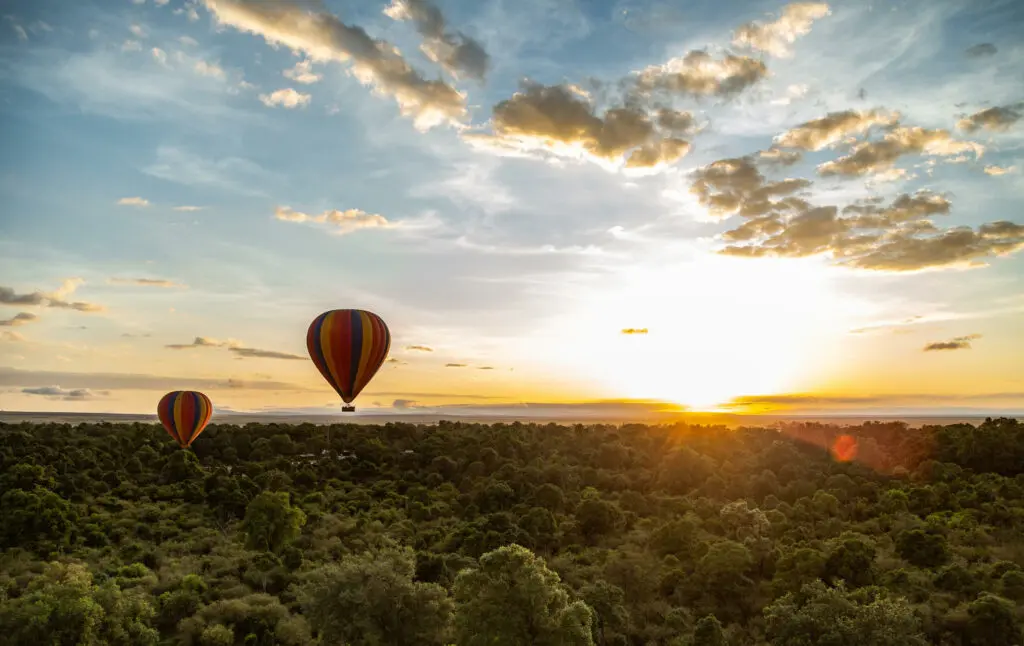
The Serengeti is a classic choice. Its plains run clear to the horizon, and in migration season, the herds below are a sight you won’t forget. It’s the easiest place to picture a balloon safari – and it lives up to every bit of it. Time it well, and you can drift above the Great Migration itself.
Camps with balloon access: Sayari Camp, Olakira Migration Camp, Dunia Camp, Namiri Plains.
Maasai Mara
Best for: the migration, rolling grasslands, and the sheer size of the Greater Mara.
The Mara is Kenya’s jewel. The land rolls gently, dotted with acacia, and the greater ecosystem is vast – far bigger than the reserve alone. All that space gives wildlife room to breathe, especially in the quieter private conservancies in Kenya.
Camps with balloon access: Rekero Camp, Naboisho Camp, Encounter Mara, and Emboo.
Tarangire National Park
Best for: big elephant herds, ancient baobabs, and a quieter flight.
Tarangire feels different. Fewer balloons fly here, so the morning is yours alone. Below you, elephant herds gather among giant baobab trees.
Camp with balloon access: Oliver’s Camp
Ruaha National Park
Best for: seasoned safari-goers, remote wilderness, and true exclusivity.
Ruaha is for those who want to go further. It’s wild, remote, and gloriously empty. From the air, its size is staggering – rugged country stretching in every direction, cut through by the quiet beauty of the Great Ruaha River. This flight sets a trip apart.
Camps with balloon access: Jabali Ridge and Kokoko Camp.

When Is the Best Time for a Balloon Safari?
There’s no single best time, but certain times of year yield differing experiences – each with its own reward.
Migration season offers an aerial view of the staggering number of wildebeest and the sheer drama as it unfolds below. Calving season, early in the year, fills the southern Serengeti with newborns and opportunistic predators never far behind. The dry season promises clear skies and easy wildlife spotting.
What Wildlife Can You See From a Balloon?
The beauty of a balloon safari is the new perspective you gain, not just of the landscape, but of the animals as you watch them move down below.
You might see elephants, giraffes, and lions, as well as herds of wildebeest and zebras. Keep an eye out for crocodiles and hippos along the rivers as you glide overhead. No two flights are ever the same, and no sighting is ever guaranteed.
Who Should Book a Balloon Safari?
A balloon safari suits a wide range of travellers:
- Honeymoon couples. It’s a romantic experience for sure – perfect for photographs, and for a moment you’ll both hold onto. It’s easy to see why it earns a place on so many a romantic safari honeymoon.
- Families. A shared thrill for every family member, though operators do set a minimum age. Check before you plan.
- First-time safari travellers. A true bucket-list moment, and a stunning way to take in the landscape.
- Returning safari guests. If you’ve been on safari before, this experience offers a fresh perspective of the bush. It’s one of the finest ways to add something unique to a repeat safari.
Things to Know Before You Book
A little planning goes a long way. Keep these in mind:
- Minimum age: usually around seven, but it varies by operator.
- Weather: flights depend on it and may be delayed or cancelled.
- Clothing: dress in warm layers. Mornings are cold, and it heats up fast once the sun is up.
- Cameras: bring one with a strap. Your hands will be busy holding on and pointing.
- Weight: some operators ask for guest weights when you book.
- Booking: reserve early. Spaces are limited and go quickly.
- Cost: it’s a premium add-on, priced per person. Confirm the rate when you book.

Frequently Asked Questions About Balloon Safaris
For most travellers, yes. The view, the calm, and the sheer scale make it a highlight of any safari.
The flight itself runs around an hour. The full morning – transfer, flight, and breakfast – takes about half a day.
Very early. You’ll usually wake up before 5 am to be ready for first light.
Yes. A champagne bush breakfast follows the flight, set out in the open.
Yes. Experienced pilots run the flights, and they only go ahead in the right conditions.
Often, yes – but there’s usually a minimum age. Check with the operator before booking.
Warm layers. Early mornings are chilly, and the day warms up quite quickly after dawn.
There’s no single winner. The Serengeti suits first-timers, while Ruaha rewards those after something wilder and more remote.
Yes, in season. Floating above the herds is one of safari’s most breathtaking sights.