Long before the first wildebeest crossed the southern Serengeti, before cheetahs scanned the horizon from termite mounds, and before Namiri Plains became one of East Africa’s most compelling safari landscapes, this was a place shaped by fire.
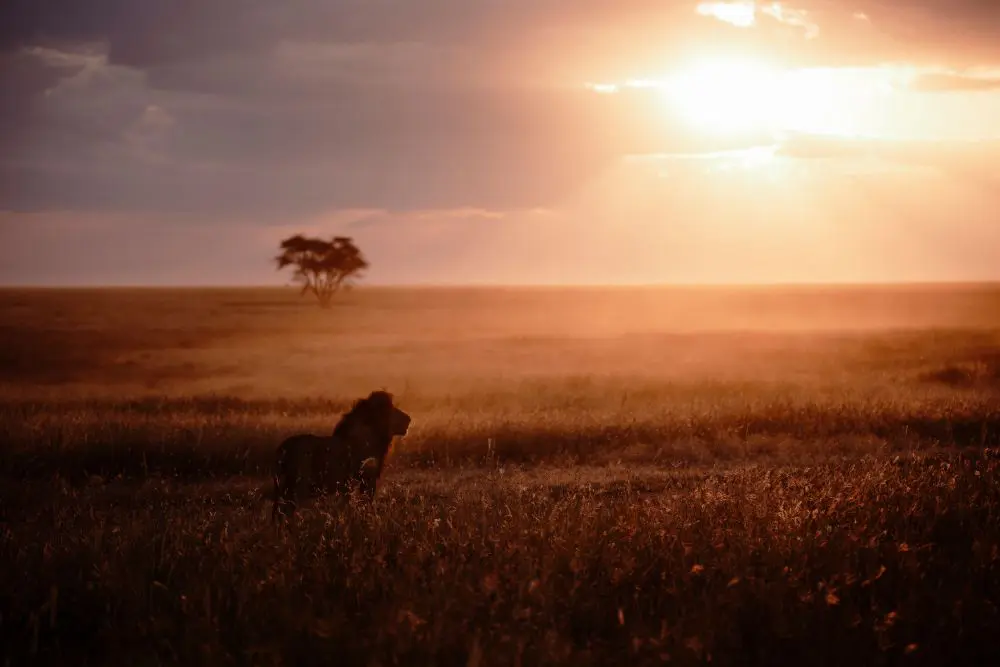
The open grasslands of Tanzania’s eastern Serengeti appear almost impossibly calm today. Sweeping horizons roll towards the distant highlands, interrupted only by kopjes, scattered acacias and the movement of wildlife across the plains. Yet beneath this seemingly gentle landscape lies a story written by volcanoes millions of years ago. To understand Namiri Plains is to begin below the surface.
When Volcanoes Built the Plains
The story starts with the volcanoes of the Great Rift Valley, particularly Ngorongoro and Ol Doinyo Lengai, the only active carbonatite volcano in the world. Over millennia, eruptions from these volcanic systems sent enormous clouds of ash drifting across northern Tanzania and the neighbouring plains of the Ngorongoro Conservation Area.
Those ash clouds carried more than dust. They were rich in calcium, magnesium, phosphates and sulphates, minerals that settled over the land in repeated layers, blanketing the soil in mineral-rich deposits.
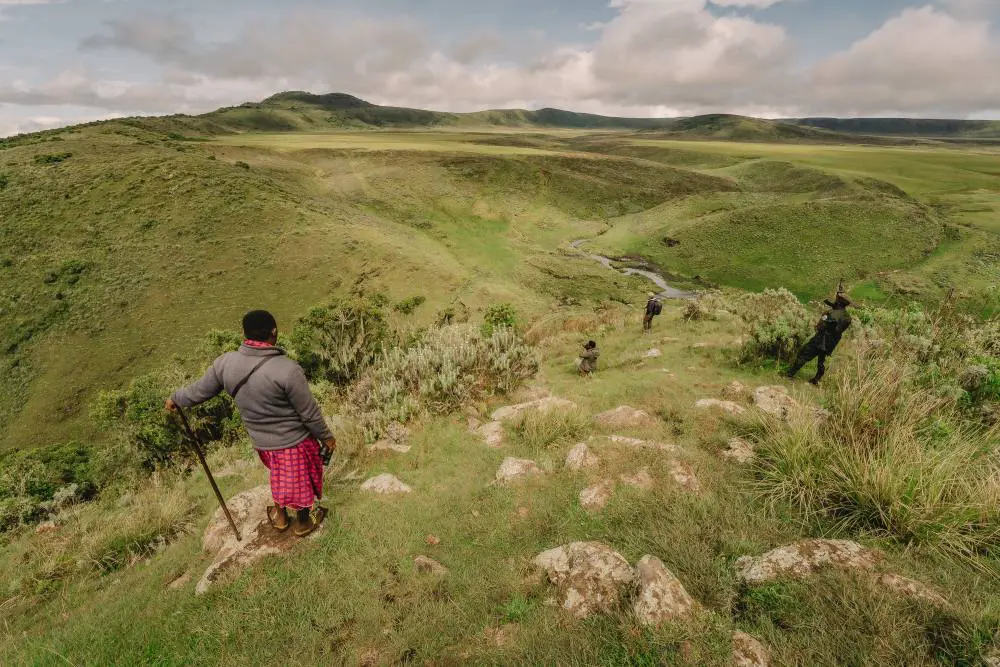
As the ash settled and slowly broke down into the Earth, it transformed the nutrients of the soil. Even today, the short grasses that grow across these plains remain unusually rich in minerals, particularly during the green season when rains sweep across the Serengeti ecosystem. It is one of the reasons the Great Migration returns here year after year. Between January and March, hundreds of thousands of wildebeest gather on the southern plains to give birth. Timing is critical. The nutrient-rich grasses provide nursing mothers with the sustenance needed during calving season, while the open landscape offers visibility against predators. Within a matter of weeks, the plains become one of the most concentrated wildlife spectacles on earth, not by accident, but because of volcanic activity that occurred millions of years ago. The migration, in many ways, still follows the path laid out by ancient eruptions.
The Layer Beneath
The volcanoes shaped more than the grasses. Over time, calcium from the volcanic ash settled beneath the surface and combined with groundwater and heat. Gradually, it hardened into a dense subsurface layer known as calcrete, a natural limestone-like material found just below the topsoil across much of this region.Calcrete changes the landscape in subtle but important ways.
Because tree roots struggle to penetrate the hardened layer, large forests cannot easily establish themselves here. Instead, the terrain remains predominantly open: long grasslands, scattered shrubs and isolated rocky outcrops. Underfoot, the ground becomes firm and stable, particularly during the dry season.
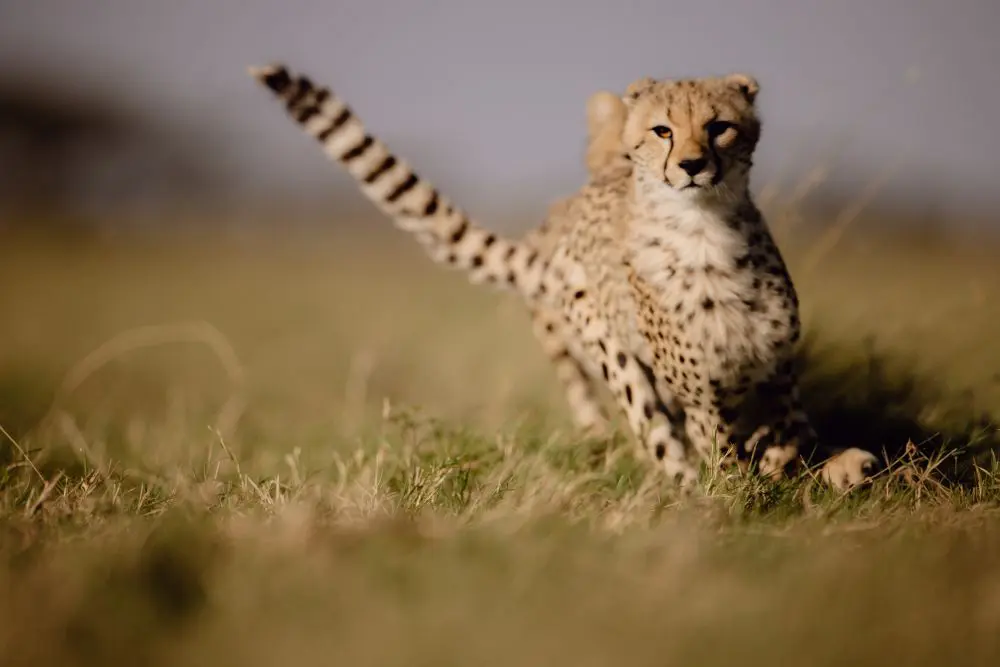
For cheetahs, it is the ideal habitat. Open visibility allows them to scan for prey across great distances, while the hard ground provides the traction needed to accelerate and turn at extraordinary speed during a hunt. In many ways, the landscape itself favours their survival. The same geological processes that shaped the plains for migrating herbivores also created one of East Africa’s most important cheetah strongholds. Today, the region is widely recognised for exceptional cheetah sightings, and few areas illustrate that relationship between predator and landscape more clearly than Namiri Plains.
A Landscape Given Time to Recover
For decades, however, this region remained largely closed to tourism. In the late twentieth century, concerns around declining cheetah populations prompted conservation authorities and the Frankfurt Zoological Society (FZS) to limit human activity across parts of the eastern Serengeti. The area surrounding Namiri Plains became part of a long-term conservation and research initiative focused on predator protection, habitat preservation and ecological monitoring.
For roughly twenty years, tourism activity remained absent from much of the region. That period of protection allowed wildlife populations, particularly large predators, to stabilise without disturbance. Researchers, conservationists and monitoring teams developed detailed understandings of cheetah behaviour while the plains themselves retained a sense of remarkable wildness.
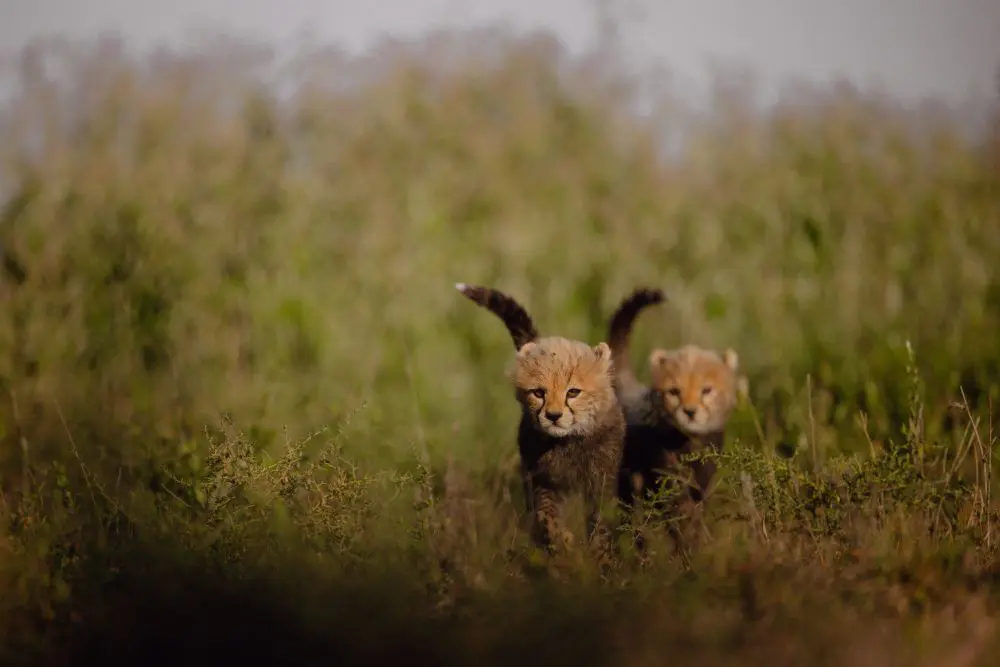
When the lease eventually came to an end, Asilia Africa became the first operator permitted to establish a camp in the area. That history still shapes the experience of Namiri Plains today. Many of Asilia’s guides have worked in this region for years, building a deep familiarity with its seasonal rhythms, predator movements and hidden corners. The relationship is not simply operational; it is long-term and deeply rooted in the landscape itself. In many ways, Namiri Plains feels less discovered than carefully understood. The result is a safari experience shaped as much by patience and continuity as by wildlife density alone.
Built From the Landscape
Even the camp carries traces of the geology beneath it. Calcrete, the same mineral-rich material that helped shape the plains, was incorporated into elements of Namiri Plains’ design and construction. Beyond its visual connection to the landscape, calcrete also offers natural thermoregulatory properties, helping interiors remain cooler during the heat of the day and warmer during colder evenings on the plains. It is a subtle architectural decision, but an intentional one. A way of grounding the camp within the very environment that created it.
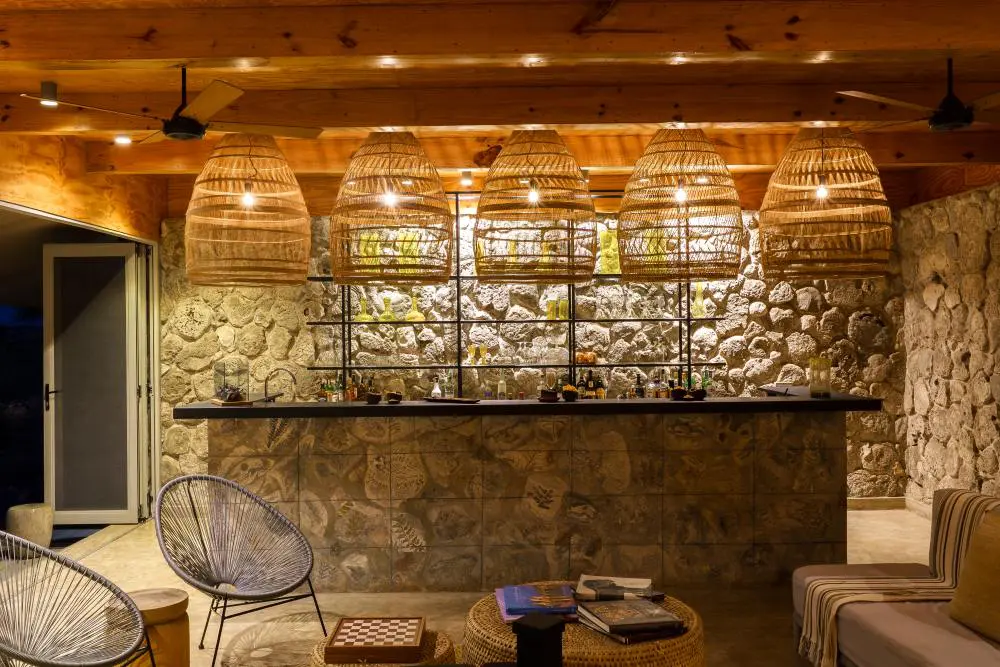
At Namiri Plains, the story of the landscape is never far away. It lives in the grasses that sustain the migration, in the open terrain favoured by cheetahs, in the conservation history that protected the region and even within the walls of the camp itself. It’s a story written in ash, hardened by time, and connected to the wild.
Explore Namiri Plains with us today