Calving season in East Africa has a certain hit-the-ground-running feel to it. Quite literally.
From the drop, life unfolds across the Southern Serengeti in ways that are beautiful, tender and, at times, remarkably cruel. One moment, a wildebeest calf is taking its first uncertain steps. The next, somewhere across the plains, a predator is watching those same steps with very different intentions.
But that is the circle of it all.
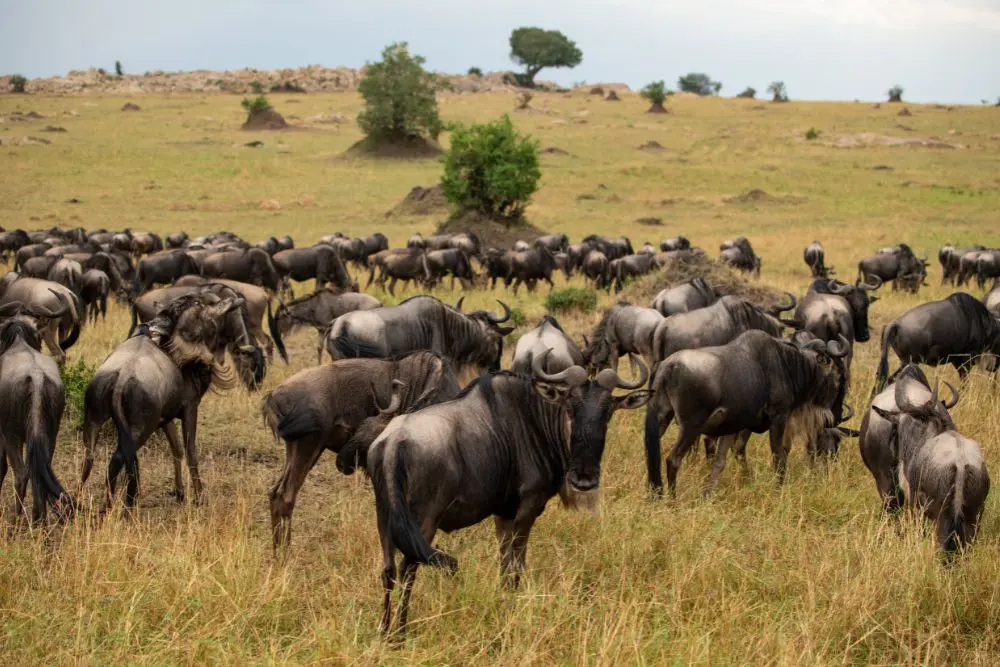
There is excitement in the prospect of new life, while in the same breath, there is a food chain waiting patiently to be completed. Birth and survival. Predator and prey. Stillness and sudden movement. Calving season is one of nature’s greatest balancing acts, played out across an enormous stage.
And we are privileged enough to get a front-row seat.
From the quiet of a safari vehicle we watch, without interfering, as these stories unfold. No script. No second take. No guarantee of what comes next. Just the natural world doing what it has always done, with all the tension, tenderness and unpredictability of a wildlife film happening right in front of you.
But before we get to the theatrics of it all, let’s go back to the beginning.
Before your travel bag is dropped at your room. Before you climb into a safari vehicle for the first time. Before the first calf you witness makes that short but significant drop onto the grassy plains.
Because, like any great story about life, sometimes it is the anticipation that makes the chapter you’re dropped into so memorable.
It All Starts with a Drop
There is something different about planning a safari around a moment you know is coming but can never completely predict. And it all starts at the drop of an enquiry.
You know roughly what awaits you. Vast herds gathering across the short-grass plains of the Southern Serengeti. Thousands upon thousands of wildebeest. Newborn calves finding their feet. Lions, cheetahs and hyenas never too far from the action.
But you don’t know what your story will be.
Perhaps it begins while speaking to one of our safari experts and realising that your dates place you right in the middle of calving season. Suddenly, what started as a trip to Tanzania has a little more urgency to it.
Flights are booked. Bags are packed. Cameras are charged.
And somewhere in the Serengeti, the plains are beginning to fill.
That anticipation follows you all the way to Tanzania. It sits with you as the landscape changes beneath the wings of your light aircraft, as roads become tracks and towns give way to seemingly endless grassland.
Then you land.
And the waiting is over.
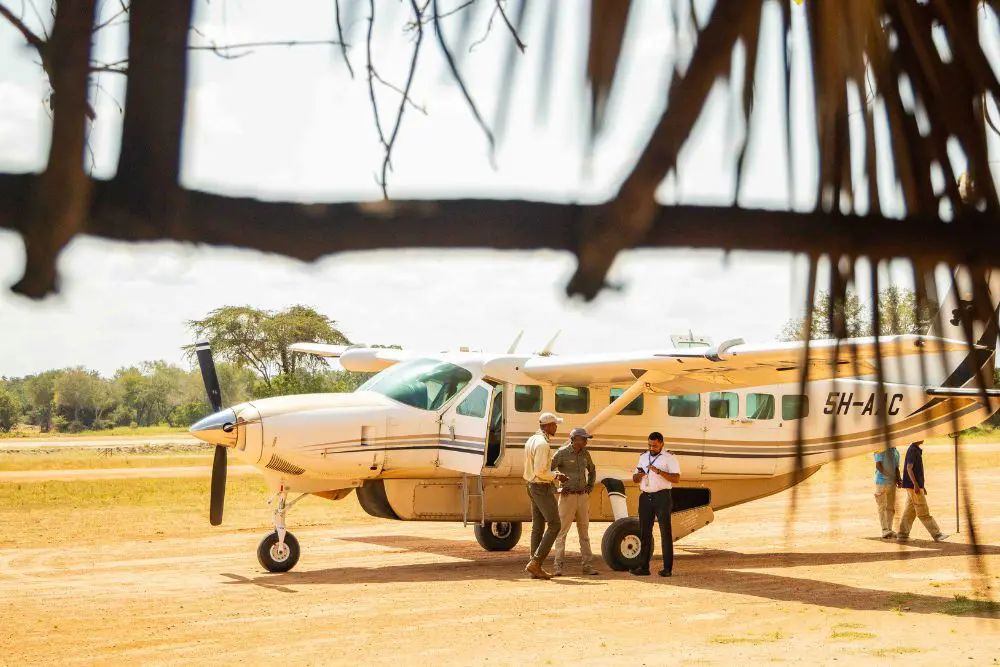
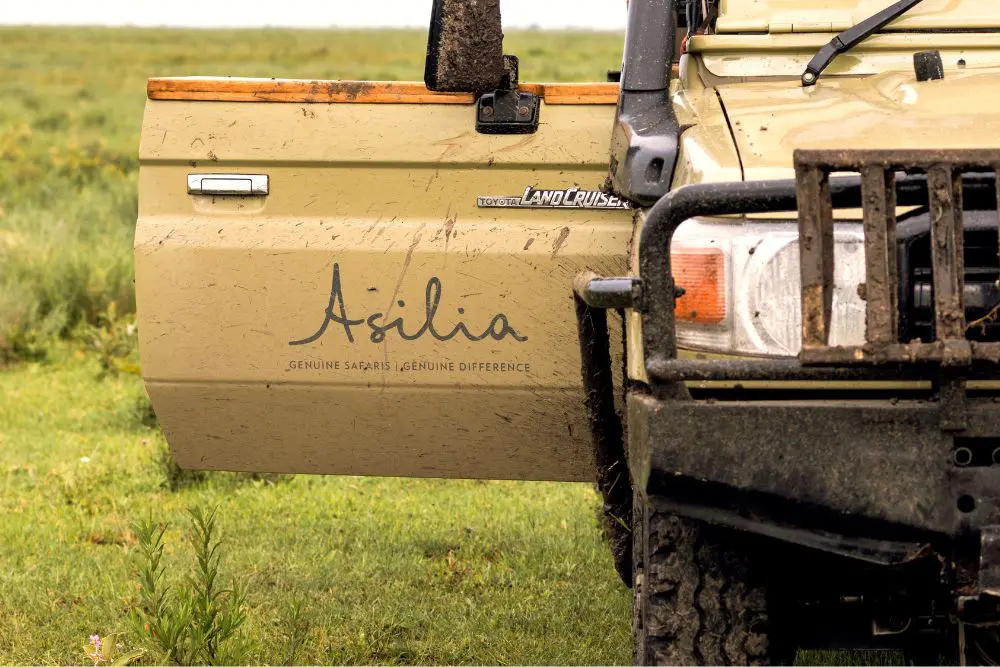
Drop your bags. The Serengeti Awaits.
Arriving at camp during calving season feels less like reaching a destination and more like stepping into something already in motion.
Your bags may be heading towards your room, but your attention is somewhere else entirely. Perhaps there are wildebeest visible on the horizon. Perhaps your guide has already heard about a cheetah nearby. Perhaps the radio crackles with news from another vehicle.
Mid-December to the end of March is usually referred to as “the calving season” in the southern Serengeti. Like the river-crossings to the north, it is impossible to predict when most of the births will take place, but February is usually seen as the peak of the calving season. During this time of year, there is always the sense that something could be happening just beyond where you can see. So, settle in, but don’t get too comfortable. The Southern Serengeti will keep you on the edge of your seat.
Where Life Hits the Ground Running
For all the scale associated with the Great Migration, some of its most powerful moments are remarkably small.
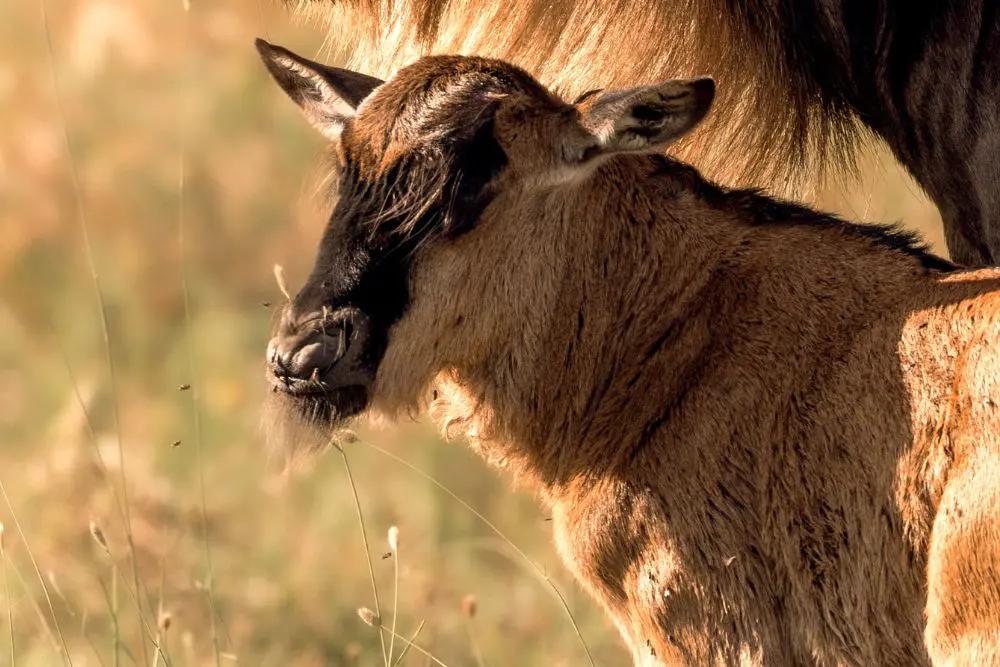
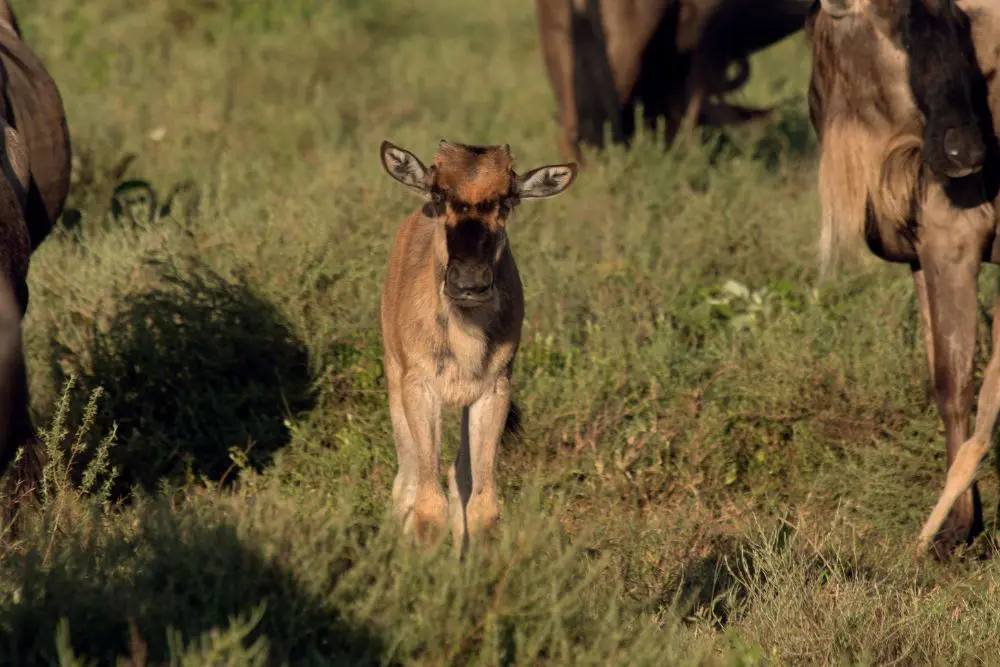
Four legs. A wet coat. An uncertain attempt to stand.
Seeing a wildebeest calf enter the world strips the spectacle back to its simplest form: a mother and her newborn trying to navigate the first few moments of life.
There isn’t much time for hesitation.
Within minutes, calves begin attempting to stand. Soon, those uncertain legs must carry them alongside their mothers and into the movement of the herd.
Watching it happen in front of you can be strangely emotional. There is vulnerability in those first few steps, but there is determination too.
And then you look beyond the calf in front of you and realise this moment is being repeated across the plains.
Again.
And again.
And again.
New life arriving in extraordinary numbers until the landscape itself seems to be moving.
When New Life Gathers, Drama Follows
Of course, calving season is not only a story about beginnings.
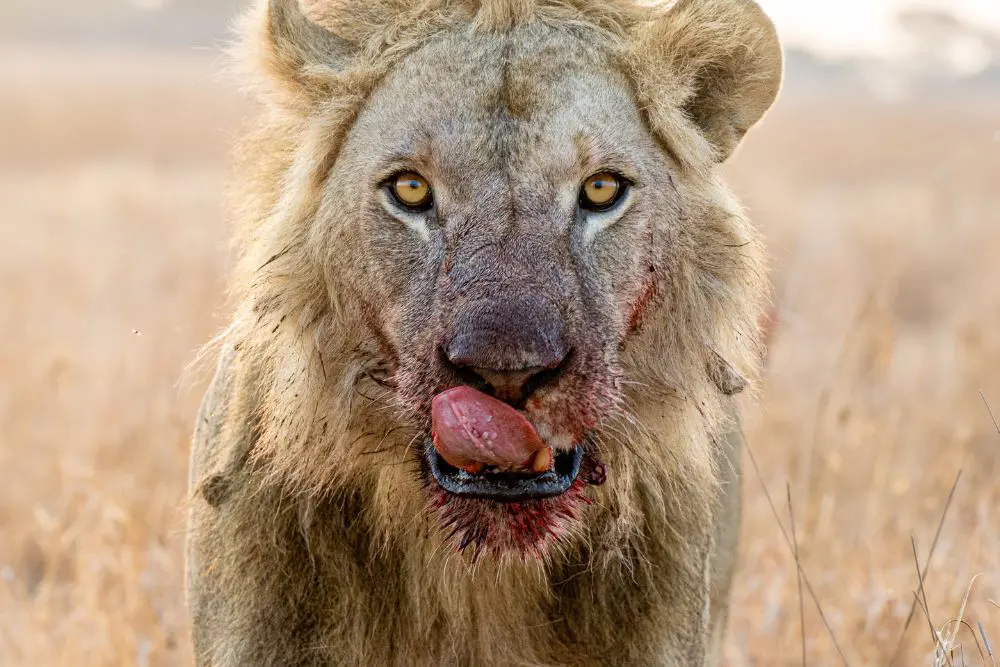
The same abundance that makes the Southern Serengeti a nursery also makes it one of the most compelling places in Africa to witness predator interactions.
Lions patrol the grasslands. Cheetahs use the open plains to their advantage. Hyenas move between the herds, always alert to opportunity.
This is where the softness of the season meets its edge.
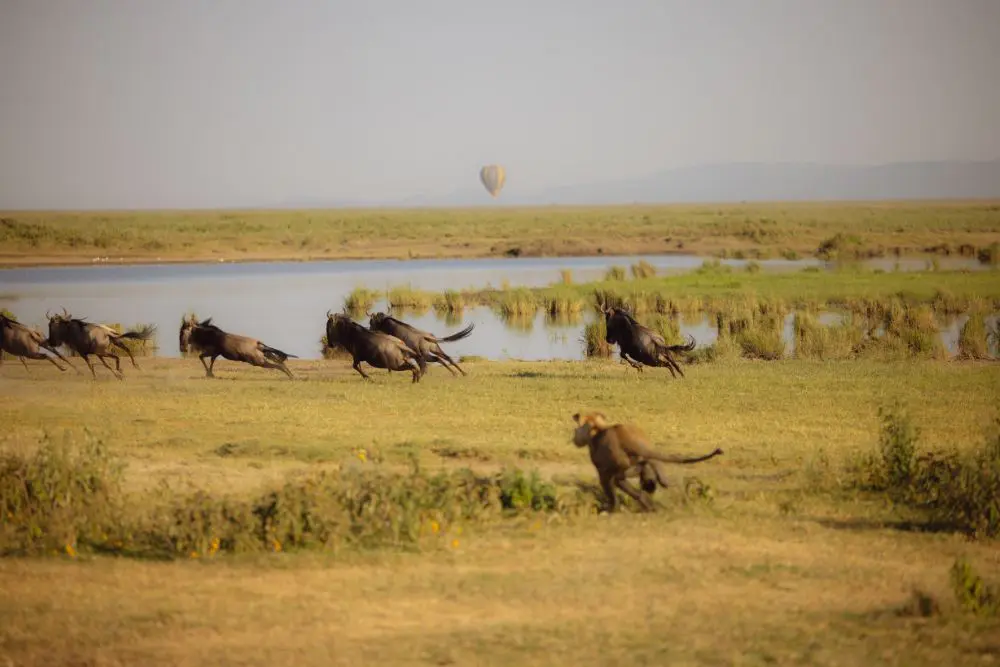
A quiet morning can change in seconds. A herd begins to move differently. Heads turn. Your guide notices something you haven’t yet seen.
Then the chase begins.
There is no soundtrack telling you when to feel nervous. No slow-motion replay. You experience the moment at the same speed as the animals involved.
Sometimes the calf gets away. Sometimes it doesn’t.
That tension is part of what makes calving season so extraordinary. You are not simply witnessing new life. You are witnessing the system that surrounds it. Every birth, chase, escape and hunt is connected to something bigger.
Drop Into the Rhythm of It All
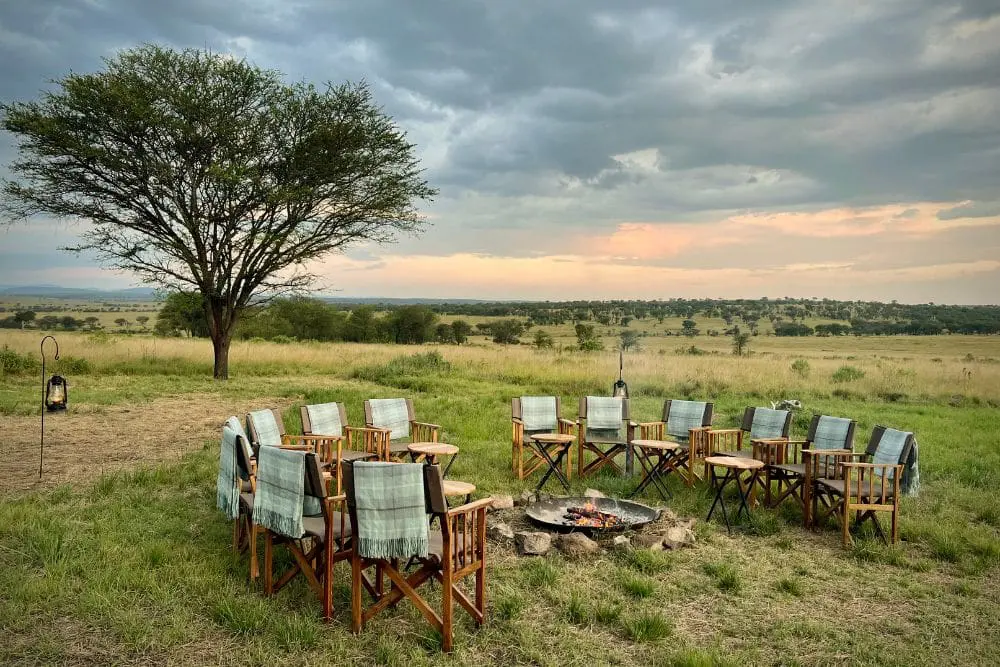
Eventually, something changes. You stop waiting for the Serengeti to perform for you. Instead, you begin moving at its pace. Early mornings start before the sun has properly arrived. Coffee is poured while the horizon slowly changes colour. Your guide reads tracks and movements that, a few days earlier, you may never have noticed.
You begin recognising the signals.
A herd suddenly bunching together. A gazelle staring fixedly into the distance. Vultures circling overhead. The subtle change in your guide’s body language when something has caught their attention.
And between those moments of action comes another side of the Serengeti.
Breakfast somewhere out on the plains. Long stretches of golden grass. The quiet satisfaction of returning to camp after a morning where you saw something you know cannot be recreated.
This is where a calving season safari becomes about more than sightings.
It becomes about being present for the spaces between them.
An Experience Worth Dropping Everything For
Ask two people to describe calving season and they will probably tell you two completely different stories. One might talk about witnessing a birth. Another about a watching a kill. Someone else may remember the scale of the herds more than anything else, thousands of animals stretching towards the horizon until it becomes difficult to tell where one group ends and another begins.
And perhaps that is the real reason to experience it for yourself.
There is no definitive calving season safari. There is only the one that unfolds while you are there. Your guide can take you to the right places. Experience can help read the landscape. The season can provide all the ingredients. But the Serengeti decides the rest.
So, From the Drop
Maybe that is what makes this chapter of the Great Migration feel so alive.
Everything begins with a drop. Your bags at camp. Your first descent onto the plains. The sun dropping towards the Serengeti horizon after a day on safari. And, somewhere amongst the herds, a newborn calf dropping into the grass and beginning one of the most instinctive journeys on Earth.
From that moment, there is no waiting around. And for a few remarkable days, you get to move alongside it all. Not controlling the story. Not knowing what the next scene will bring. Just watching it unfold, from the drop.
Start planning your calving season today