There is no such thing as an ordinary encounter with a mountain gorilla. Every trek into Bwindi Impenetrable Forest unfolds differently. The route changes, the forest changes and, perhaps most importantly, the gorillas themselves bring individual personalities, relationships and family dynamics to every encounter.
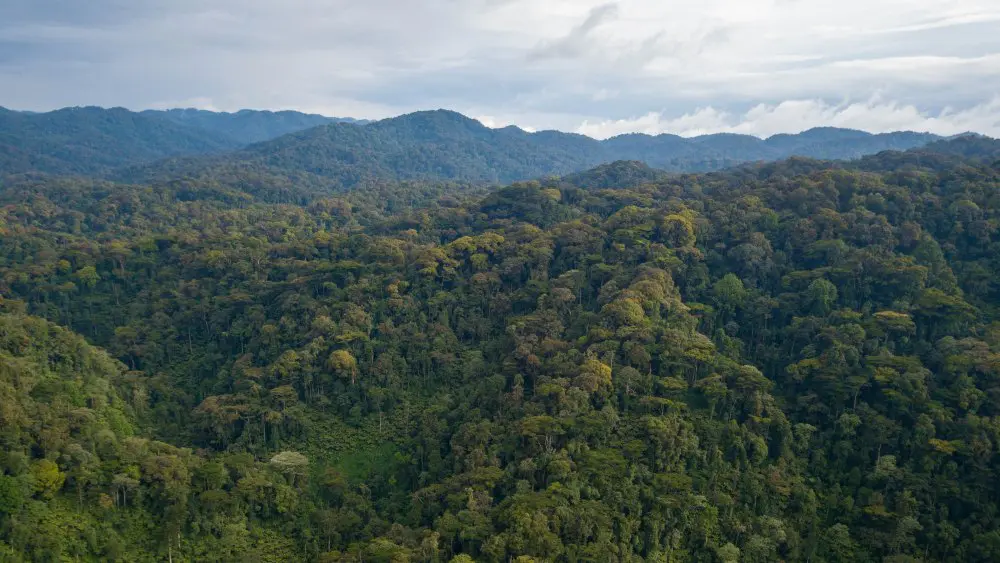
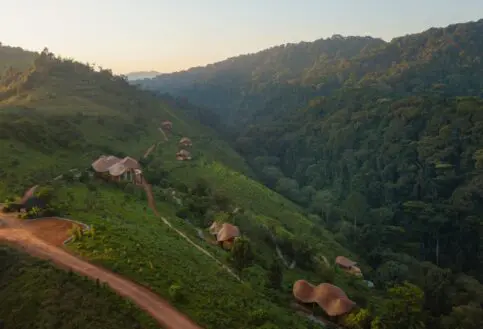
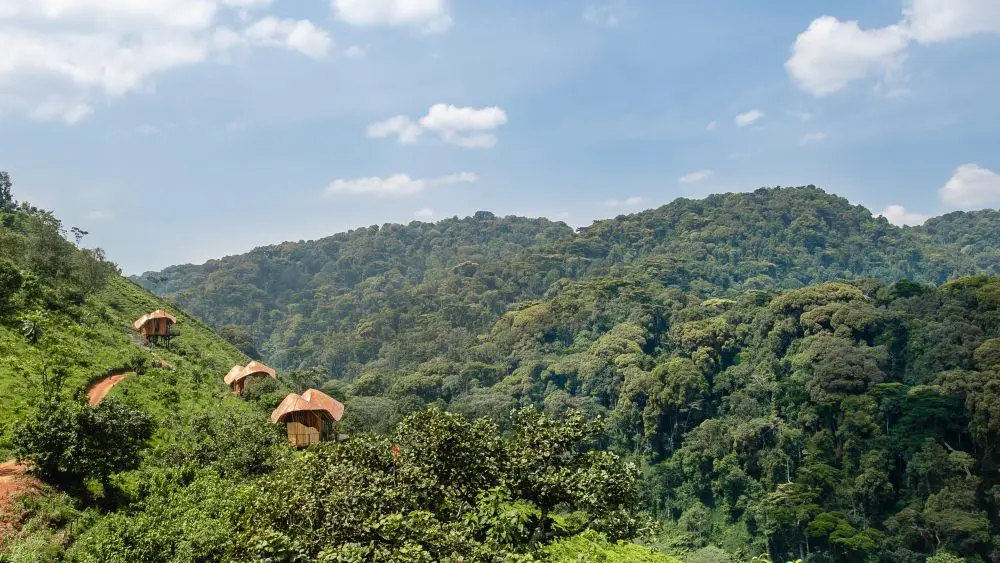
For guests staying at Erebero Hills, Ruhija is our first choice for gorilla trekking. At approximately 25 minutes from the lodge, its proximity makes it the natural starting point when securing permits. When permits in Ruhija are unavailable, the journey instead takes us to Buhoma, approximately an hour from Erebero Hills. The distinction is one of distance, not experience.
Buhoma offers its own interpretation of Bwindi. Sitting at a lower altitude than Ruhija, it is warmer, its terrain somewhat gentler and its history as a gateway into the forest more established. And somewhere beneath its canopy are six habituated gorilla families, each with their own personalities and stories. These are the gentle giants of Buhoma.
The Kanywani Family – Friendly by name
Sometimes a name tells you almost everything you need to know. The Kanywani family takes its name from its silverback, Kanywani, whose name translates rather appropriately as “Friendly”. He leads a small, close-knit group alongside three adult females – Musingye, Kamushongi and Karuhuura – and the family’s youngest member, Kibirangwe.
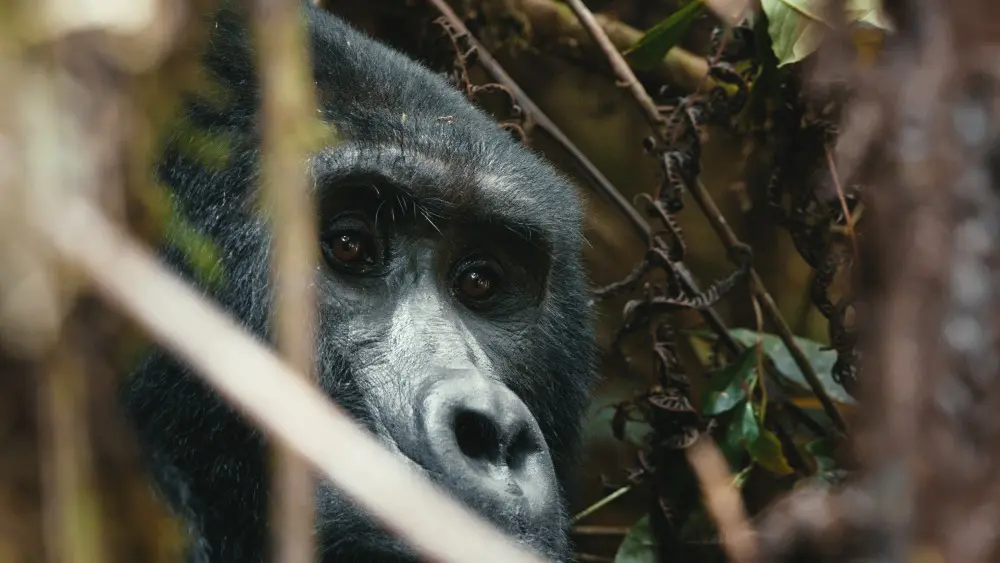
With relatively few individuals, an encounter with the Kanywani family offers an opportunity to focus on the relationships within the group. Watch long enough and the individual gorillas begin to emerge from the collective – where they choose to sit, who stays close to whom and how the younger members interact with the adults around them. It is often in these quiet details that an hour with mountain gorillas becomes most memorable.
The Binyindo Family – What’s in a name?
Spend enough time learning about Bwindi’s gorillas and their names begin to offer intriguing glimpses of the individuals behind them. Few families demonstrate this quite as well as the Binyindo.
At the head of the family is Kavuyo, a distinctive silverback whose name means “Trouble Maker”. Even without an introduction, there are physical features that can help you recognise him: a damaged ear, deep-set eyes and a prominent nose. Around him is a collection of equally memorable names.
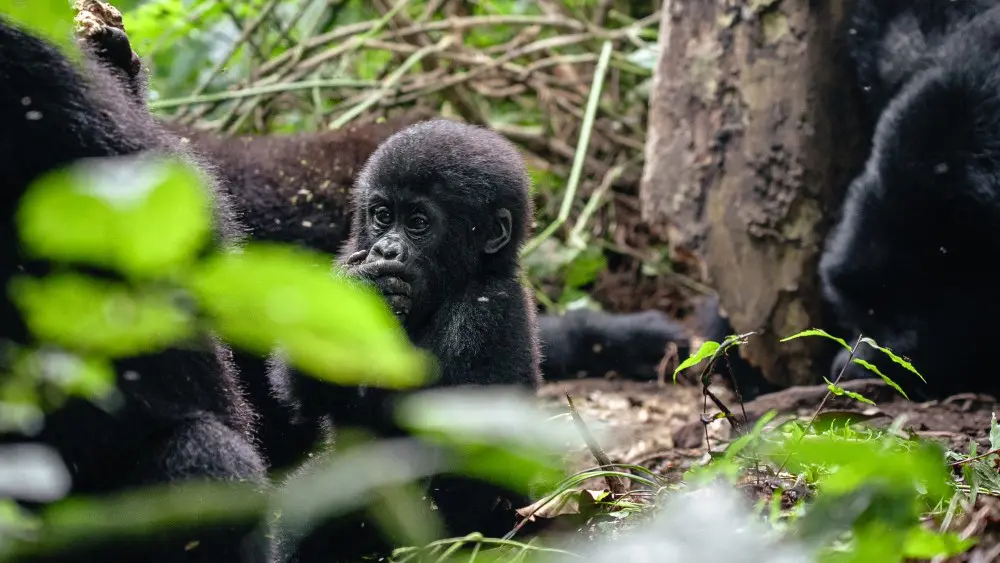
There is Kajura – “Born in Drizzling Rain” – alongside the rather more leisurely sounding Rushooba, whose name means “Moves Slowly”. And then there is Nyampaka: “The Argumentative One”. The names alone invite curiosity. What happened for a gorilla to become known as the Trouble Maker? Just how slowly does Rushooba move? And what earned Nyampaka such an argumentative reputation? Perhaps your hour with them will provide some clues.
The Rushegura Family – Life in a large family
Where some of Buhoma’s families offer an intimate glimpse into a small group, the Rushegura family provides something quite different. This is a large, lively community led by dominant silverback Kabukojo. Around him are adult females, blackbacks and youngsters spanning several generations, while another silverback, Karembezi, adds further strength to the group.
Among the younger males are Kimuriru and Ndeeba, whose playfulness adds another dynamic to an already busy family. With so many individuals sharing the same forest home, there can be a lot to take in. One gorilla may be feeding quietly while youngsters play nearby. Somewhere else, an adult may settle into the vegetation while another individual moves through the group.
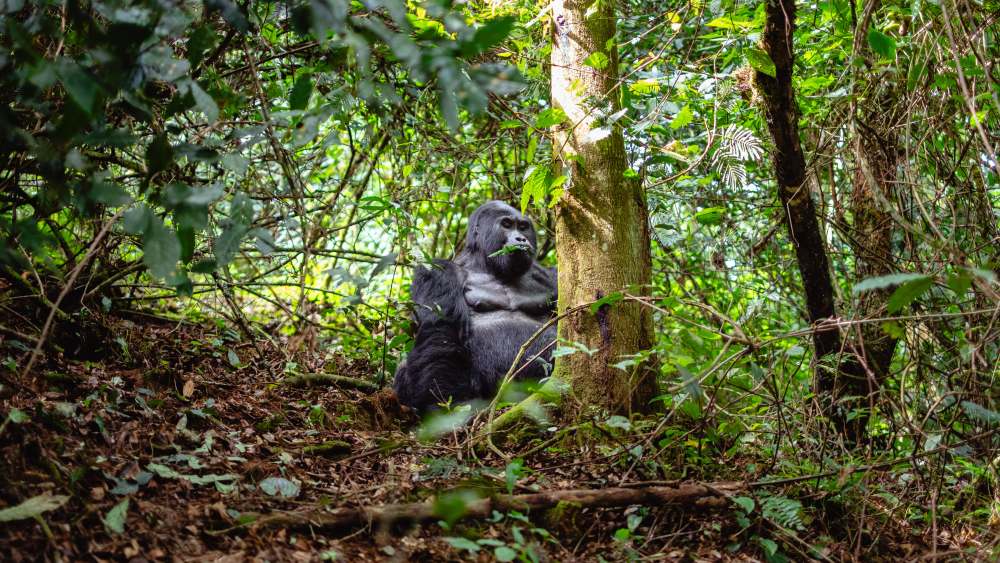
Rather than trying to watch everything, sometimes it pays to choose one interaction and follow it. Gorilla families are communities, and the Rushegura offer an opportunity to observe the different generations, personalities and relationships that allow that community to function.
The Katwe Family – Protectors and troublemakers
If the Binyindo family has some memorable names, the Katwe are more than capable of competing. The family is led by Murinzi, born in 2002, whose name means “Protector”. Sharing the group with him is the considerably older silverback Mahaane, born around 1990, whose name translates as the rather intriguing “Complicated”. Two silverbacks from different generations already create an interesting family structure.
Then you meet Karureeta. Her name? “Chaos Initiator”. Alongside her are patient Kangume and the younger Kasiru, Mirangara and Miracle, creating a small family that combines experience with youthful energy.
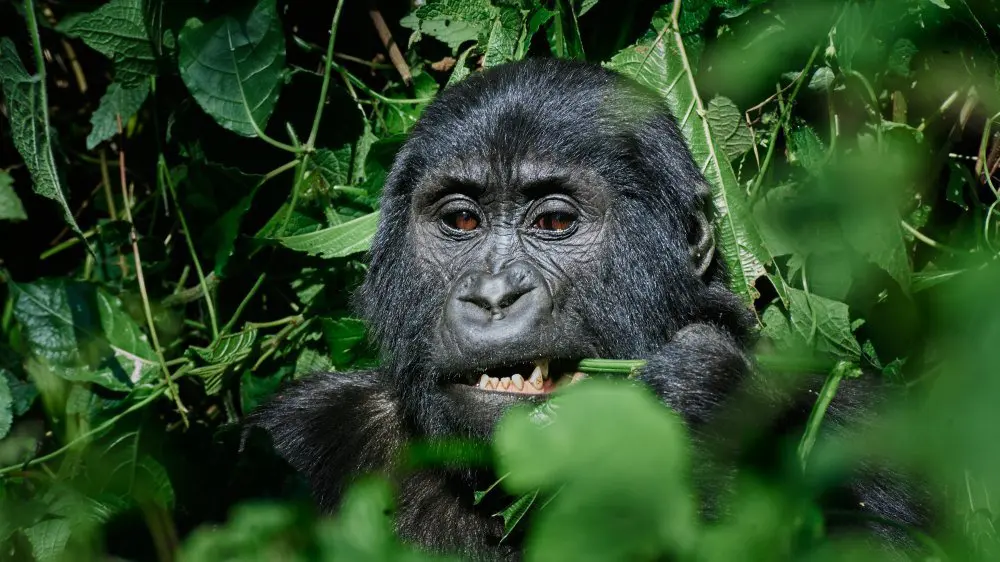
As with so many gorilla names, we shouldn’t assume that a translation provides a complete description of an individual’s personality. But they do provide a window into the stories and observations that have accumulated around these animals over time. And it is difficult not to keep one eye on someone called the Chaos Initiator.
The Habinyanja Family – Look a little closer
Not every gorilla encounter is defined by activity. Sometimes the most absorbing moments are the quiet ones. The Habinyanja are a compact family led by silverback Ruyombo. Alongside him are adult females Rutinda and Rukondo, blackbacks Kazahi and Nyanjura, and young Prunus.
Their smaller family structure offers a quieter window into gorilla life, where the relationships between individuals can be particularly rewarding to observe. Watch where a youngster seeks reassurance. Notice which individuals choose to remain close together. Pay attention to the subtle movements and interactions that might initially seem insignificant.
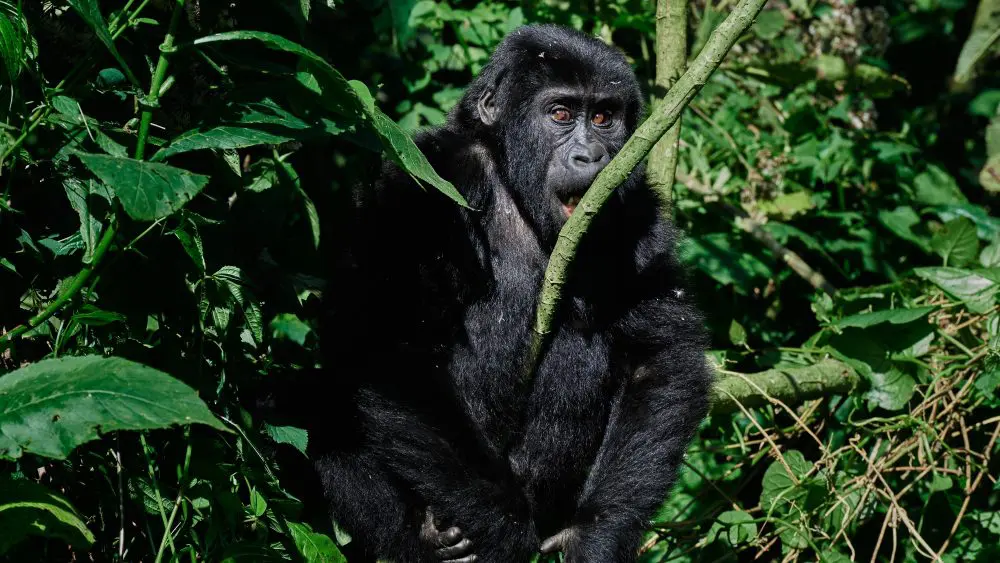
Mountain gorillas do not perform for their visitors, nor should we expect them to. An hour might contain play, movement and displays of strength, or it may be spent watching a family feed and rest beneath the canopy. With the Habinyanja, the reward may simply come from slowing down enough to notice.
The Muyambi Family – Every individual has a story
The final family brings us to another appropriately named silverback. Muyambi means “Helper”, and the silverback who carries the name is relatively easy to identify thanks to a distinctive horizontal ridge above his nose. Around him are several generations. Senior adult male Kituta shares the group with adult females Kikombe, Kisho and Bucerere, blackback Rushokye and young female Kura – whose name rather unexpectedly means “Elections”. Kisho has distinguishing features of her own, including a damaged left eye and wrinkled ears.
It is a relatively small family, which once again creates space to begin recognising individuals during the limited time you have with them. A ridge above a nose, the shape of an ear or the behaviour of one particular gorilla can become the detail that fixes an encounter in your memory. You arrive hoping to see mountain gorillas. You leave remembering individuals.
Another side of Bwindi
Ruhija remains our first choice for guests trekking from Erebero Hills. Its proximity to the lodge means less time on the road and more time immersed in the landscape surrounding us. But when your permit takes you to Buhoma, the experience is not a lesser one. It is simply a different doorway into the same extraordinary forest.
Buhoma is warmer and lower, with its own atmosphere, terrain and history. Beneath its canopy, Kanywani, Kavuyo, Kabukojo, Murinzi, Ruyombo and Muyambi lead families with stories entirely their own. Which family you encounter is only one part of the experience. Gorillas move, conditions change and no two days beneath the canopy unfold in quite the same way. That unpredictability is part of what makes trekking in Bwindi so compelling.
You can learn their names and read their stories before setting out. But it is only when the vegetation parts and you meet them in their forest home that your own story with the gorillas of Buhoma begins.
The first step of your gorilla trekking adventure begins here.