As we build towards Giving Tuesday, we continue to shine a spotlight on the partners and projects we work alongside and support throughout East Africa. Our partners are supported by every guest that spends a night in an Asilia camp, as well as through the Asilia Giving platform which combines contributions made by Asilia with private donations from individuals.

Changing lives in Bwindi
Last year we were excited to announce our expansion into Uganda, with our new lodge Erebero Hills due to open in 2026. Importantly this also marked the next chapter in our long-term impact agenda across East Africa. We’ve partnered with Change a Life Bwindi, a community-focused NGO operating on the edge of Bwindi Impenetrable National Park, one of the most biologically rich forests on the planet and home to half of the world’s remaining mountain gorillas.
Through this partnership we are committed to funding a multi-year effort to support sustainable livelihoods, reforestation, and education in one of East Africa’s most important landscapes.
Change a Life Bwindi works with the Batwa and Bakiga communities who live around Bwindi Impenetrable National Park in south-western Uganda. The organisation focuses on linking livelihoods with conservation, helping local people benefit from protecting the forest.
Founded in 2018 by Tina Katushabe, Change a Life Bwindi began after she met a young girl in need of help while visiting her brother, a ranger in Bwindi Impenetrable Forest. What started as personal support to help one child, has grown into a network of projects reaching hundreds of households across the hills that surround the National Park.
What They Do
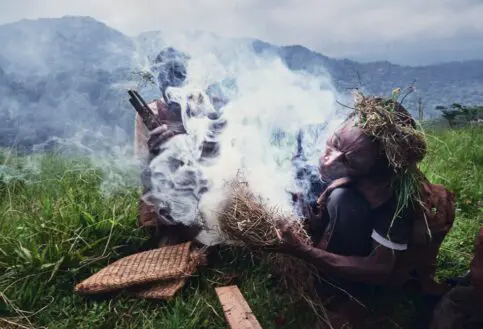
For years, the Batwa people lived as hunter-gatherers within the Bwindi Impenetrable Forest. Their way of life was intertwined with the rhythms of the forest, relying on it for food and medicine. They hunted small animals, gathered wild fruits, and used their intricate knowledge of plants to sustain themselves. For the Batwa, the forest was central to their identity, spirituality, and survival.
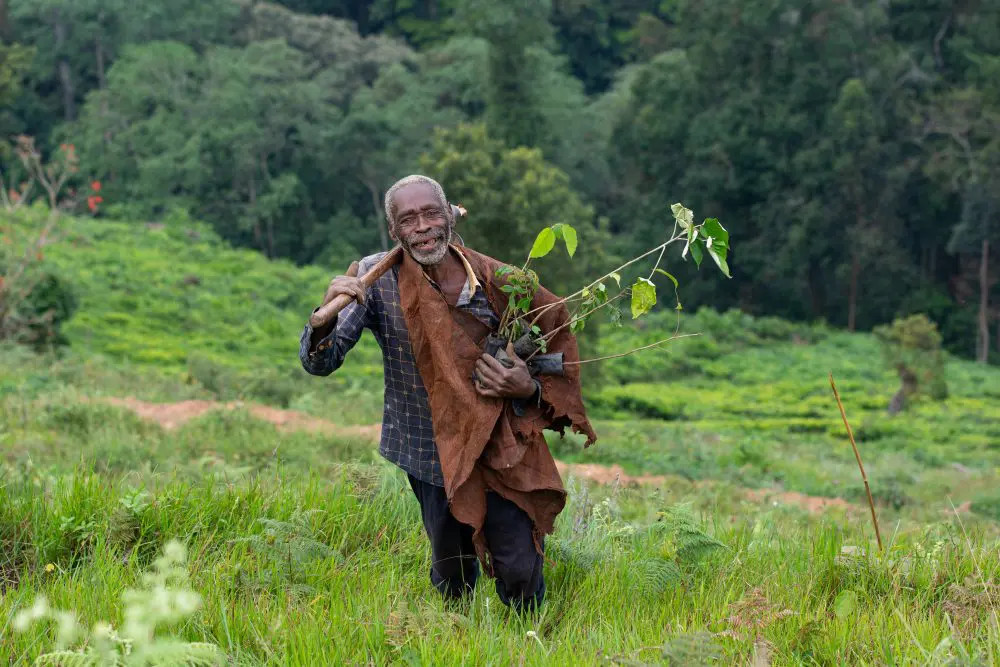
This deep connection was severed in 1991 when Bwindi Impenetrable Forest was designated a national park to protect mountain gorillas. Without legal claims to the land, the Batwa were evicted, losing access to the resources that had defined their existence for generations. Removed from the forest, they were cut off from their traditional lifestyle and many Batwa families ended up living in poverty on the periphery of the very forest that once sustained them.
The Batwa aren’t the only community living on the forest border. The Bakiga, known for their industrious nature have a history of cultivating the region’s fertile soils, their terraced fields climbing the steep slopes, mirroring the contours of the land. However, the pressure of an increasing population combined with no space in which to expand their traditional farming practices sees them facing increasing challenges to survive on the fringe of a protected landscape.
Change a Life Bwindi helps both Batwa and Bakiga communities, supporting them to find new livelihoods while respecting their cultural heritage and connection to the natural world.

“I wanted to find a way to support the children I was meeting but realised to help them, I needed to help their families.” Tina explains. “Giving handouts wasn’t a scalable option, I needed to find a way to help the children’s’ mothers, often unemployed single parents, generate their own income enabling them to support their children.”
The first project Tina started was a basket weaving group, that offered local women with a traditional skill a way to earn a living. Weaving holds a significant place in Batwa culture, reflecting their connection to the forest and its natural materials. It was a skill that came naturally to the women, even those who had never tried it before, with sustainable materials grown locally readily available for them to use. Tina provided them with support to organise themselves and find a route to market their woven products.
Tina recalls the moment news came that the first baskets were sold, “It was fantastic, the village erupted in celebration. The drums came out, and everybody was dancing. The sale gave them hope for a future whereby they could earn money for themselves.”
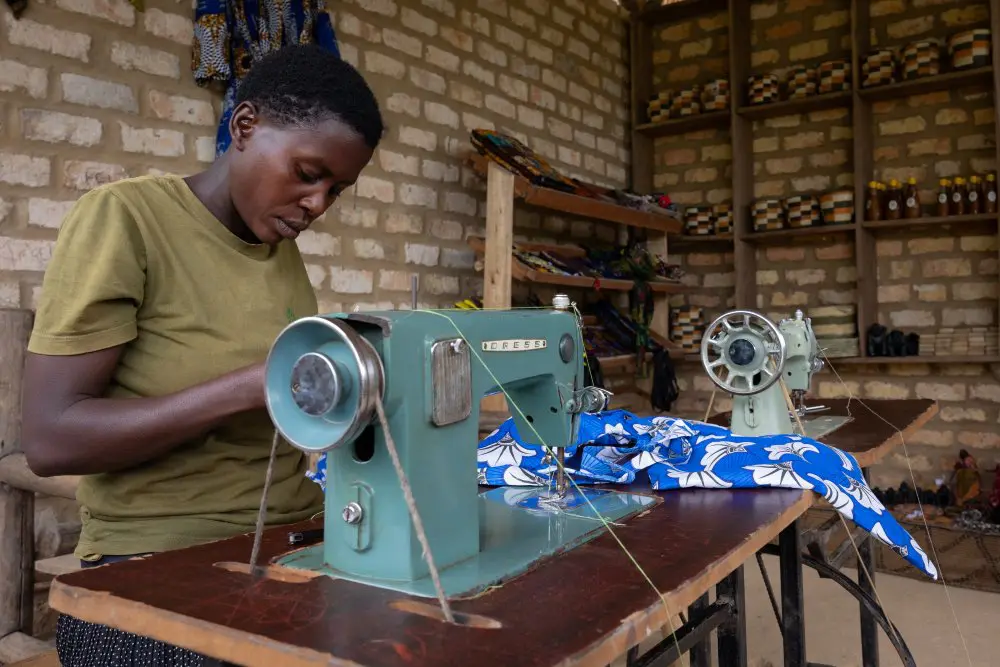
Change a Life Bwindi now runs a number of programmes that support local communities through sustainable enterprise. The basket weaving programme was a success, but the craft wasn’t as popular with the younger generation of Bawta. They were more interested in fashion which encouraged Tina to launch “My Hands, My Future”, a tailoring and design project. Young women, many of them young mothers, learn sewing and business skills, producing clothing and accessories to sell to tourists, as well as offering repair and tailoring services to others in the villages. For Batwa men, a beekeeping programme offered access to hives, suits, and training in modern honey production while encouraging them to draw on their traditional knowledge of forest ecology.

These nature-friendly crafts offer the opportunity to generate income. With market sources linked to tourism, the health of the forest and its wildlife becomes important and directly linked to prosperity.
Restoring Forest and Creating Employment
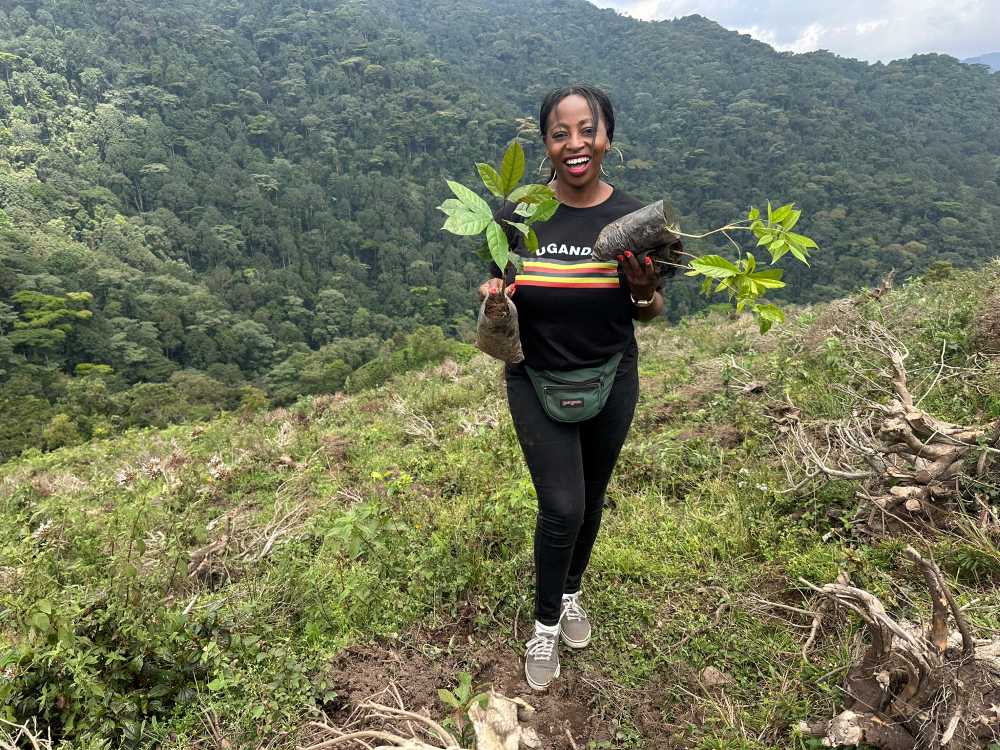
There is almost no transitional zone between the National Park and the surrounding communities, limiting wildlife movement and igniting human-wildlife conflict. A key element of our impact agenda in the region is to create a reforested buffer along the northern boundary of Bwindi, replacing failing tea plantations with a diverse, resilient forest ecosystem that restores corridors for wildlife while creating new livelihoods for local people.
Working with Change a Life Bwindi we’ve begun planting and testing reforestation methods on the lodge site itself. To date, over 25,000 indigenous trees have been planted, with a further 35,000 seedlings purchased from local community nurseries ready to take root on the hills. The project, which provides wages for the local community, incorporates a biocultural approach that merges science with indigenous knowledge. Batwa elders are involved in selecting species with cultural and ecological value, choosing trees they have historically used for fruit, medicine, and ceremonies, ensuring restoration also revives lost traditional knowledge.

Change a Life Bwindi’s model shows how social and environmental priorities can reinforce one another. By providing livelihoods that depend on healthy forests the organisation helps secure both people’s futures and Bwindi’s fragile ecosystem.
“When people have a way to earn a living, they don’t need to take from the forest. They see that protecting it protects their own future.” Tina Katushabe
Through Asilia’s support, this work is helping communities around Bwindi build stability, pride, and a renewed relationship with the forest that sustains them. This Giving Tuesday, consider making a donation to Asilia Giving – the philanthropic arm of Asilia. Full donation amounts are used in support of our implementing partners, ensuring the longevity and reach of their programmes.