Dining on safari is about so much more than the food. Every meal becomes a part of the adventure.
From breakfast beside your vehicle on a dawn game drive, to sundowners as the savannah turns gold, and dinner beneath a sky thick with stars. The setting may change every day, but the sense of occasion never does.
Read further to find out what you’ll actually eat, where you’ll eat it, and why so many travellers say the meals were some of the moments they remember most.

Why Dining Is One of the Highlights of Safari
At home, a meal is a pause in the day to refuel. On safari, a meal is part of the story.
You eat close to nature. A herd moves across the plain while you sip your coffee. A hippo grunts somewhere in the dark as your dinner is served. The location shifts constantly, so no two meals feel the same.
The pace slows down, too. Lunch stretches long into a warm afternoon. Dinner runs late around the crackling fire. There’s time to talk, swap stories of the day’s sightings, and hear your guide’s tales.
Much of the food is local and fresh, often grown a short walk from your table. And there’s always the chance of a surprise: a table set up in a place you’d never expect.

What Meals Can You Expect on Safari?
A safari day is built around the light, and meals follow the same rhythm. Here’s how a typical day unfolds, from first coffee to the last glass by the fire. If you’d like the fuller picture, see how meals fit into a safari day.
Early Morning Coffee Before Your Game Drive
A safari day starts before the sun.
A gentle wake-up call. A pot of coffee or tea waiting outside your tent, sometimes with a rusk or warm pastry to see you off. It’s a quiet, unhurried ritual – a few minutes to breathe in the cool air before you set out to find the wildlife stirring at dawn.
Bush Breakfasts
After a few hours out on a drive, breakfast in the bush is a joy.
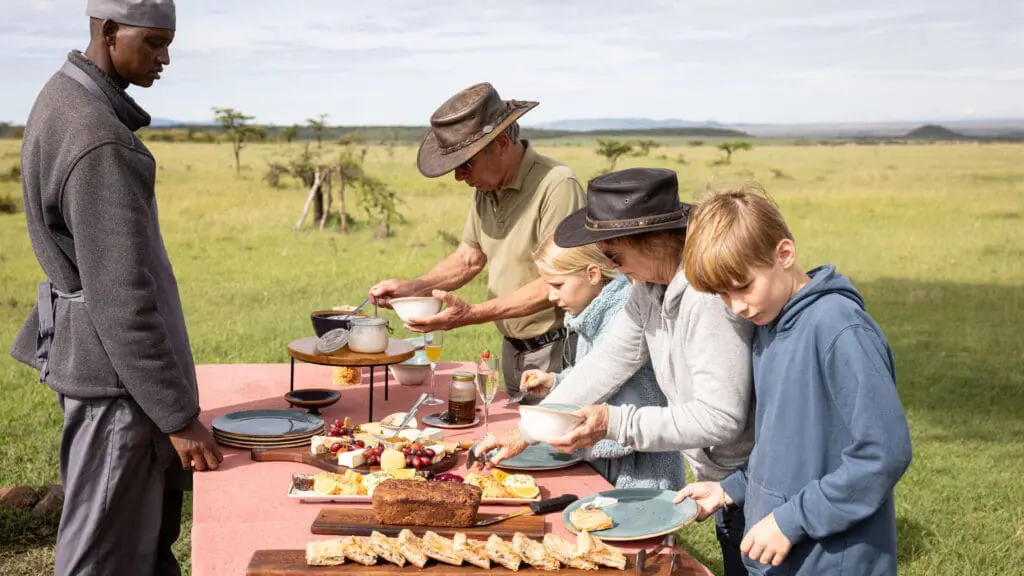
Most mornings this is a relaxed picnic. Your team sets up in a shaded spot with a view – flasks, fresh fruit, pastries, cereals and some tasty prepared options like boiled eggs and bacon, and maybe even a quiche. You eat in the open, boots dusty, the plains stretching out around you.
On special occasions, and whenever it’s possible, the picnic becomes something grander: a full cooked breakfast laid out in the wild, eggs and bacon sizzling far from any kitchen.
Curious how it comes together? Read more about our bush breakfasts.
Relaxed Camp Lunches
Lunch is a slower affair.
You return to camp, wash off the morning, and sit down to a spread built around fresh, seasonal produce: salads, warm dishes, homemade bread, something sweet to finish. There’s usually the option to dine outside, in the shade, with the view and birdsong as accompaniments.
Then the afternoon opens up. A siesta. A book. A cold drink by the pool. A moment to rest and time to be still.
Sundowners
As the sun drops, the age-old safari ritual begins.
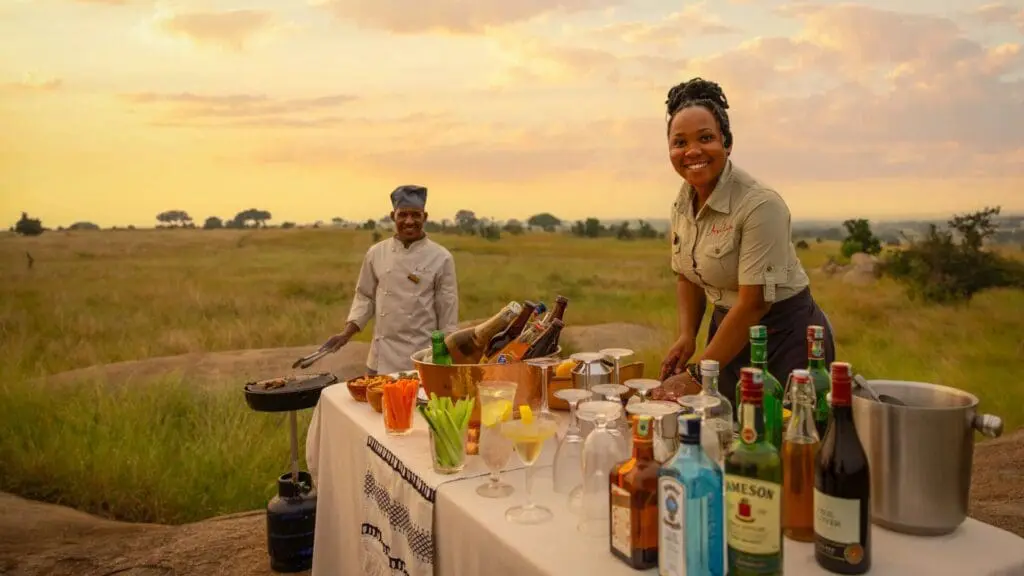
As your afternoon game drive winds down, your guide finds a spot with a wide horizon. Out come the drinks – a gin and tonic, a cold beer, a soft drink, and a few canapés to go with them. You stand with the savannah glowing orange, cameras out, wildlife often still on the move nearby.
It’s a simple ritual. It’s unforgettable. And it happens every evening.
Dinner Under the Stars
Dinner is the day’s warm heart.
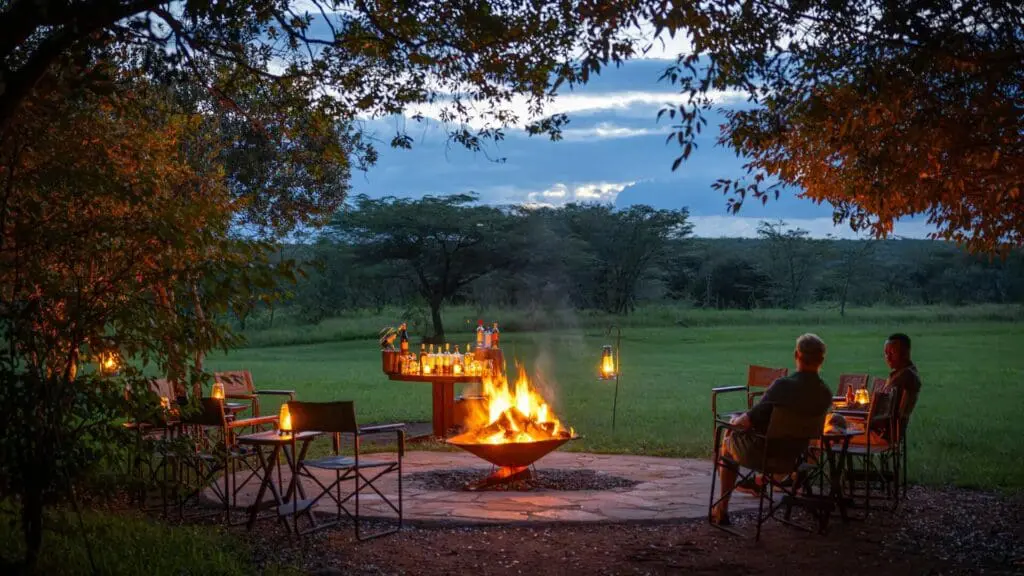
Sometimes it’s around a long table under canvas. Sometimes it’s out in the open, lit by candles and the glow of a campfire. Plates arrive, glasses are filled, and the conversation drifts from the day’s sightings to stories the guides have carried for years.
Above you, the sky does something you rarely see at home. Stars pierce the inky blackness in numbers you’ve never seen before – edge to edge, with nothing to dim them.
What Makes Bush Dining So Memorable?
Bush dining lives in the unexpected.
You round a bend, and there’s a table where there was nothing before. Lanterns in the grass. A fire crackling. A chef who has whipped up delights in the middle of nowhere, with only a fraction of a full kitchen at his disposal.
Then there’s the silence – real silence, broken only by the wild around you. Wildlife grazes in the middle distance. The unexpected locations. The changing scenery.

Our Favourite Safari Dining Experiences
Across our camps, dining takes on the character of the place. Here are a few of the experiences we love most.

Jabali Ridge, Ruaha, Tanzania
Best for: dinner among ancient granite boulders, dramatic landscapes, and an intimate, tucked-away feel. Perched high in Ruaha National Park, Jabali Ridge turns dinner into theatre, with the rocks lit up by the glowing firelight.
Rubondo Island Camp, Lake Victoria, Tanzania
Best for: lakeside lunches and freshly-caught fish, cooked to order as you watch. Rubondo Island Camp offers something rare: island exclusivity, water on every side, and a menu shaped by the day’s catch.

Roho ya Selous, Nyerere, Tanzania
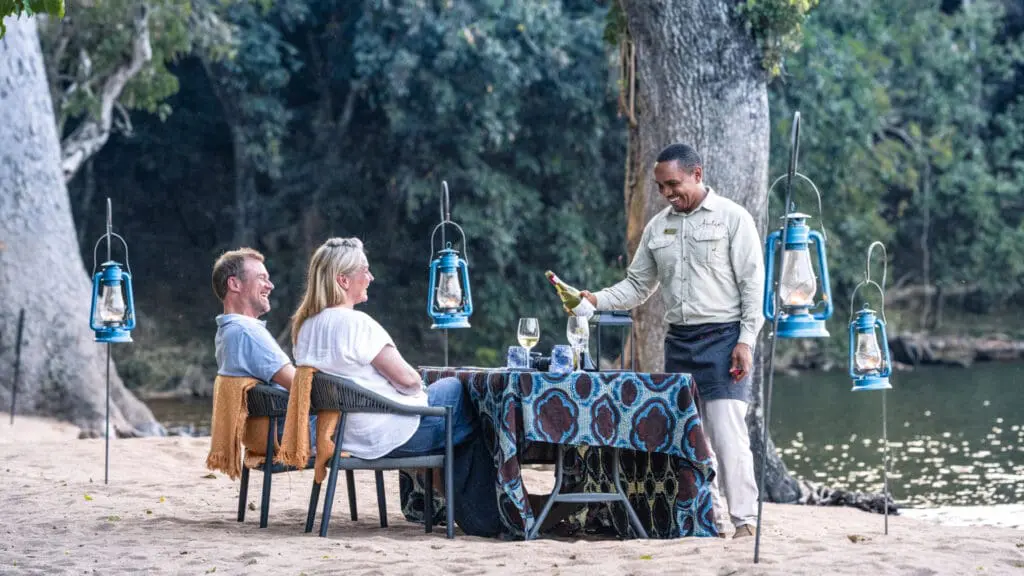
Best for: lakeside sundowners and long riverside dinners. Set in Nyerere National Park, Roho ya Selous makes the most of its waterfront location. A bush lunch by the lake. Drinks as the sun sinks over the channel – dinner beside the river, with the sounds of the water close by.
Encounter Mara, Naboisho, Kenya
Best for: family bush breakfasts under the acacias, with sweeping conservancy views. Encounter Mara, located in the Mara Naboisho Conserancy, welcomes families, and breakfast in the open is a favourite with young explorers and their parents alike.
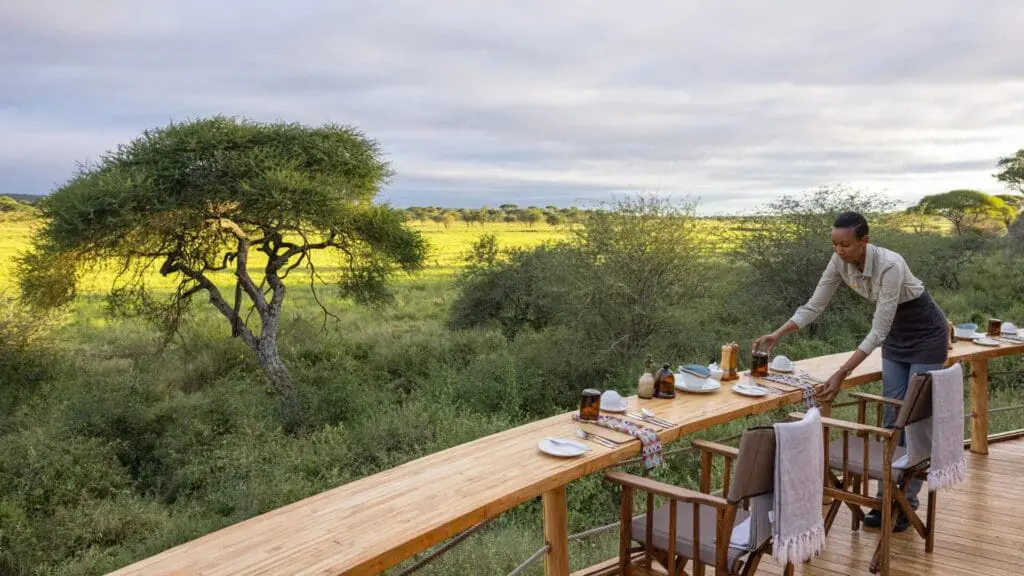
Oliver’s Camp, Tarangire, Tanzania
Best for: a dedicated breakfast bar overlooking the Tarangire River, and picnic lunches spent watching elephants move through the swamp. Oliver’s Camp puts the wildlife right in front of your plate.

Sayari Camp, Serengeti, Tanzania
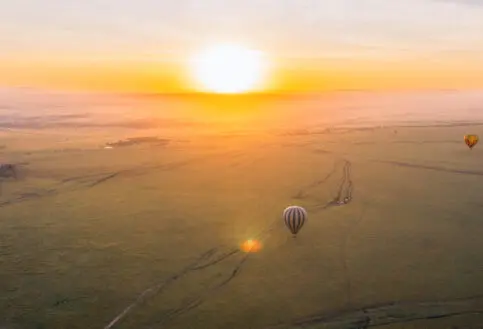
Best for: bush breakfasts during the migration and champagne breakfasts after a balloon safari. In the northern Serengeti, Sayari Camp sits close to the Mara River, where the great herds cross. Few breakfasts come with a view like it.

Usangu Expedition Camp, Ruaha, Tanzania
Best for: fly-camping dinners in true wilderness. At Usangu Expedition Camp, you can head out on an overnight fly-camping experience and eat under the stars, far from anywhere, with only the wild for company.
Is the Food Good on Safari?
Yes – and it often surprises people.
Our camps operate professional kitchens staffed by skilled chefs. Ingredients are fresh, much of it locally grown or sourced. The cooking leans on East African flavours while keeping familiar international dishes on hand, so there’s always something you’ll love. Special requests are welcomed, not merely tolerated.
Want to see a sample menu? Here’s what you’ll eat on safari, and how safari chefs create unforgettable meals far from any supermarket. Much of the produce comes from closer than you’d think – read about where our fresh ingredients come from.

Can Safari Cater for Dietary Requirements?
Our camps can accommodate most dietary requirements.
Vegetarian, vegan, gluten-free, and halal options, as well as allergies and intolerances, are all part of the routine. The key is to tell us in advance. Once the kitchen knows, they’ll plan around you, so you never feel like an afterthought.
For a fuller guide, read about navigating dietary restrictions while on a safari in East Africa.
The Most Romantic Safari Dining Experiences
Safari has a gift for romance.
Picture a private dinner for two, lit by candles, set apart from the rest of the camp. A honeymoon breakfast in bed with a view over the plains. An anniversary toast beside the fire, a private chef, a table just for you.
Camps will always try to arrange a surprise – a bush dinner in a hidden spot, a sundowner set up just for the two of you. Whether it’s possible on a given night depends on occupancy and the resources on hand, so nothing can be guaranteed. But when it happens, it’s magic.
Planning a trip to remember? Explore our romantic safari experiences.

Dining Experiences You Can Only Have on Safari
Some meals simply can’t happen anywhere else.
- Breakfast served while wildlife grazes a short distance away
- Sundowners as the whole savannah turns gold
- Dinner around the campfire on an overnight fly camping experience
- A barbecue beneath a sky full of stars
- A chef cooking your meal over an open fire in the bush
- Breakfast after a hot-air balloon safari, champagne in hand
This is the kind of dining that turns a holiday into a story you’ll tell for years.
Frequently Asked Questions About Safari Dining
A full range – cooked breakfasts, fresh salads and warm lunches, canapés at sundown, and multi-course dinners. Menus mix East African flavours with familiar international dishes, built around fresh, mostly local produce.
Very. Camps run professional kitchens with skilled chefs, and the quality often takes first-time guests by surprise.
Breakfast served out in the wild after your morning game drive. Usually a relaxed picnic in a scenic spot, and on special occasions a full cooked breakfast set up in the open.
Typically breakfast, lunch and dinner, plus early coffee before your game drive and drinks and snacks at sundown. You will not go hungry.
Yes. Meals in the open are set up and watched over by experienced guides and camp teams who know the area and take safety seriously.
Yes. Vegetarian, vegan, gluten-free, halal, and allergy-friendly options are all standard. Just let the camp know in advance so the kitchen can plan.
Often, yes – many camps offer a sociable, shared-table feel. Private dinners can usually be arranged if you’d prefer to dine just the two of you.
Most camps include a good selection of drinks – soft drinks, wines and spirits. Premium labels and champagne may be extra. Check the details for your camp when you book.
Yes. Private and surprise dinners can often be arranged, subject to occupancy and the resources available at the time.