A safari might be the best family holiday you ever take. Wild animals. Big skies. Long days spent together, far from screens and school runs.
But the magic does not happen by accident. The right camp makes all the difference.
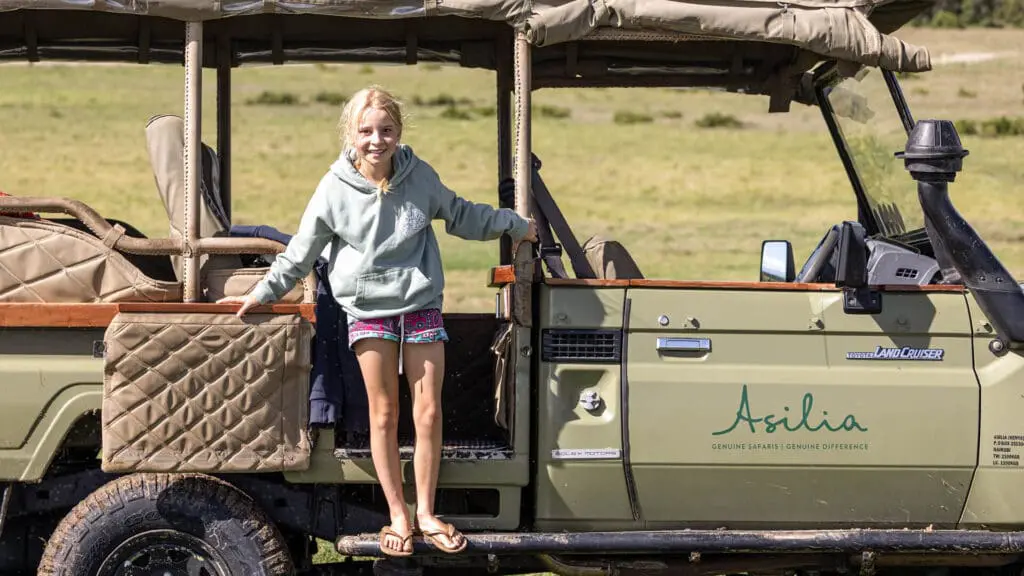
Family-friendly safaris are not just about bigger rooms. They are about flexible days, patient guides, food children will actually eat, and wildlife that keeps every generation leaning forward in their seat. Choose well, and your children come home changed. They will talk about their first lion sighting for years.
This guide helps you choose. First, we answer the questions asked most. Then we show you the camps that prove the point.
Is a Safari a Good Holiday for Families?
Yes. For many families, it is the best one they ever book.
Children are built for safari. They notice things adults miss. A dung beetle rolling its prize. A lion cub tumbling in the grass. A giraffe crossing the road on legs that seem too long to work. Wonder comes easily to them, and the bush is full of it.
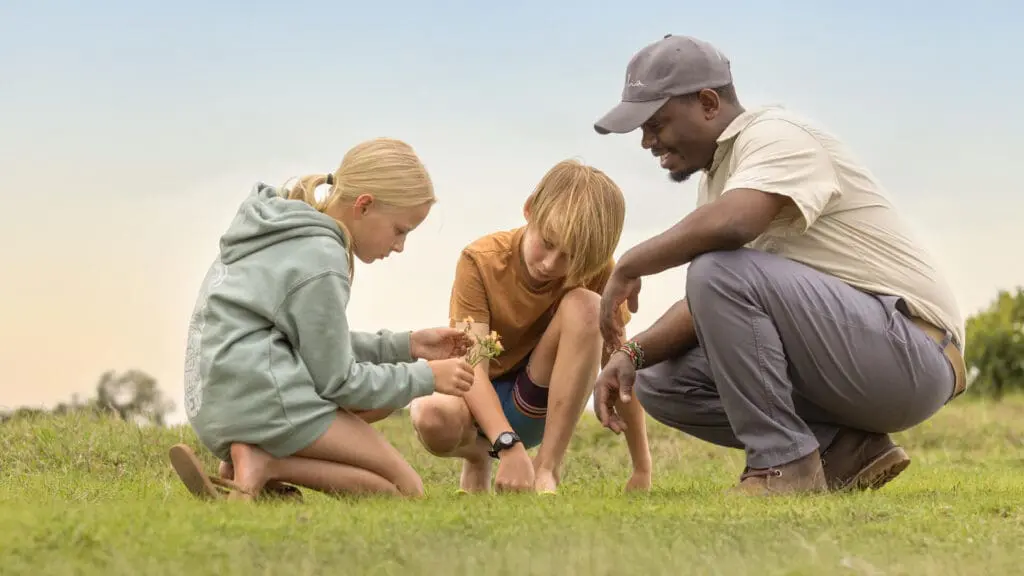
The learning is real, too, and none of it feels like school. Children track animals by their prints. They learn why elephants flap their ears and how a termite mound stays cool. They meet the people who protect these places and hear why it matters that we care for our wild places.
Then there’s the time together. No phones ringing. No cartoons in the next room. Just your family, a fire, and a sky thick with stars. Children remember that. So do parents. A safari gives your family adventure, learning and calm, all at once. Few holidays do that.
How to Choose a Family-Friendly Safari Camp
Not every camp suits children. The good ones share a few things. Here’s what to look for:
Family Accommodation
Space matters when you travel with children. Look for family tents, interconnecting rooms, or private units set slightly from the rest of camp.
You want room to spread out. You want a door between the children and the grown-ups. And you want privacy, so early bedtimes and quiet mornings do not disturb other guests. A good family tent gives you all three.
Flexible Activities
Children do not run on a fixed timetable. The best camps know this and bend the day around your family rather than the other way round.
The means shorter game drives when little legs get restless. It means a private vehicle, so you set the pace, stop when the little one needs a break, and never worry about testing another guest’s patience. On a family safari, a private vehicle is often worth every penny.
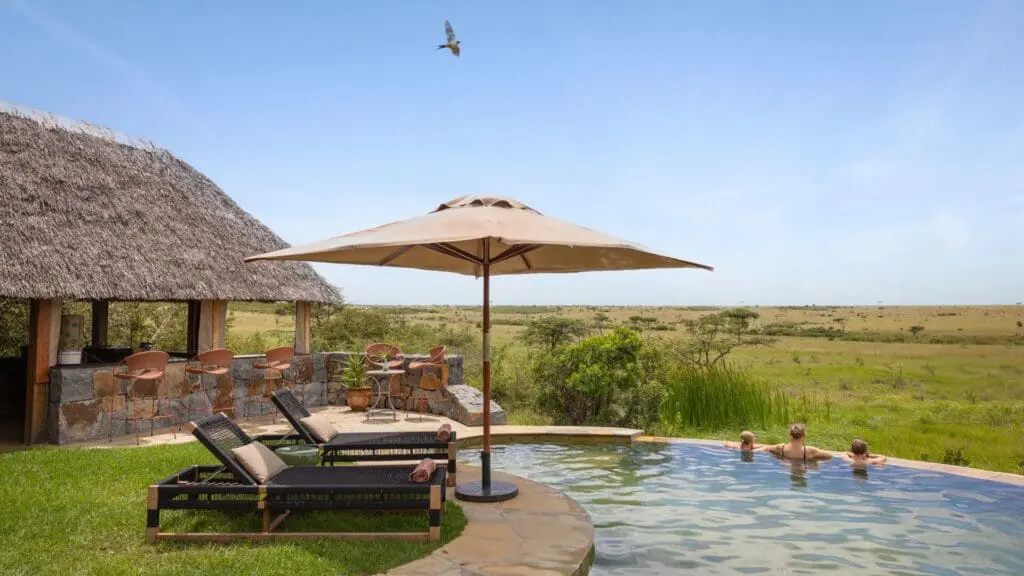
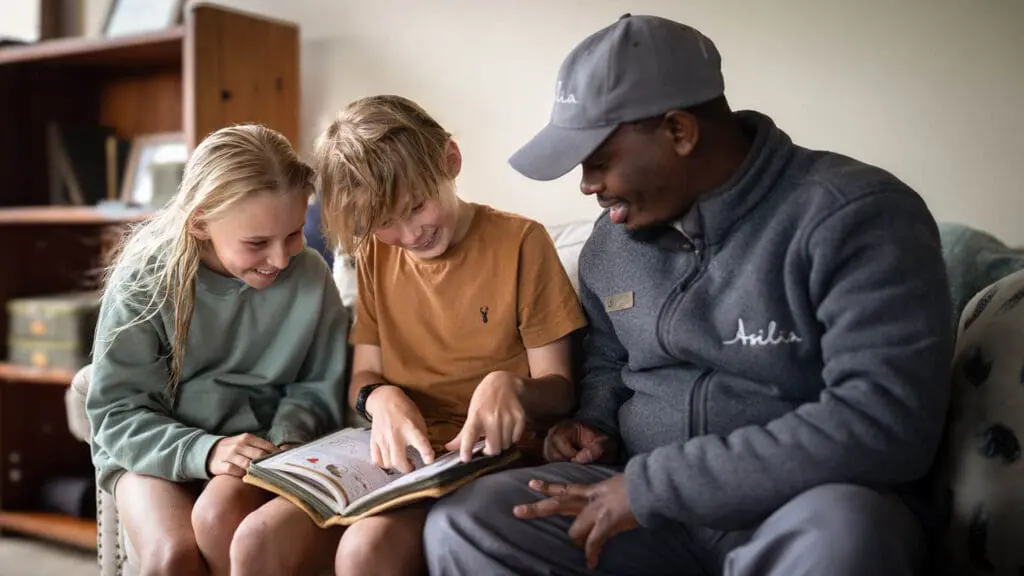
Between drives, there is plenty to keep children busy. Swimming pools at some camps. Cultural visits. Bush skills taught by the guides. And here is the quiet secret of Asilia’s camps: the guides are brilliant with children. They fill the gaps with football, tracking games and archery. They turn a slow afternoon into the best part of the day.
Experienced Family Guides
A great guide can make or break a family safari. Children have short attention spans. A good family guide reads that in seconds. They slow down, point out the small stuff, and tell the story behind the animal instead of reciting facts. When the drive runs long, he switches to a game or a challenge and keeps everyone happy.
Ask about guides who work well with children. The best camps will know exactly who to send. (Check out our guide to tipping before you go, too.)
Safety and Logistics
Parents ask about safety first, rightfully so.
Camps that welcome families are built with children in mind. Family tents are usually located closer to main camp areas to keep walks to and from meals shorter for little legs. Every Asilia vehicle has seatbelts to keep everyone securely in their seats along bumpy tracks.
Always check the camp’s child policy before you book. Minimum ages vary between camps and between activities, and a quick question now saves disappointment later.
The Best Family Safari Camps in Kenya
Kenya is a good place to start. The wildlife is famous, the conservancies are quiet, and the flying times are short. Here are four camps that families love.
Ol Pejeta Bush Camp
Best for: curious children who want to learn, and families who care about conservation.
Ol Pejeta Bush Camp is a working conservancy, and that changes everything. Children do not just watch wildlife here. They learn how it is protected.

They can meet the anti-poaching dogs, who steal the show every single time. They can stand near the last two northern white rhinos on Earth and understand, in a way no classroom can teach, why every rhino counts. Guides run junior-ranger-style activities that turn children into trackers and rangers for the day.
Naboisho Camp
Best for: families who want big wildlife and few other cars.
Naboisho Camp sits in the private Mara Naboisho Conservancy next to the Maasai Mara. Fewer vehicles. More space. Wildlife that behaves as if no one is watching.
The camp has family suites with room to spread out and a pool to cool off in after a drive. Older children can try a walking safari, where age rules apply, and everyone can spend time with the Maasai who own and run this land. For families who want to see the Mara without the crowds, this is a strong choice.
Encounter Mara
Best for: first-time safari families.
If this is your family’s first safari, Encounter Mara is an easy place to begin. It is a genuine conservancy camp, warm and unfussy, and the pace suits newcomers.
Days adapt around your family’s schedule. Guides keep drives light and fun. And because it sits in the Naboisho Conservancy, you can do things here that you cannot do in the busy national parks, from off-roading to meeting the local Maasai community. It eases a family into safari without overwhelming anyone.
Rekero Camp
Best for: families chasing the Great Migration.
Rekero sits near the Talek River. From July to October, the migration thunders through, and this is one of the best seats in the house.
Children can watch wildebeest gather at the river’s edge before a crossing. Photographers, young and old, can fill a memory card in a morning. In the evening, Maasai guides tell stories around the fire that children will repeat for weeks.
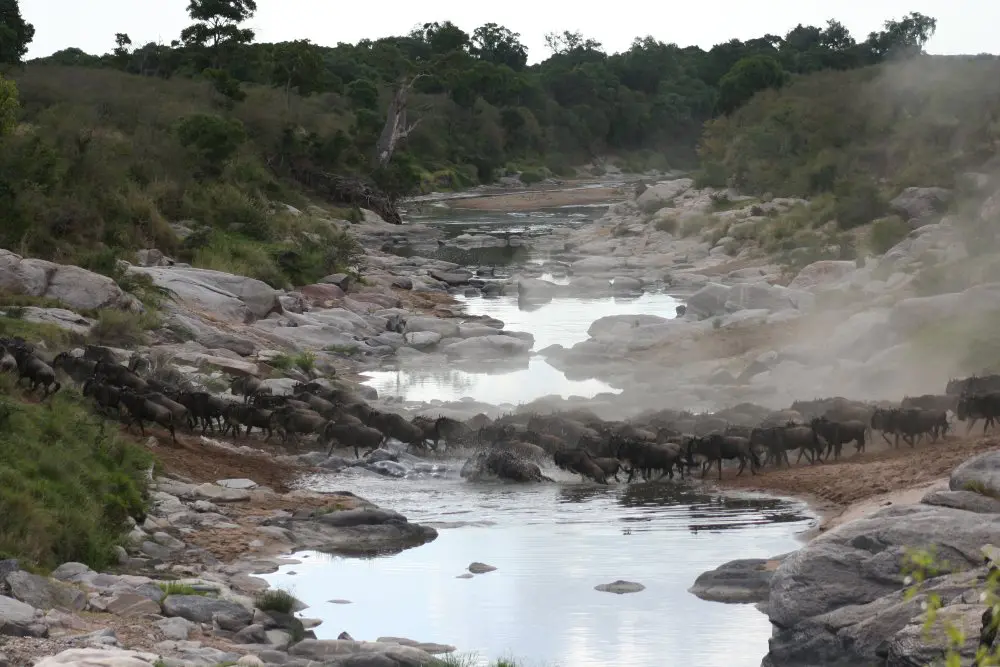
Here is the family bonus: during migration season, so much game gathers within sight of the deck that you barely need to leave camp. Shorter drives, more sightings, happier children. Everyone wins.
The Best Family Safari Camps in Tanzania
Tanzania offers something different. Vast plains, ancient craters and wilder corners. These three camps suit families ready for a bit more adventure.
Sayari Camp
Best for: families with older children who want the migration and a touch of wildness.
Sayari sits in the far north of the Serengeti, close to the Mara River. This is migration country, and the river crossings here are the stuff of documentaries.
The camp suits older children and teenagers well. There is space to roam, walking safaris for those old enough, and a real sense of being deep in the wild.
Oliver’s Camp
Best for: adventurous families who love elephants and want to walk.
Oliver’s Camp is located in Tarangire, a park famous for its elephants and its ancient baobab trees. In the dry season, the herds gather in numbers that stop you mid-sentence.
This is a camp for families who want to get out of the vehicle. Walking safaris put you on the ground, where children learn to read tracks, spot birds and understand the bush at eye level. Guides teach bush skills that turn a walk into a lesson no child forgets. Age rules apply to the walks, so check before you book.
The Highlands
Best for: families who want variety, cooler air and something out of the ordinary.
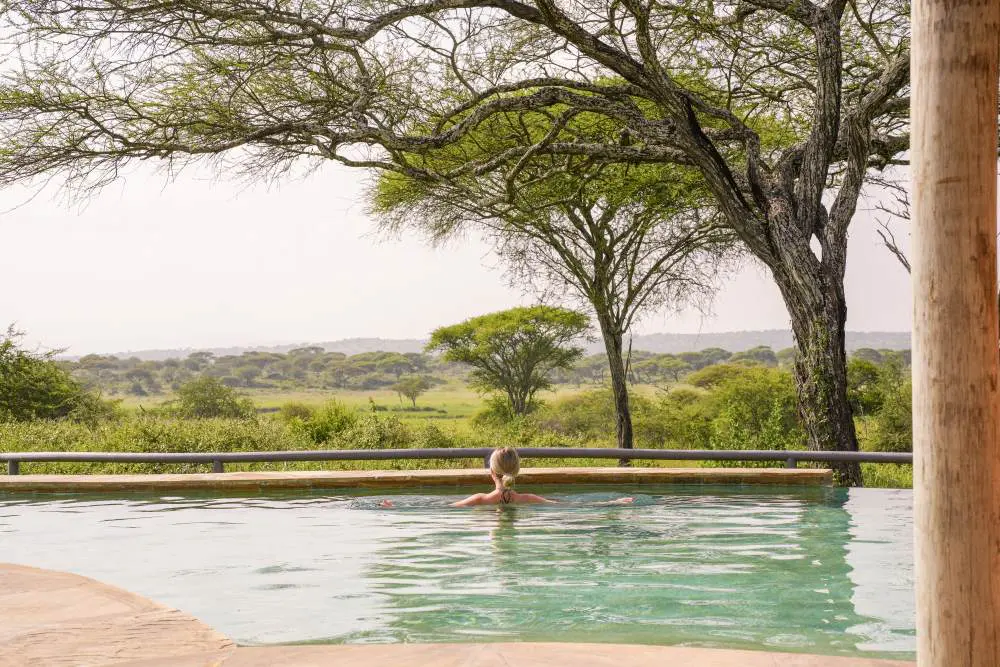
The Highlands is like nowhere else. The tents look like space domes, tucked into a forest on the edge of the Ngorongoro highlands.
The climate is cool and fresh, a welcome change after hot days elsewhere. Families can hike, explore the famous Ngorongoro Crater, and spend time with the Maasai community nearby. It pairs beautifully with a Serengeti camp, giving your family two very different worlds in one trip.
Which Safari Camp is Best for Different Ages?
Age changes everything on safari. Here’s how to match the camp to your children.
Safaris with Young Children
Little ones need shorter days and gentle pacing.
Choose camps that offer private vehicles so that you can cut a drive short without a second thought. Look for pools and open space to burn off energy between game drives. And lean on flexible camps that shape the day around nap times, not the other way round. Ol Pejeta Bush Camp and Encounter Mara handle young families beautifully.
Safari with Teenagers
Teenagers want to do more than sit and watch.
Give them a walking safari, where they can track on foot. Hand them a camera and watch them disappear into it. Involve them in conservation experiences, where the stages feel real and grown-up. Camps like Sayari and Oliver’s give teenagers the adventure they crave.
Multi-Generational Families
Travelling with grandparents, parents and children at once? Flexibility is everything.
Book a private guide and vehicle, so the group can split when energy levels differ. Choose camps with larger suites or several tents close together. And build an itinerary that lets everyone do their own thing, then come back together for the sundowner. The right camp makes three generations feel equally at home.
What Makes a Family Safari Memorable?
The camps matter. But the moments are what your family will carry home.
The first lion, closer than anyone expected. The hush that falls over the vehicle. The campfire, and the faces lit up around it. The morning a guide shows your child how to read leopard’s tracks in the sand. A Maasai elder telling a story older than any of you.
The sundowner, when the sky turns to fire and someone hands round the snacks. The tracking game that turns your seven-year-old into a detective. The night the whole family lies back and counts more stars than they ever knew existed.
You cannot plan these moments. But the right camp makes them. That is the whole point.
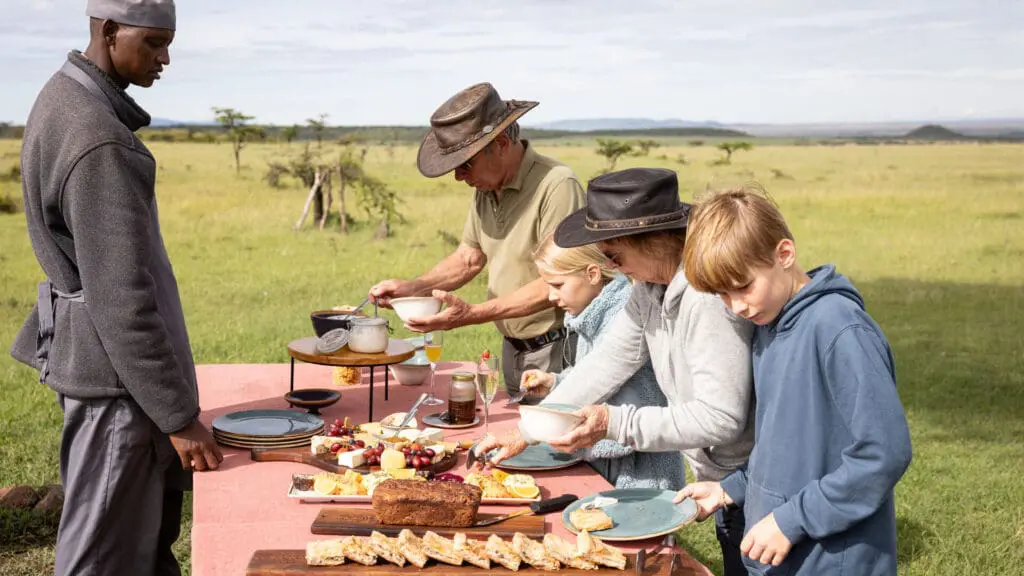
Family Safari Activities Children Love
A safari is far more than game drives. The best camps offer plenty to keep children busy and thrilled.
Wildlife tracking, where children learn to read prints and dung like a story. Bush treasure hunts that have them scurrying across camp. Cultural visits with the Maasai, full of song, colour, and jumping contests. Junior-ranger-style activities that let children play protector for a day. Bow and arrow lessons that turn quiet children bold.
For the bigger moments, there are hot air balloon safaris, floating over the plains at dawn, with age limits to check first. Walking safaris for older children, and night drives in the conservancies, where a spotlight reveals a whole world that sleeps by day.
There is something here for every age. No child is ever bored on safari for long.
When is the Best Time for a Family Safari?
The best time for a family safari is often the time that suits your family.
School holidays line up well with some of the finest wildlife viewing. The dry months, roughly June to October, bring easy sightings and comfortable weather, and they overlap neatly with the summer break. This is also prime migration season in the Mara and northern Serengeti.
Think about comfort, too. The dry season means cooler mornings, fewer mosquitoes, and firmer roads, all of which make life easier with children.
If you can, sidestep the very busiest weeks. Private conservancies like Naboisho stay quiet even in peak season, which is a real gift when you are travelling with little ones. Your Asilia planner can help you find the sweet spot between great wildlife and small crowds.

Tips for Planning a Family Safari
A few simple choices turn a good family safari into a great one.
Slow down. Resist the urge to squeeze in a new camp every second night. Fewer camps and longer stays mean less packing, gentler travel days, and time for your children to settle in and build a bond with their guide. That relationship often becomes the highlight of the trip.
Pair your camps with care. A wildlife-rich plains camp and a cooler, activity-led camp make a lovely combination. Keep travel days short and simple, and check flight times before you commit.
Pack smart. Neutral colours, layers for cold mornings and warm midday sun, sun hats and high-factor sunscreen. Bring snacks that children like, a pair of binoculars they can call their own, and a few screen-free games for downtime. Sort out any health preparation, including vaccinations and anti-malaraials, well before you fly.
Do these few things and the rest tends to look after itself.
Frequently Asked Questions About Family Safaris
Yes, with the right camp. Choose one that offers private vehicles, flexible days and shorter drives, and young children do wonderfully. Camps built for families make it easy.
There is no single right age. Smaller children love the animals and the freedom. School-age children soak up the learning. Teenagers thrive on the adventure.
Almost always. A private vehicle lets you set the pace, stop when you need to, and shorten a drive without a second thought. For families with young children, it is one of the best investments you can make.
Camps with walking safaris, photography, and hands-on conservation suit teenagers best. Sayari and Oliver’s Camp both offer the adventure and independence older children want.
Aim for at least three nights per camp, and fewer camps overall. Longer stays mean less travel, more downtime, and the chance for children to build a real bond with their guide.
Both are excellent. Kenya offers short flights and quiet conservancies, which suit first-timers and young families. Tanzania offers vast wilderness and dramatic variety, which suits adventurous families and older children. Many families combine the two.
Elephants top most lists, closely followed by lions, giraffes and zebras. Baby animals of any kind cause instant delight. During the migration, the sheer number of wildebeest leaves children wide-eyed.
Neutral-coloured clothes, warm layers for chilly mornings, and strong sunscreen. Add their own binoculars, a few favourite snacks, and some screen-free games for quiet afternoons.
Ready to plan a family safari your children will never forget?