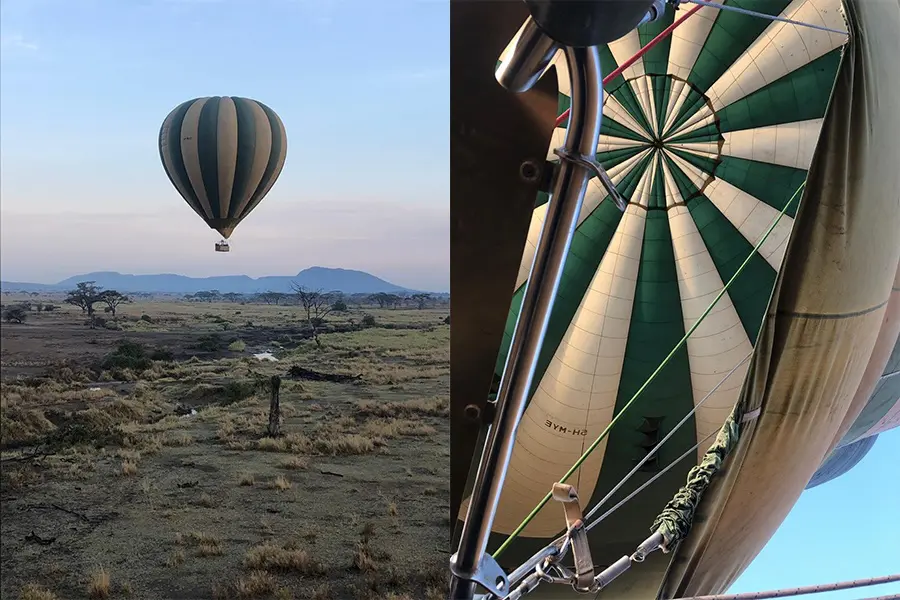
Witnessing herds of wildebeest, towers of giraffe or a dazzle of zebra running across the plains of Africa a few hundred metres below you is something you’re not likely to forget. Combine breathtaking aerial views with a spectacular sunrise and you’re close to imagining the splendour of an East African hot-air balloon safari.
What Makes a Balloon Safari in Tanzania So Spectacular?
Floating over the plains in a hot-air balloon allows you to experience the beauty of a Tanzania safari from an entirely new perspective. You’ll get a bird’s-eye view of the local game going about their early morning activities, as a new day dawns over the horizon.
What to Expect from Your Hot-Air Balloon Safari
Before the Flight
You’ll be woken up before sunrise and whisked away on a (very) early drive to the launch site. It can be quite chilly at this time of the morning, and even cooler once you’re up in the air, so be sure to wrap up in a few extra layers. Arrive at your balloon and watch as your professional ballooner gets ready for your take-off.
Be prepared for the noise as they gas up the balloon – it can be quite loud, so it’s not uncommon to be startled! However, once you’re in the air, it is mostly silent (save for the occasional roar of the gas) so you can fully appreciate the wonder of peacefully flying high above the plains.
Note: All balloons are well maintained and serviced regularly, to ensure that your experience is a safe one.
During the Flight
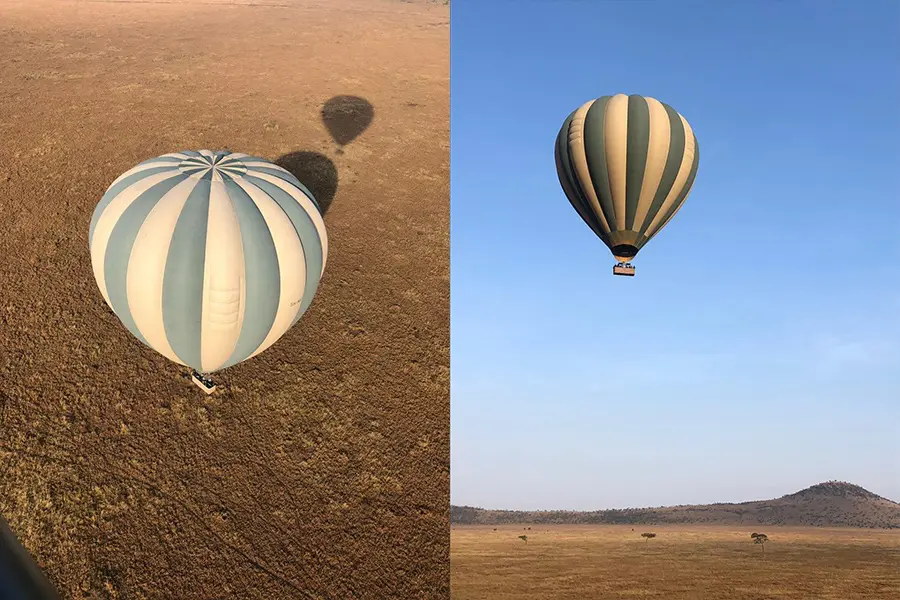
On average, a hot-air balloon safari lasts between one and two hours. During this time, you’ll get an idea of just how vast the landscape is, and have the opportunity to spot all sorts of game from your unique vantage point. Once you are up high enough, the animals below become less aware of their audience – there are sure to be some unforgettable sights in store for you.
Coming back down to land can be slightly bumpy, so anyone with a bad back or similar injury should get the all-clear from their doctor beforehand.
After the Flight
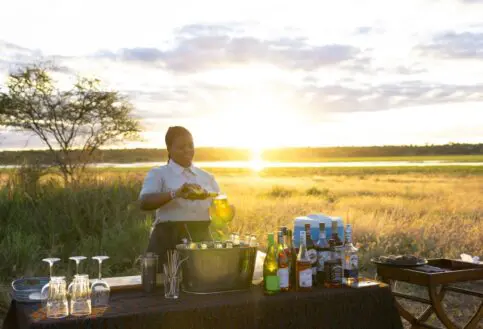
Once you’re back on the ground, you’ll be treated to a scrumptious champagne breakfast in the bush. Is that not the perfect end to a memorable morning in the African skies?
Planning and Preparation Tips for Your Balloon Safari
The Night Before
Your hot-air balloon experience will start very early in the morning, so plan for an early night beforehand.
What to Pack
Take the following essentials with you:
- A jersey or light jacket
- Sunglasses
- Binoculars
- Camera
Weather and Cancellations
Be aware that hot-air balloon safaris are extremely dependent on weather conditions. If it’s too windy or wet, the flight will be cancelled and you’ll have the option of receiving a full refund or rescheduling to another day (if possible).
Advance Booking
Booking your balloon safari well in advance is absolutely essential. This isn’t an activity that can be organised on the day. Due to the reliance on the weather, balloon safaris are only on offer at certain times of the year, so it’s best to make sure your agent is aware of your interest in this wonderful experience and have them book as far in advance as possible.
Budget
Another thing to consider is that, because of the extensive safety measures and the large team required to make a hot-air balloon safari happen, the price of a trip can be quite high. However, anyone who has experienced it will tell you that it’s totally worth it.
The Best Places for a Tanzanian Balloon Safari
Which Asilia camps can I Book a Hot-Air Balloon Safari From?
You can experience the wonder of a hot-air balloon safari from several of our boutique camps. It’s also a part of our Classic Edition Small Group tour and Signature Edition Small Group Tour.
In the Serengeti National Park in Tanzania, the following Asilia camps offer balloon safaris:
In Tanzania’s Tarangire National Park, you can enjoy a hot-air balloon safari from Oliver’s Camp.
In Masai Mara in Kenya, hot-air balloon safaris are available from:
Talk to one of Asilia’s friendly and knowledgeable safari planners to help you create the best itinerary to include a hot-air balloon adventure.