Sunrise over the forest was always going to be special, so the curtains were deliberately left open last night. As dawn breaks and the sky lightens, you wake with the natural rhythm of the day.
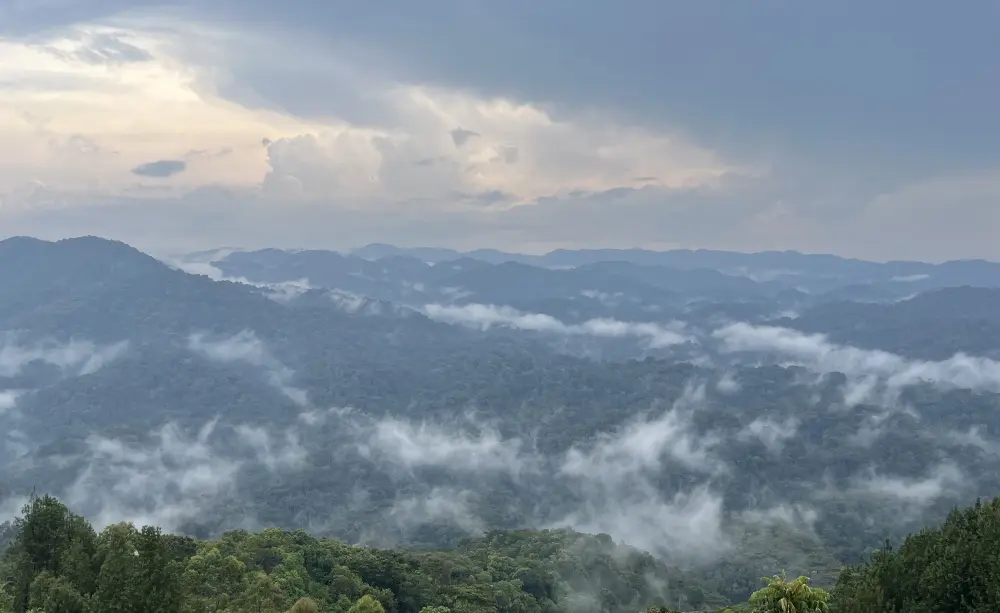
It’s a difficult combination to ignore: Freshly brewed coffee, a warm and comfortable bed, and views of the morning mist lazily drifting across the forest canopy. The excitement of yesterday’s gorilla trek is still fresh and bubbling, with conversation easily and quickly returning to the awe and wonder of viewing these primates up close with your own eyes instead of through the digital window of a screen. Knowing you’ll be returning to the forest again today makes it that much easier to start the day, a day that will dive into the essence and core purpose of Erebero Hills.

Fuelled by a hearty breakfast in the dining room and encouraged by further views of the forest, you make your way to the vehicle for the short, and now familiar drive, to Ruhija Headquarters – the same entry point into Bwindi Impenetrable Forest that was used the previous day for your gorilla trek. However, today holds a very different forest experience. Instead of being allocated to a trekking group, you are met by a park ranger, introduced, and provided with some basic rules of the forest. After selecting a suitable walking stick from the various lengths available, you follow your ranger up the narrow path leading into the forest. Here you meet a group of the Batwa, a local indigenous tribe that used to live deep within Bwindi Forest.

This Batwa forest walk is an interactive cultural experience, offering insight into the traditional customs and practices of this ancient indigenous people who were known as “The Keepers of the Forest”. For thousands of years, they lived deep in the heart of Bwindi, in harmony with the forest, taking only what they needed and relying on the forest to provide. When the forest became a national park, they were forced to vacate the land, moving to the fringes where they could still maintain a level of contact with their traditional lands and customs, but losing access to many of the plants and trees they relied on for food and medicinal use.
Carrying fire
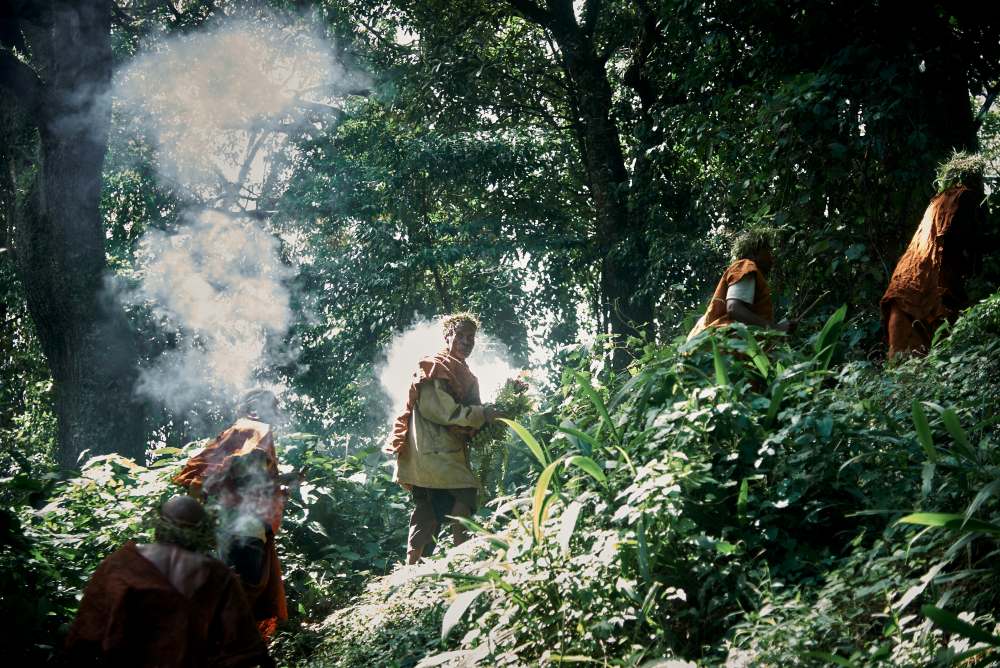
The first stop with the Batwa is just a few minutes into the walk. They gather some dry bark and grass, then produce a long, smooth and straight stick, with a second shorter, flat piece of wood with small holes in it. The end of the long stick fits snugly into the hole on the other piece of wood, and with some continuous and fast-paced twisting, the hole begins to smoke. A little more, then grass is added and the smoke intensifies. A larger ball of grass is added and the whole smoking mass is tipped off the starter wood onto a piece of bark and furiously blown on to encourage the burn. More grass and small twigs are added as it begins to take, and a flame eventually appears. Green leaves and shredded palm fronds are then added, creating a smoking mass that can be carried using bark husks as an outer shell, while more green leaves and plants are continually added.

The journey continues, shrouded in smoke to keep away the flies and biting bugs that would otherwise pursue you through the forest. It’s an ancient practice for the Batwa. They take turns to hold the smoking fire, continually feeding it a variety of green vegetation along the way, which creates a constantly changing aroma to the smoke. Sometimes there are hints of herbs or perhaps a spice, but often it’s purely the heady scent of green, wet vegetation. It does what it’s meant to do, keeping the flies and mosquitoes at bay.
Thrill of the hunt
The walk continues, the narrow trail winding this way and that, up and down the steep hills of Bwindi Impenetrable Forest. At the bottom of each downhill the path meets another rising uphill. In a small clearing the Batwa are waiting. They move impossibly fast through the forest, so they are forced to wait every so often. This time they are preparing to demonstrate a hunt. Being inside the national park, it is not a demonstration they can perform true to life, but they have mastered the art of performance and are able to recreate an imaginary hunting experience.
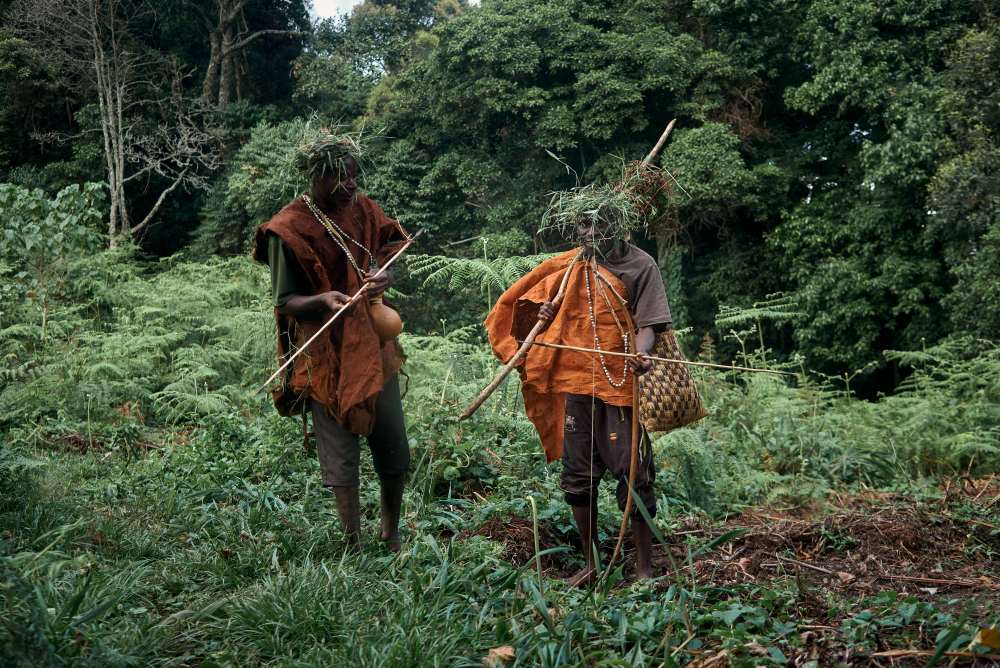
An “animal” is created from a bundle of grass which is then hung in an improvised snare. An arrow is shot and the animal is pronounced dead. The kill is celebrated and triumphantly carried back to the rest of the party. The fire is prepared, and the animal is cooked and eaten, a celebration for the community. The recreation is lifelike and genuine, performed with an excitement and enthusiasm that speaks to pride and the joy of storytelling.

Medicinal plants
The Batwa’s connection to Bwindi Forest is more than it simply being their ancestral home. Countless generations worth of traditional medicinal knowledge has been passed down over hundreds of years, through word of mouth and practical experience. All it takes is for this knowledge to skip one generation, and it will be lost forever.
As the walk progresses deeper into the forest, the Batwa will occasionally stop at plants and trees along the way. The leaves of a certain plant can be crushed up and boiled with water to create a remedy for stomach pains and intestinal parasites, or a different plant when rubbed on the skin will relieve insect bites and other skin irritations. From headaches to heartburn, the Batwa have the knowledge to create the remedy using only what the forest provides.

Some of the medicinal plants are incredibly rare, to the extent that they can only be found within Bwindi Forest, and even then, they are hard to locate. The purpose of the reforestation project at Erebero Hills is not only to create a buffer zone against the forest, but also to create a new forest for the Batwa. The planting process has been in close consultation with the Batwa elders, who have directed which trees and plants should be cultivated and planted, restoring their connection to many species which was previously lost.
The morning spent with the Batwa offers rare and unique insight into their customs and culture, highlighting their relationship with the forest and the importance it holds for them. After lunch in the lodge, with views once again taking in the endless vistas of Bwindi Forest, there is the opportunity to engage with, and better understand, the reforestation project taking place on the site of Erebero Hills.
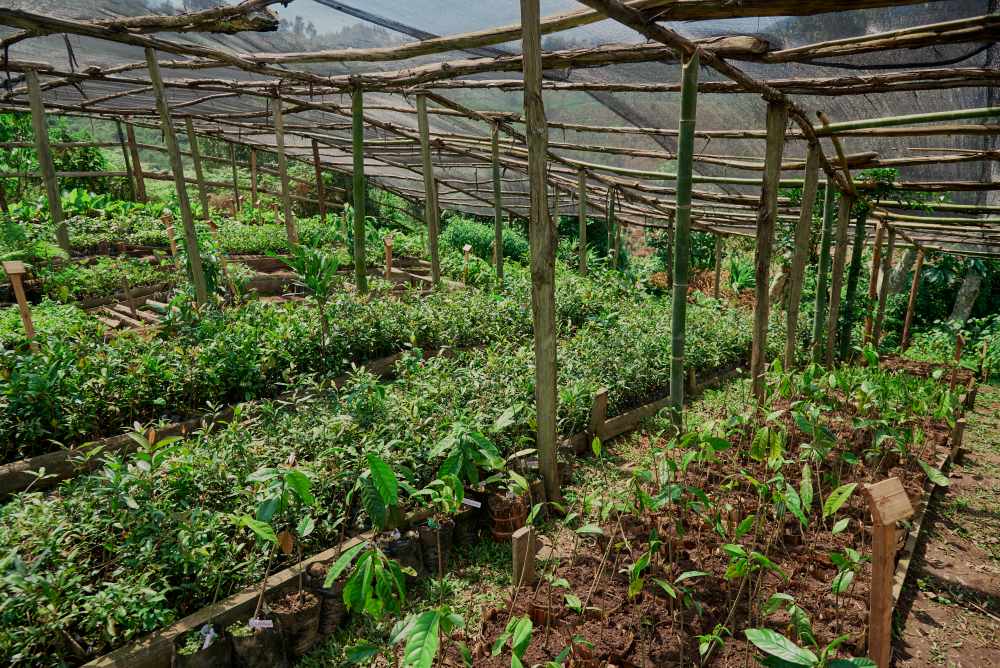
In partnership with Change a Life Bwindi, and under the guidance of the surrounding Batwa community, a reforestation project is creating a buffer zone around the outskirts of Bwindi Forest. The purpose is twofold: It extends the habitat available for the species of the forest, while re-establishing access to the traditional plants of the forest that the Batwa rely on for food, medicine, and cultural practices. The Batwa community identified the indigenous tree and plant species that would be most beneficial for them and, although most of the saplings are still young and do not yet resemble a forest, the Batwa are already fondly referring to this land as “Our forest”.
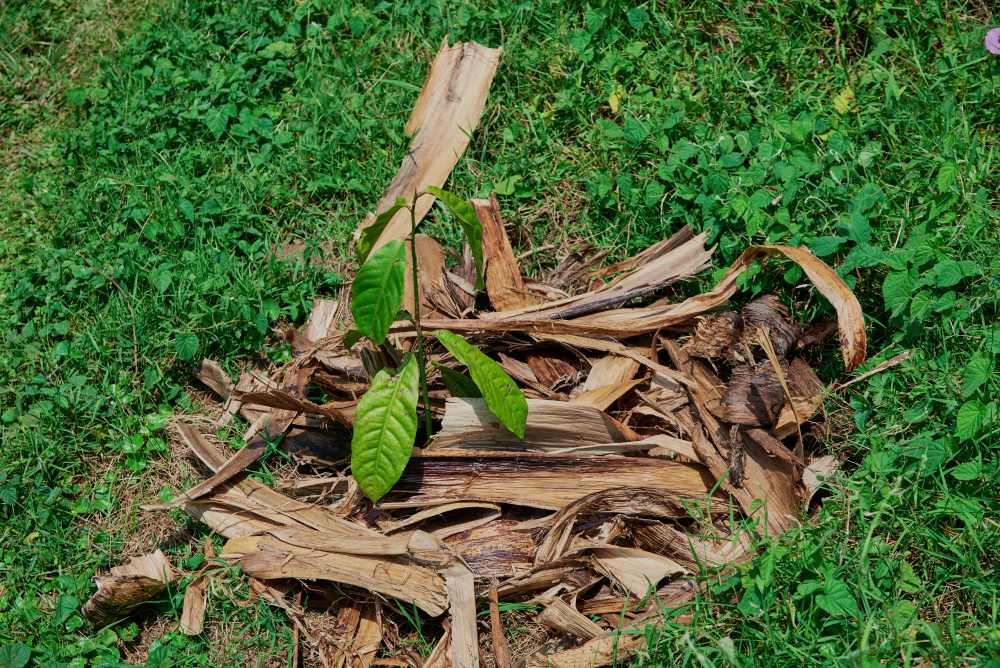
The reforestation project quickly birthed a forest economy. Hundreds of employment opportunities have been created through the process, from building nurseries to tending seedlings and saplings, clearing land, and planting, as well as supporting local nurseries through the purchasing of specific species. More than 35’000 trees have been planted across the site, with thousands more still to come. Alongside the planned reforestation, there is also an area dedicated to nature, which has been cleared of old tea plantations and is now being allowed to re-wild naturally, an experiment of sorts to see what species grow in the space.
Accompanied by a resident guide, the afternoon holds the opportunity to explore the hillside surrounding the lodge, from the river and boundary of the national park through the landscape that was cleared and replanted for reforestation. Some of the species hold nutrient properties that enrich and nourish the soil purely by their presence, while others have been hand selected by the Batwa for their medicinal uses. Some of the species are so rare, they only occur deep within the forest. With the support of the Uganda Wildlife Association, the Batwa have been allowed to harvest seeds from these rare species from within the forest in order to cultivate them outside of the park borders.

The hills of Erebero are steep and there is no rush here. It’s an informative afternoon that delves beneath the surface of this extraordinary location that offers so much more than just convenient access to gorilla trekking. However, there is still so much more to explore within this place where you can see far: a house dedicated to growing fresh mushrooms, the syntropic farm where most of the fresh fruits and vegetables are grown, and the community initiatives of Change a Life Bwindi where skills are nurtured and futures developed.
Erebero Hills is far more than simply a lodge. It is the embodiment of the mechanism of tourism being used as a force for driving positive change for people, wildlife, and nature. Contact us today to start planning your Erebero Hills adventure.